
EN 50122-1: Europe’s Foundation For Rail Electrical Safety
EN 50122-1 ensures railway electrical safety. This cornerstone standard protects people from electric shock in fixed installations via robust design, earthing, and fault protection.
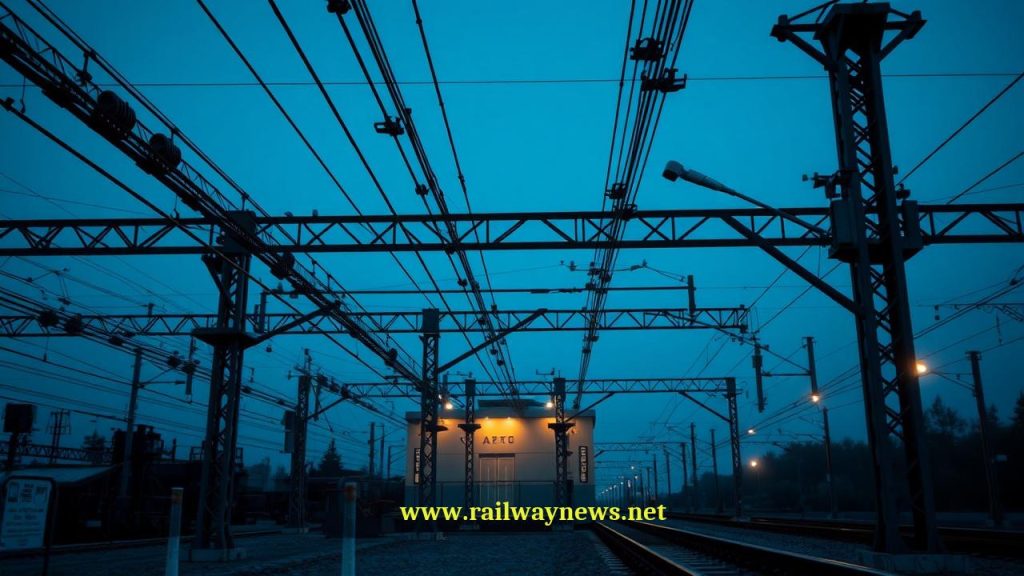
Understanding EN 50122-1: A Cornerstone of Railway Electrical Safety
EN 50122-1 is a key European standard that specifies the protective measures intended to ensure electrical safety in railway fixed installations. Its primary goal is to protect persons from electric shock arising from both AC and DC railway systems. The standard provides a framework for designing, constructing, and maintaining safe electrical environments for passengers, operational staff, and the general public.
This standard is the first part of the EN 50122 series, which holistically addresses electrical safety. While Part 1 focuses on protection against electric shock, Part 2 (EN 50122-2) deals with provisions against the effects of stray currents, and Part 3 (EN 50122-3) covers the mutual interaction of AC and DC traction systems. For any rail project, EN 50122-1 is fundamental to establishing a safe and compliant system.
Core Principles and Scope of EN 50122-1
The standard is built on fundamental principles of electrical safety, adapted to the unique and complex environment of railways. It covers new railway lines and complete renewals or major upgrades of existing fixed installations.
Scope of Application
The provisions of EN 50122-1 apply to all fixed installations associated with the traction system, including:
- Contact line systems (overhead catenary systems) and conductor rails.
- The return circuit, which includes running rails and other intended conductive paths.
- Earthing and bonding of all exposed conductive parts within the railway environment.
- Electrical installations within substations that are part of the traction power supply system.
- Electrical installations on-board vehicles are not covered by this standard, as they fall under standards like EN 50153.
Fundamental Concepts of Protection
EN 50122-1 defines protection based on two primary types of contact with live parts:
- Protection against Direct Contact: This involves measures to prevent persons from touching parts that are intended to be live during normal operation, such as the overhead contact wire or the third rail.
- Protection against Indirect Contact: This involves measures to protect persons from electric shock when touching conductive parts that are not normally live but may become energized under fault conditions. Examples include catenary masts, metal fences, or station platform structures.
A critical concept within the standard is Touch Voltage (Ute). This is the voltage that appears between conductive parts that a person can touch simultaneously during a fault condition. The standard defines acceptable limits for touch voltage based on the duration of the fault, distinguishing between long-term (permanent) and short-term faults. The goal of the protective measures is to ensure these voltage limits are never exceeded.
Key Protective Provisions in Detail
To achieve its safety objectives, EN 50122-1 outlines a hierarchy of protective measures for fixed installations.
Protection Against Direct Contact
Preventing contact with intentionally live parts is achieved primarily through physical means:
- Insulation: Covering live parts with durable, approved insulating material to prevent any contact.
- Barriers or Enclosures: Using locked cabinets, screens, or enclosures to provide a physical barrier against access to live components.
- Placing Out of Reach: Ensuring live conductors are installed at a sufficient height and distance so they cannot be reached. The standard provides detailed clearance diagrams and minimum distances for various scenarios, including platforms, public areas, and areas accessible only to trained personnel.
- Obstacles: Using physical obstacles to prevent unintentional approach to live parts.
Protection Against Indirect Contact
Managing the risk from parts that become live under fault conditions is more complex and relies on a system-wide approach:
- Automatic Disconnection of Supply: This is the primary method of protection. It requires that in the event of a fault (e.g., an insulator failure causing a catenary mast to become live), a protective device (like a circuit breaker in the substation) detects the fault current and disconnects the power supply quickly enough to prevent dangerous touch voltages from persisting.
- Earthing and Equipotential Bonding: All exposed conductive parts (metal structures, fences, poles, etc.) near the traction system must be connected to a common earthing system. This system is typically connected to the return circuit (running rails). This bonding ensures that if a fault occurs, all connected parts rise to a similar potential, minimizing the touch voltage a person could be exposed to.
The Role of the Return Circuit and Earthing System
The return circuit in a railway system has a dual function: it serves as the path for the traction current to return to the substation and acts as the backbone of the safety earthing system.
Return Circuit Integrity
EN 50122-1 places significant emphasis on the design and maintenance of the return circuit. It must be a continuous, low-impedance path to ensure fault currents are high enough to be reliably detected by protective devices. This involves effective bonding between rails and ensuring connections to other return conductors are robust.
Earthing Philosophy
The standard’s earthing philosophy is to create an equipotential zone around the railway tracks. By connecting all nearby metalwork to the rails (the return circuit), the system ensures that there are no significant potential differences between objects a person might touch. This systematic bonding is the most effective way to control touch voltages under both normal and fault conditions.
Comparison of Considerations for AC and DC Systems
While the principles of EN 50122-1 apply to both AC and DC traction systems, the specific risks and mitigation measures can differ. The following table highlights some of these differences.
| Feature / Aspect | AC Railway Systems (e.g., 15 kV, 25 kV) | DC Railway Systems (e.g., 750 V, 1.5 kV, 3 kV) |
|---|---|---|
| Primary Physiological Risk | Ventricular fibrillation due to the alternating nature of the current, which is particularly dangerous for the heart. Touch voltage limits are generally lower. | Severe burns, muscle tetanus, and electrolytic effects. While the fibrillation risk is lower, high currents can still be lethal. |
| Touch Voltage Limits | Stricter limits for permissible touch voltages due to the higher risk of fibrillation. Values are defined in curves based on fault duration. | Higher permissible touch voltage limits compared to AC for the same fault duration, as DC is generally considered less dangerous in terms of causing fibrillation. |
| Stray Current Corrosion Risk | Lower risk. The alternating nature of the current significantly reduces the potential for electrochemical corrosion of buried metallic structures. | Very high risk. Stray DC current leaving the intended return path can cause rapid and severe electrolytic corrosion of nearby utilities (pipelines, building foundations). This is primarily addressed by EN 50122-2. |
| Fault Detection | Faults are readily detectable using overcurrent and distance protection relays, which measure the impedance of the fault loop. | Fault detection can be more challenging, especially for high-resistance faults. DC systems rely on fast-acting circuit breakers that trip on high rates of current rise (di/dt) or absolute overcurrent. |
| Return Circuit Design | Focus on providing a low-impedance path to manage electromagnetic interference (EMI) and ensure reliable fault detection. | Focus on providing a very low-resistance path and excellent electrical insulation from the general mass of earth to minimize stray currents. |
Compliance and Implementation
Achieving compliance with EN 50122-1 is not a simple checklist exercise. It requires a detailed system-level safety analysis during the design phase. This includes:
- Calculating expected fault currents and resulting touch voltages throughout the system.
- Designing the earthing and bonding system to ensure touch voltages remain within the safe limits defined in the standard.
- Selecting appropriate protective devices and configuring them to disconnect the power supply within the required timeframes.
- Verification through on-site measurements of continuity and impedance after installation is complete.
Conclusion: The Foundation of a Safe Rail Network
EN 50122-1 is an indispensable standard for the modern railway industry. It provides a robust, systematic, and internationally recognized methodology for managing the risks of electric shock in fixed installations. By defining clear principles for protection, setting permissible touch voltage limits, and mandating a detailed approach to earthing and bonding, the standard forms the foundation upon which safe, reliable, and interoperable electric railway networks are built. Adherence to its principles is non-negotiable for ensuring the safety of everyone who interacts with the railway environment.

Railway infrastructure, rolling stock and transport technologies specialist focused on global rail industry developments, high-speed rail systems, signaling technologies and freight transportation. Covering railway investments, public transport modernization, rail operations and international mobility projects across Europe, Asia and North America.