
EN 14535-1: Europe’s New Standard For Axle Brake Discs
EN 14535-1: The European standard for axle-mounted railway brake discs. It guarantees safety, reliability, and interoperability through strict material, dimensional, and testing requirements.
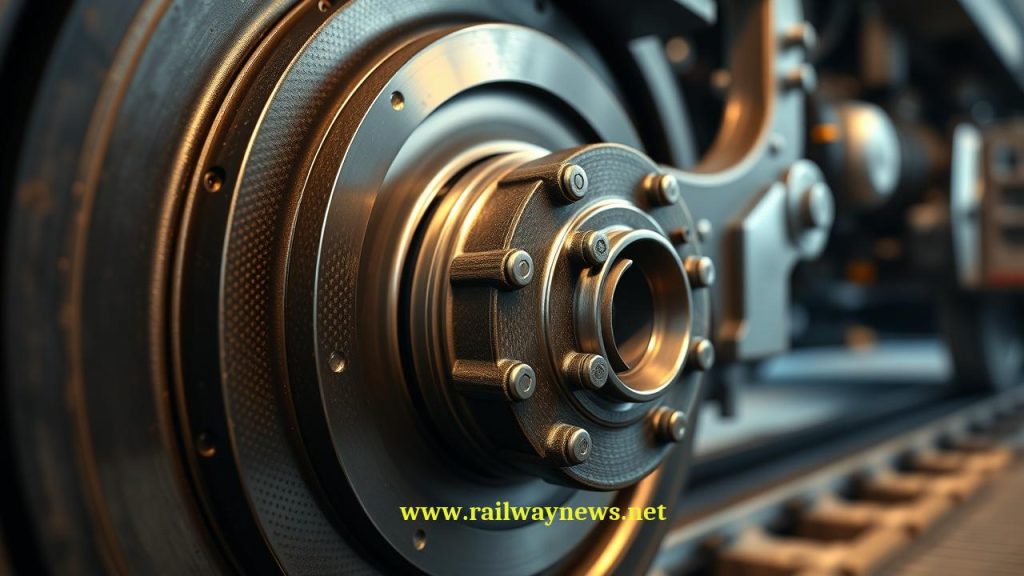
Understanding EN 14535-1: The Standard for Axle-Mounted Railway Brake Discs
EN 14535-1 is a European standard that specifies the dimensional and quality requirements for brake discs that are pressed or shrunk onto the axle or drive shaft of railway rolling stock. This standard is a critical component in ensuring the safety, reliability, and interoperability of braking systems across the European railway network.
The primary function of this standard is to provide a unified technical framework for manufacturers, railway operators, and maintenance providers. By defining precise criteria for materials, dimensions, and testing, EN 14535-1 guarantees that brake discs from different suppliers can perform consistently and safely under the demanding operational conditions of railway service.
Core Technical Requirements of EN 14535-1
The standard is highly technical and covers the entire lifecycle of the brake disc, from material selection to final inspection. The key requirements can be broken down into several distinct areas.
Dimensional and Geometric Tolerances
Precision is paramount for the correct functioning of a braking system. EN 14535-1 defines strict tolerances for all critical dimensions of the brake disc. This ensures a perfect interface with the brake pads and the axle.
- Outer and Inner Diameters: Defines the overall size and the bore for mounting on the axle.
- Disc Thickness: Specifies the thickness of the friction rings and the overall disc, which is crucial for thermal capacity and wear life.
- Ventilation Channel Geometry: For ventilated discs, the design of the internal cooling channels is specified to ensure effective heat dissipation.
- Mounting Interface: The dimensions and surface finish of the bore are tightly controlled to ensure a secure and durable press-fit or shrink-fit connection.
- Geometric Tolerances: The standard also dictates requirements for flatness, parallelism of the friction surfaces, and run-out to prevent brake judder and uneven wear.
Material and Manufacturing Requirements
The material chosen for a brake disc must withstand immense thermal and mechanical stresses. EN 14535-1 details the acceptable materials and the quality controls required during manufacturing.
- Material Composition: The standard typically specifies grey cast iron alloys with specific grades (e.g., low-alloy cast iron) known for their excellent thermal conductivity, high thermal capacity, and resistance to thermal cracking. The chemical composition (carbon, silicon, manganese, etc.) is strictly controlled.
- Manufacturing Process: The casting process must be controlled to prevent defects such as porosity, shrinkage cavities, or inclusions. Post-cast heat treatment processes, such as stress relieving, may be required to ensure microstructural stability and reduce internal stresses.
- Machining: All functional surfaces, especially the friction faces and the central bore, must be machined to a high degree of precision and surface finish as defined in the standard.
Mechanical Properties and Testing Protocols
To verify the integrity and performance of the finished product, EN 14535-1 mandates a series of rigorous tests.
- Mechanical Testing: Samples taken from the disc casting are subjected to tests to verify properties like tensile strength and Brinell hardness. Hardness is critical for wear resistance, while tensile strength ensures the disc can withstand the rotational and clamping forces.
- Non-Destructive Testing (NDT): The entire disc, or critical areas of it, must undergo NDT to detect any subsurface or surface-breaking flaws that could lead to catastrophic failure in service. Common methods specified include:
- Ultrasonic Testing (UT): To detect internal defects like voids or cracks.
- Magnetic Particle Inspection (MPI): To detect surface and near-surface cracks.
- Chemical Analysis: A chemical analysis is performed to confirm that the material composition of the cast alloy is within the specified limits.
Comparison: Axle-Mounted vs. Wheel-Mounted Brake Discs
EN 14535 is divided into parts, with Part 1 focusing exclusively on axle-mounted discs. Understanding the difference between axle-mounted and wheel-mounted discs is crucial for railway engineers.
| Feature | Axle-Mounted Discs (EN 14535-1) | Wheel-Mounted Discs (e.g., EN 14535-2) |
|---|---|---|
| Mounting Location | Pressed or shrunk directly onto the vehicle’s axle or drive shaft. | Bolted to the side of the wheel web. |
| Heat Transfer | Heat is dissipated directly from the disc; minimal thermal load on the wheels. | Some heat can be transferred to the wheel, which must be considered in wheel design. |
| Unsprung Mass | Adds to the unsprung mass of the axle assembly. | Adds to the unsprung mass of the wheelset, but is part of the wheel itself. |
| Typical Application | High-speed trains, locomotives, and multiple units where high braking energy needs to be dissipated. | Trams, metro cars, and some regional trains where space on the axle is limited. |
| Maintenance | Requires removal of the wheelset from the bogie for disc replacement. | Disc replacement can sometimes be done without removing the wheelset, depending on the design. |
The Fitting Process: A Critical Aspect of EN 14535-1
The standard’s focus on “pressed or shrunk” discs highlights the importance of the mounting method. This connection must be strong enough to transmit immense braking torque without slipping.
Shrink-Fitting
Shrink-fitting is a common method where the brake disc is heated uniformly, causing its central bore to expand due to thermal expansion. It is then placed over the cooler axle. As the disc cools, it contracts and creates an extremely strong interference fit, gripping the axle with immense pressure.
Press-Fitting
In press-fitting, the disc’s bore is manufactured to be slightly smaller than the axle’s outer diameter. A powerful hydraulic press is then used to force the disc onto the axle. This creates a strong mechanical bond due to the radial pressure and friction between the two components.
Conclusion: Ensuring Safety Through Standardization
EN 14535-1 is more than just a document of specifications; it is a foundational pillar of railway braking safety. By mandating stringent requirements for dimensions, materials, and quality control, the standard ensures that every axle-mounted brake disc entering service is fit for purpose. It minimizes the risk of failure, enhances braking performance, and fosters interoperability, which is essential for the seamless operation of Europe’s modern, high-performance railway systems.

Railway infrastructure, rolling stock and transport technologies specialist focused on global rail industry developments, high-speed rail systems, signaling technologies and freight transportation. Covering railway investments, public transport modernization, rail operations and international mobility projects across Europe, Asia and North America.