
Europe’s EN 13481-3: New Standard Elevates Wood Sleeper Safety
EN 13481-3 defines critical performance standards and tests for rail fastening systems on wood sleepers, ensuring railway safety, reliability, and track integrity.
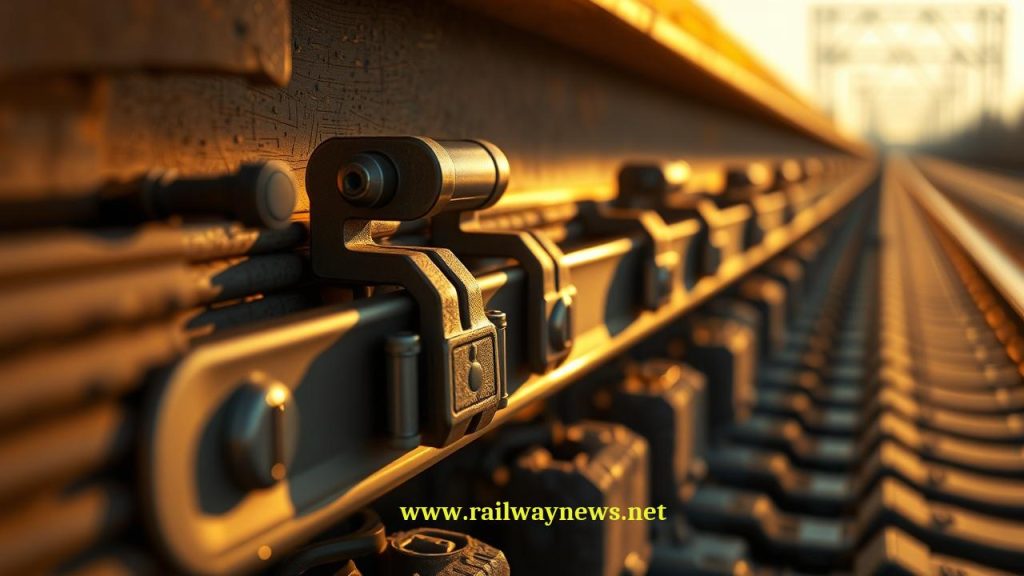
Understanding EN 13481-3: Performance Requirements for Fastening Systems on Wood Sleepers
EN 13481-3 is a crucial European Standard within the railway sector that outlines the specific performance requirements and laboratory test procedures for fastening systems intended for use on wood sleepers. This standard is part of the broader EN 13481 series, which covers fastening systems for various track types, but Part 3 is exclusively dedicated to the unique challenges and properties associated with timber infrastructure.
Core Objective of the Standard
The primary objective of EN 13481-3 is to ensure the safety, reliability, and interoperability of railway tracks by establishing a common benchmark for the performance of fastening systems. By defining rigorous testing criteria, the standard allows manufacturers to prove the capability of their products and gives railway infrastructure managers confidence that the components they procure will perform predictably under demanding operational conditions.
Key Performance Requirements as per EN 13481-3
The standard specifies a detailed set of laboratory tests to evaluate a fastening system’s ability to withstand the forces and environmental conditions experienced in a live track environment. The key performance characteristics measured are:
- Longitudinal Rail Restraint: This test measures the fastening system’s ability to resist the longitudinal movement of the rail. This is critical for preventing rail creep caused by thermal expansion/contraction and the traction/braking forces of trains. A high restraint value is essential for maintaining track geometry and the integrity of continuously welded rail (CWR).
- Clamping Force: This refers to the vertical force exerted by the fastening clip or component onto the foot of the rail. Adequate clamping force is necessary to ensure firm contact between the rail, rail pad, and sleeper, which contributes to torsional resistance and overall track stability.
- Torsional Resistance: The fastening system must prevent the rail from rotating or overturning, especially on curves where lateral forces are significant. This test evaluates the moment required to cause a specific degree of rail rotation, ensuring the system can maintain the correct rail cant and gauge.
- Attenuation of Impact Loads: This requirement assesses the ability of the system, particularly the rail pad, to absorb and dampen high-frequency impact loads generated by wheel-rail interaction, especially at joints or wheel flats. Effective attenuation reduces wear and tear on both the track components and the rolling stock.
- Electrical Resistance: For tracks equipped with signalling and train detection systems, the fastening system must provide sufficient electrical insulation between the rails. This test measures the electrical resistance to ensure that track circuits are not short-circuited, which is fundamental for safe train operations.
- Fatigue Life: Railway fastenings are subjected to millions of load cycles throughout their service life. The fatigue test simulates this repeated loading in a laboratory setting to ensure the components can endure long-term operational stresses without failure or significant degradation in performance.
The Significance of Wood Sleepers
Wood sleepers have distinct mechanical properties compared to concrete or steel. They are more elastic, can absorb moisture, and have a non-uniform material structure. EN 13481-3 takes these factors into account. For instance, the pull-out strength of screw spikes (coach screws) is a critical parameter for wood, and the standard’s tests are designed to simulate the specific interaction between the metal fastening components and the wood sleeper body.
Laboratory Testing Procedures
Compliance with EN 13481-3 is demonstrated through a series of demanding laboratory tests performed on a sample assembly. This assembly typically consists of a section of rail, the fastening system components, and a representative wood sleeper block. The tests are conducted under controlled conditions to ensure repeatability and accuracy. These procedures are divided into static tests (measuring resistance to a single applied load), dynamic tests (measuring performance under repeated loads), and tests that simulate harsh environmental conditions.
Categorization of Fastening Systems
The standard defines different categories of fastening systems based on their performance characteristics. This allows for the appropriate selection of a system based on the specific requirements of the railway line, such as axle load, train speed, and track type. A simplified comparison is provided below.
| Category | Typical Application | Maximum Axle Load | Key Characteristics |
|---|---|---|---|
| Category A | Low-traffic, secondary lines, sidings | ≤ 225 kN | Moderate clamping force and longitudinal restraint. Focus on cost-effectiveness and simplicity. |
| Category B | Mainline passenger and mixed traffic | ≤ 260 kN | Balanced performance with good longitudinal restraint and fatigue resistance. Suitable for a wide range of applications. |
| Category C | Heavy haul freight lines, high-density traffic | ≤ 300 kN | High clamping force, very high longitudinal restraint, and excellent fatigue life to withstand severe loading conditions. |
| Category D | High-speed lines (> 250 km/h) | ≤ 260 kN | Very high clamping force, excellent dynamic performance, and high torsional resistance to ensure track stability at high speeds. |
Conclusion
EN 13481-3 serves as a fundamental quality assurance tool for the railway industry. By providing a standardized framework for evaluating the performance of fastening systems on wood sleepers, it ensures that these critical components meet the high standards of safety, durability, and reliability required for modern railway networks. Its detailed test procedures and categorization system enable engineers and procurement managers to select the most suitable fastening systems for their specific operational needs, ultimately contributing to a safer and more efficient railway infrastructure.

Railway infrastructure, rolling stock and transport technologies specialist focused on global rail industry developments, high-speed rail systems, signaling technologies and freight transportation. Covering railway investments, public transport modernization, rail operations and international mobility projects across Europe, Asia and North America.