
Europe Mandates EN 50155: Ensuring Rail Electronics Safety
EN 50155 is the definitive standard for railway electronics, ensuring equipment reliability, safety, and performance in demanding train environments.
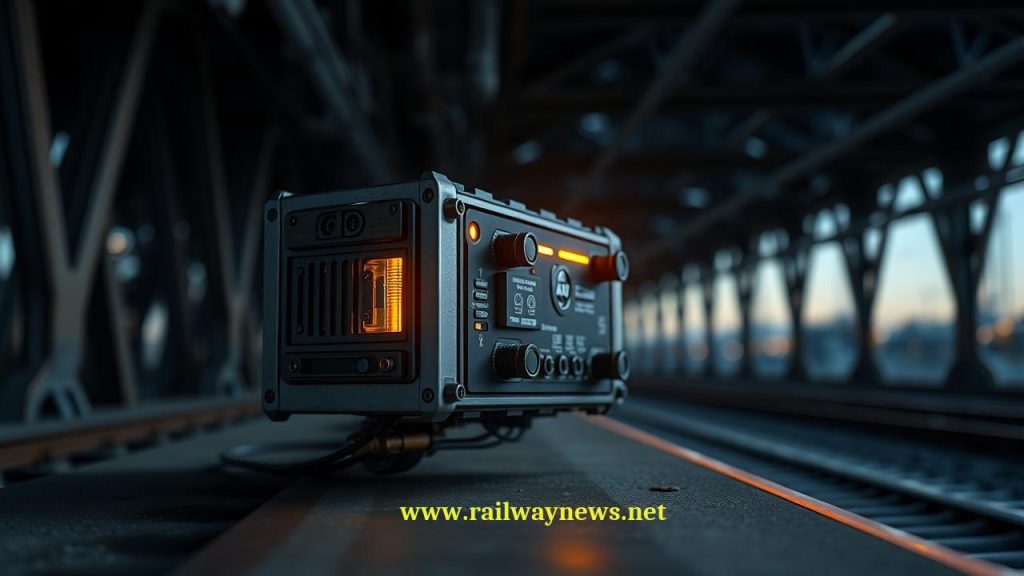
EN 50155: The Definitive Standard for Electronic Equipment on Rolling Stock
EN 50155 is a European standard that specifies the requirements for all electronic equipment used on railway rolling stock. It establishes the minimum conditions for operation, design, construction, and testing of this equipment to ensure reliability and safety in the demanding railway environment. The standard is essential for manufacturers, system integrators, and railway operators to guarantee that components can withstand the harsh conditions of a train’s life cycle.
The primary purpose of EN 50155 is to ensure interoperability and a high level of performance for electronic systems subjected to severe vibrations, shocks, wide temperature ranges, and fluctuating power supplies. Compliance with this standard is a benchmark of quality and robustness for any electronic product intended for on-board railway applications, from passenger information systems to critical train control units.
Core Principles of EN 50155
The standard is built upon a foundation of ensuring equipment survivability and consistent performance. It addresses the entire lifecycle of the equipment, from design and manufacturing to testing and documentation. The key principles include:
- Environmental Resilience: Equipment must operate reliably when exposed to the extreme temperatures, humidity, shock, and vibration characteristic of railway operations.
- Electrical Integrity: Systems must be resilient to the unstable nature of a train’s power supply, including voltage variations, surges, and short interruptions.
- Performance and Reliability: The standard encourages a design philosophy focused on long-term reliability, often specified through metrics like Mean Time Between Failures (MTBF).
- Safety and Functionality: While not a functional safety standard itself (like EN 50128 for software), EN 50155 ensures that the hardware platform is robust enough to support safety-critical applications.
Key Technical Requirements of EN 50155
EN 50155 details a detailed set of technical specifications and tests that equipment must pass. These are broadly categorized into environmental, electrical, and design requirements.
Environmental Conditions
This is one of the most critical sections of the standard, as the physical environment on a train is extremely harsh.
-
Operating Temperature: The standard defines several temperature classes to accommodate equipment installed in different locations (e.g., inside a temperature-controlled cabin vs. in an unheated cabinet). The most common classes are:
- OT1 / T1: -25°C to +70°C (Passenger/Driver cabins)
- OT2 / T2: -40°C to +70°C (Equipment in technical cabinets)
- OT3 / T3: -25°C to +85°C
- OT4 / T4: -40°C to +85°C (For equipment in harsher locations, with +85°C for a 10-minute duration)
- TX: An extended range of -40°C to +70°C continuous operation, often a default for high-reliability systems.
- Shock and Vibration: This is a fundamental requirement. EN 50155 references EN 61373 (“Railway applications – Rolling stock equipment – Shock and vibration tests”) for test procedures. Equipment is typically tested under Category 1, Class A or Class B, depending on its mounting location on the vehicle body or bogie.
- Humidity: Electronic equipment must withstand high levels of relative humidity (e.g., 75% average, with 95% for 30 days) without degradation in performance or corrosion. Conformal coating on printed circuit boards (PCBs) is a common method to meet this requirement.
Electrical Requirements
The power supply on a train is notoriously unstable due to engine start-ups, pantograph bouncing, and switching between power sources.
- Power Supply Voltage Variations: The equipment must operate correctly across a wide range of input voltages. The standard specifies that equipment should function within a range of 0.7 to 1.25 times the nominal voltage (Vn). For short durations, it must withstand ranges from 0.6 to 1.4 times Vn.
-
Supply Interruptions and Dips: The standard defines several classes for interruptions in the power supply:
- Class S1: The equipment must continue to operate without disruption during a supply voltage interruption of up to 10 ms.
- Class S2: The equipment must continue to operate without disruption during a supply voltage interruption of up to 20 ms (often requires hold-up capacitors).
- Class C1 & C2: These define requirements for handling voltage dips (brown-outs) without malfunction.
- Electromagnetic Compatibility (EMC): To prevent interference with other critical on-board systems (like signaling and communication), all electronic equipment must comply with EN 50121-3-2 (“Railway applications – Electromagnetic compatibility – Part 3-2: Rolling stock – Apparatus”). This standard covers both radiated and conducted emissions and immunity.
Design and Construction
EN 50155 provides guidance on the physical design and construction to ensure long-term reliability.
- Component Selection: Components should be selected for their reliability and suitability for the specified temperature ranges.
- Cooling: The design must ensure that all components remain within their safe operating temperatures, even under worst-case ambient conditions.
- Enclosures and Connectors: Enclosures should provide adequate protection (IP rating), and connectors must be robust and locking to prevent disconnection due to vibration.
- Software: The standard specifies that software should be designed to be reliable, maintainable, and well-documented. It does not dictate a specific development process but requires that the software’s behavior under fault conditions is predictable.
Summary of Key EN 50155 Test Parameters
The following table provides a simplified overview of the most common requirements and tests mandated by the EN 50155 standard for ensuring equipment compliance.
| Parameter | Requirement Category | Typical Specification / Test Reference |
|---|---|---|
| Operating Temperature | Environmental | Classes T1, T2, T3, T4, TX (e.g., TX: -40°C to +70°C continuous). Involves cyclic temperature tests. |
| Shock & Vibration | Environmental | Compliance with EN 61373. Typically Category 1, Class A or B, based on installation location. |
| Supply Voltage Variation | Electrical | Continuous operation from 0.7 x Vn to 1.25 x Vn. Must withstand 0.6 x Vn and 1.4 x Vn for short durations. |
| Supply Interruption | Electrical | Class S1 (10 ms) or S2 (20 ms). Equipment must not reset or malfunction. |
| Electromagnetic Compatibility (EMC) | Electrical | Compliance with EN 50121-3-2 for emissions and immunity. |
| Protective Coating | Design/Construction | PCBs are typically required to have conformal coating to protect against humidity and condensation. |
Conclusion: The Importance of EN 50155 Compliance
In the railway sector, there is no room for error. The failure of an electronic component can have consequences ranging from service disruptions to serious safety incidents. EN 50155 provides a robust and universally recognized framework for ensuring that electronic equipment is fit for purpose. For manufacturers, compliance is a critical market-entry requirement and a testament to product quality. For railway operators, specifying EN 50155-compliant equipment is fundamental to achieving a safe, reliable, and efficient transportation network.

Railway infrastructure, rolling stock and transport technologies specialist focused on global rail industry developments, high-speed rail systems, signaling technologies and freight transportation. Covering railway investments, public transport modernization, rail operations and international mobility projects across Europe, Asia and North America.