
EN 16585-2: Making European Trains Accessible for All
Unlock EN 16585-2: the railway standard for accessible rolling stock. It details technical requirements for comfortable, safe, and inclusive journeys for all passengers.
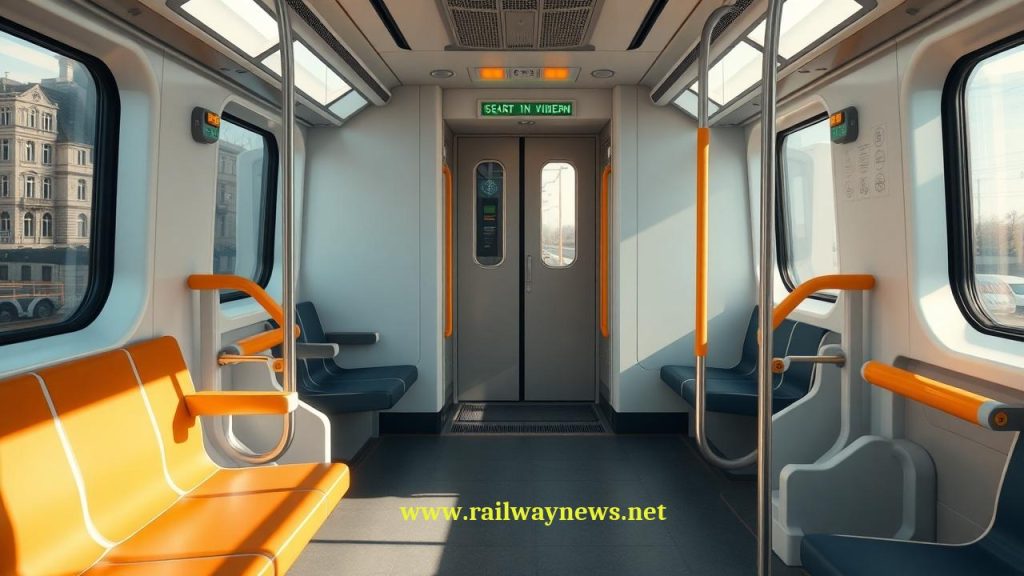
Understanding EN 16585-2: A Technical Guide to PRM Accessibility On-Board Rolling Stock
EN 16585-2 is a crucial European Standard within the railway industry that specifies the technical requirements for equipment and components on board rolling stock designed for use by Persons with Reduced Mobility (PRM). This standard is part of a larger series and specifically focuses on elements that facilitate sitting, standing, and moving within a rail vehicle, ensuring a safer, more comfortable, and accessible journey for all passengers.
This standard serves as a detailed implementation guide, providing a “presumption of conformity” with the legal requirements outlined in the Technical Specifications for Interoperability for Persons with Reduced Mobility (TSI-PRM). By adhering to EN 16585-2, manufacturers and operators can ensure their rolling stock designs meet the highest standards of accessibility and inclusivity.
Core Technical Requirements of EN 16585-2
The standard is methodically structured to address the key functional areas experienced by a passenger once they are inside the train. It provides precise dimensions, contrast values, and operational forces to eliminate ambiguity in design and manufacturing.
Elements for Sitting: Priority Seats
The design and placement of seats, especially those designated as “priority seats,” are fundamental to PRM accessibility. The standard details several critical parameters:
- Dimensions: Specifies the minimum width and depth of the seat cushion, as well as the height from the floor, to ensure comfortable use by a wide range of passengers, including those who have difficulty sitting or standing.
- Armrests: Mandates the presence of armrests to assist passengers in sitting down and standing up. It often requires at least one armrest per priority seat to be movable, allowing for easier lateral transfer from a wheelchair.
- Clear Space: Defines the required clear headroom and legroom. A crucial requirement is the provision of sufficient space adjacent to or in front of the priority seat to accommodate an assistance dog.
- Identification: Priority seats must be clearly identifiable through specific pictograms and have a distinct color contrast with surrounding seats and interior surfaces to be easily located by visually impaired passengers.
Elements for Standing: Handrails and Grab Handles
For passengers who are standing or moving through the vehicle, stability is paramount. EN 16585-2 provides explicit requirements for handrails, stanchions, and grab handles.
- Profile and Diameter: The standard mandates a specific range for the cross-section diameter of handrails and stanchions (typically between 30 mm and 40 mm) to ensure a firm and secure grip.
- Clearance: A minimum clearance (e.g., 45 mm) must be maintained between the handrail and any adjacent surface (like a wall or window) to prevent hand-trapping and allow for a full grip.
- Positioning: The height and location of horizontal and vertical handrails are specified to be accessible from both a standing and seated position. This includes handrails along gangways, in vestibule areas, and near doorways.
- Visual Contrast: Handrails and grab handles must have a significant luminance contrast with their background, making them easily visible to passengers with low vision. The surface should also be slip-resistant.
Elements for Moving: Gangways and Interior Corridors
Safe and unhindered movement through the train is a core aspect of accessibility. The standard addresses the design of internal pathways and doors.
- Gangway Width: Defines the minimum clear width for gangways and corridors to allow for the passage of a standard reference wheelchair and other mobility aids.
- Floor Surfaces: The floor must be slip-resistant and designed to minimize trip hazards. Any change in level must be clearly marked, and if a ramp is necessary, its maximum gradient is strictly defined.
- Interior Doors: For manually operated doors, the standard specifies the maximum force required to open and close them. For power-operated doors, it details requirements for activation devices (push-buttons), their placement, feedback signals (visual and audible), and safety features to prevent passenger trapping.
Technical Specification Summary Table
The following table provides a comparative overview of the key technical elements covered in EN 16585-2.
| Element Category | Key Component | Core Technical Requirement | Rationale for PRM Accessibility |
|---|---|---|---|
| Sitting | Priority Seats | Defined minimum width/depth, movable armrests, adjacent space for assistance dogs. | Provides stability, ease of transfer, and support for a diverse range of mobility needs. |
| Standing | Handrails / Stanchions | Specific diameter (30-40mm), minimum clearance from walls (45mm), high visual contrast. | Ensures a secure grip for balance and stability while the train is in motion or braking. |
| Moving | Gangways | Specified minimum clear width to accommodate a wheelchair, slip-resistant flooring. | Allows for independent and safe movement between carriages for all passengers. |
| Moving | Interior Doors | Maximum operating force for manual doors, accessible height for push-buttons, audible/visual signals. | Guarantees that passengers with limited strength or sensory impairments can operate doors without assistance. |
Conclusion: The Role of EN 16585-2 in Modern Rail Design
EN 16585-2 is more than just a set of guidelines; it is a foundational technical document for creating truly inclusive railway environments. By translating the high-level accessibility objectives of the TSI-PRM into concrete, measurable engineering parameters, it empowers designers and manufacturers to build rolling stock that is inherently accessible. Adherence to this standard not only ensures legal compliance but also significantly enhances the passenger experience, promoting public transport as a viable and comfortable option for everyone, regardless of their level of mobility.
Frequently Asked Questions (FAQ) about EN 16585-2
Here are some common questions regarding the standard and its application.

Railway infrastructure, rolling stock and transport technologies specialist focused on global rail industry developments, high-speed rail systems, signaling technologies and freight transportation. Covering railway investments, public transport modernization, rail operations and international mobility projects across Europe, Asia and North America.