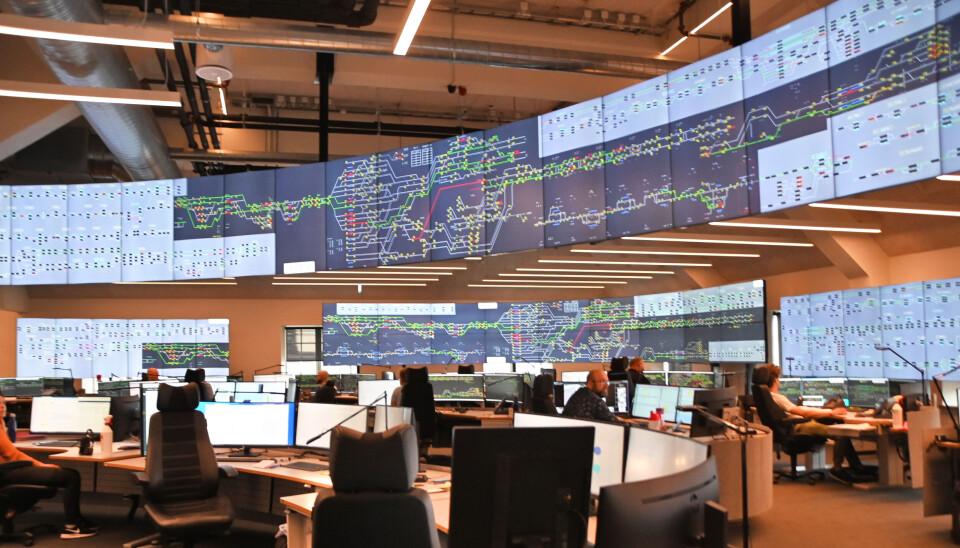
Unlike a conventional corporate IT risk assessment, railway cybersecurity risk management must consider operational technology (OT), industrial control systems, long asset lifecycles, supplier dependencies and the potential consequences of disruption to railway services. It must also account for the relationship between cybersecurity, reliability and functional safety without treating these disciplines as interchangeable.
1. What Is Railway Cybersecurity Risk Assessment?
Railway cybersecurity risk assessment is the process of examining how cyber threats could exploit vulnerabilities in railway systems, equipment, people or processes and what consequences could follow.
The assessment considers both the likelihood of a threat scenario and the potential impact on the organisation, its assets and railway operations.
Its main objectives are to:
- Identify critical railway assets, systems and services.
- Understand relevant cyber threats and vulnerabilities.
- Evaluate possible attack scenarios and their consequences.
- Determine which risks require immediate attention.
- Select appropriate technical and organisational security controls.
- Assign responsibility for risk treatment and acceptance.
- Monitor changes in threats, vulnerabilities and operational conditions.
- Support investment decisions and continuous improvement.
Risk assessment is not a one-time compliance exercise. Railway systems change through upgrades, new connections, refurbishment, supplier changes, software updates and operational developments. Risk management must therefore continue throughout the lifecycle.
2. Why Railway Cybersecurity Risk Management Is Different
Railway organisations operate complex environments in which information technology, operational technology and physical infrastructure interact. A cyber incident may affect a corporate application, passenger information, train dispatching, traction power, maintenance operations or other railway services.
The consequences depend on the affected system and its operational role. A compromised passenger-facing website and an unauthorised change to a critical signalling configuration should not be assessed using identical impact assumptions.
2.1 Characteristics of railway cyber risk
- Operational dependency: railway services depend on interconnected systems operating across infrastructure, vehicles and control centres.
- Long asset lifecycles: signalling, rolling stock and industrial equipment may remain in service for decades.
- Legacy technology: some systems cannot easily support modern security tools, authentication methods or software updates.
- Safety implications: cybersecurity events may create operational conditions that require safety-related assessment.
- Supplier dependency: manufacturers, maintenance contractors and technology providers may have access to critical systems.
- Distributed infrastructure: railway assets are spread across stations, depots, lines, substations and control centres.
- Availability requirements: security measures must not introduce unacceptable disruption to operational services.
These characteristics make a railway-specific assessment essential. A general IT risk register may provide useful organisational information, but it is unlikely to capture all the technical and operational dependencies of a railway system.
3. Who Should Conduct Railway Cybersecurity Risk Assessments?
Cybersecurity risk assessment is a shared responsibility. Different railway stakeholders control different assets, systems and operational processes. Their responsibilities should be defined according to ownership, operational authority, contractual arrangements and system interfaces.
| Stakeholder | Typical risk assessment focus |
|---|---|
| Infrastructure managers | Signalling, interlocking, ETCS infrastructure, traffic management, telecommunications, substations and infrastructure control systems. |
| Railway undertakings | Rolling stock, onboard systems, fleet management, train operations, depots, passenger services and maintenance interfaces. |
| Rolling stock manufacturers | Vehicle architecture, embedded software, onboard networks, component security and product lifecycle risks. |
| Signalling and technology suppliers | Product vulnerabilities, software development, engineering access, configuration and system integration. |
| Maintenance organisations | Diagnostic equipment, maintenance workstations, software loading, removable media and supplier access. |
| Station and facility operators | Passenger information, CCTV, access control, building management and connected facility systems. |
| Railway sector authorities | Sector-level risk coordination, regulatory oversight and critical infrastructure resilience within their respective mandates. |
Where several organisations share responsibility for a system, the assessment should identify the boundaries between them. An infrastructure manager and a railway undertaking, for example, may have separate responsibilities for trackside and onboard equipment but depend on common communication interfaces.
4. The Railway Cybersecurity Risk Management Lifecycle
A practical risk management programme can be organised into a continuous cycle of preparation, identification, analysis, evaluation, treatment, acceptance, communication and review.
| Stage | Main activity | Expected output |
|---|---|---|
| 1. Establish context | Define scope, objectives, responsibilities and risk criteria | Approved assessment scope and methodology |
| 2. Identify assets | Inventory systems, services, interfaces and dependencies | Asset register and system boundaries |
| 3. Identify threats and vulnerabilities | Determine relevant threat sources, attack paths and weaknesses | Threat and vulnerability register |
| 4. Analyse risks | Evaluate likelihood, impact and existing controls | Risk analysis records |
| 5. Evaluate and prioritise | Compare risks against approved acceptance criteria | Prioritised risk register |
| 6. Treat risks | Reduce, avoid, share or retain risks | Risk treatment plan |
| 7. Accept and communicate | Obtain authorised decisions and communicate responsibilities | Documented acceptance and action ownership |
| 8. Monitor and review | Track controls, changes, incidents and emerging threats | Updated risk assessments |
This structure is consistent with the general risk management approach described in ENISA’s railway cybersecurity guidance. The exact method, scoring system and approval arrangements should be adapted to the organisation and applicable requirements.
5. Defining the Scope of a Railway Risk Assessment
Before identifying threats, the organisation must establish what is being assessed. An assessment that is too broad may produce generic results, while a narrow assessment may overlook important interfaces and dependencies.
The scope should identify:
- The railway organisation or project under assessment.
- The systems, services and operational processes included.
- The physical and logical boundaries of the assessment.
- The relevant infrastructure, vehicles and facilities.
- External systems and supplier connections.
- Applicable regulatory, contractual and technical requirements.
- The assessment period and assumptions.
- The people responsible for providing information and approving results.
5.1 System under Consideration (SuC)
IEC 62443-3-2 uses the concept of a System under Consideration (SuC) to define the system being assessed. This includes the relevant components, interfaces and boundaries needed to understand the industrial automation and control system environment.
In a railway context, the assessment might focus on a signalling system, traction power SCADA installation, depot maintenance environment, train communication network or a larger integrated operational system.
The system boundary should include relevant external connections. Excluding a supplier maintenance gateway or a connected engineering workstation simply because it is managed by another organisation can leave an important risk pathway outside the assessment.
6. Identifying Railway Assets and Services
Asset identification is the foundation of an effective cybersecurity risk assessment. Organisations cannot reliably assess threats to systems they have not identified or do not understand.
Railway asset inventories should cover more than computers and network devices. They should include operational services, software, communication links, engineering tools, physical equipment and supporting dependencies.
6.1 Railway asset categories
| Asset category | Examples |
|---|---|
| Signalling and train control | Interlocking, ETCS, RBC, ATP, ATO and signalling workstations |
| Traffic management | TMS, CTC, OCC, dispatching and train regulation systems |
| Energy and power | Traction power SCADA, substations, remote terminal units and energy management |
| Telecommunications | Railway radio, fibre networks, IP infrastructure and network management platforms |
| Rolling stock | TCMS, onboard ETCS, train communication networks and diagnostic systems |
| Stations and facilities | Passenger information, CCTV, access control and building management |
| Corporate IT | Identity management, email, enterprise applications, databases and file services |
| Maintenance | Engineering workstations, diagnostic laptops, software loading tools and removable media |
| Supply chain | Supplier portals, software repositories, remote support and third-party components |
| People and processes | Privileged users, operational procedures, maintenance processes and emergency arrangements |
6.2 Asset criticality
Assets should be classified according to their operational importance, information sensitivity, dependencies and potential consequences of compromise.
Possible classification criteria include:
- Impact on train operations and service continuity.
- Potential consequences for railway safety.
- Importance to signalling, control and power supply.
- Dependency of other systems on the asset.
- Availability and recovery requirements.
- Confidentiality and integrity requirements.
- Replacement time and availability of alternative equipment.
Criticality should not be determined solely by the purchase price or technical complexity of an asset. A relatively small network gateway may be important because it connects otherwise separate operational environments.
7. Identifying Threats and Vulnerabilities
Threats and vulnerabilities are related but different concepts.
A threat is a potential cause of an unwanted event, such as malicious activity, human error, equipment failure or a disruptive external event. A vulnerability is a weakness that could be exploited or otherwise contribute to the event.
Risk assessment should consider both malicious and non-malicious causes. A system outage caused by a technical failure may have operational consequences similar to a cyber incident, even though the cause is different.
7.1 Threat categories relevant to railways
| Threat category | Railway examples |
|---|---|
| Malicious cyber activity | Ransomware, unauthorised access, malware and denial-of-service attacks |
| Insider threats | Misuse of privileged accounts, unauthorised changes or deliberate data disclosure |
| Supply-chain threats | Compromised software, malicious updates and supplier account misuse |
| Human error | Incorrect configuration, accidental deletion and insecure handling of credentials |
| Technical failures | Hardware faults, software defects and communication failures |
| Physical threats | Unauthorised access to cabinets, control rooms and maintenance equipment |
| Environmental events | Fire, flood, extreme weather and other events affecting digital infrastructure |
| Service dependency failures | Loss of cloud services, telecommunications or external data-centre services |
7.2 Common railway cybersecurity vulnerabilities
- Incomplete or outdated asset inventories.
- Unsupported operating systems and firmware.
- Weak or shared authentication credentials.
- Insufficient network segmentation.
- Uncontrolled remote maintenance access.
- Unverified software and firmware updates.
- Inadequate logging and monitoring.
- Uncontrolled use of engineering laptops and removable media.
- Insufficient supplier security requirements.
- Incomplete backup and recovery arrangements.
The presence of a vulnerability does not automatically establish that a system is exploitable. Assessment should consider the actual configuration, access paths, compensating controls and operational environment.
8. Developing Railway Cyber Risk Scenarios
Threat lists are useful, but they become more valuable when combined with assets, vulnerabilities and realistic consequences. A risk scenario describes how an unwanted event could occur and what it could affect.
ENISA’s railway cybersecurity guidance provides sector-specific examples, including signalling compromise, traffic supervision disruption, ransomware, passenger data theft, exposed databases, ticketing service disruption and data-centre loss.
8.1 Example railway cyber risk scenarios
| Scenario | Potential consequences | Relevant stakeholders |
|---|---|---|
| Compromise of a signalling-related system | Loss of system integrity or availability, operational restrictions and potential safety implications requiring assessment | Infrastructure manager, signalling supplier |
| Disruption of traffic management | Reduced visibility, manual operating arrangements and train delays | Infrastructure manager, railway undertaking |
| Ransomware affecting corporate IT | Loss of business applications, administrative disruption and recovery costs | Railway undertaking, infrastructure manager |
| Compromise of traction power monitoring | Loss of monitoring visibility or disruption to power management processes | Infrastructure manager, energy operator |
| Unauthorised supplier access | Exposure of sensitive information or changes to connected systems | Asset owner, manufacturer, maintenance provider |
| Passenger data breach | Privacy violations, regulatory obligations and reputational damage | Railway undertaking, ticketing provider |
| Compromise of onboard maintenance equipment | Potential spread to connected vehicle or depot systems | Railway undertaking, ECM, supplier |
| Loss of a critical data centre | Unavailability of supporting IT services and operational information | Infrastructure manager, railway undertaking, service provider |
These scenarios are assessment examples, not statements that a particular railway organisation has experienced these events.
8.2 Scenario construction
A useful scenario should describe:
- The asset or service affected.
- The threat source or initiating event.
- The relevant vulnerability or weakness.
- The possible attack path or sequence of events.
- The security controls already in place.
- The potential operational and business consequences.
- The assumptions and uncertainties used in the assessment.
For example, an assessment might consider a compromised maintenance workstation connected to a depot network. The scenario would examine whether the workstation has access to vehicle diagnostic systems, whether network boundaries restrict further movement and what consequences could follow if maintenance services become unavailable.
9. Analysing Cybersecurity Risk
Risk analysis estimates the significance of an identified scenario. It commonly considers likelihood and impact, although the exact method may differ between organisations and assessment methodologies.
9.1 Likelihood
Likelihood can be estimated using factors such as:
- Threat capability and motivation.
- Exposure of the affected asset.
- Accessibility of the attack path.
- Known vulnerabilities and exploit availability.
- Effectiveness of existing controls.
- Historical incidents and relevant threat intelligence.
- Frequency of supplier and maintenance access.
Likelihood estimates should not be presented as precise probabilities unless there is sufficient data and a defensible quantitative model.
9.2 Impact
Impact should reflect the consequences of a scenario across several dimensions:
- Operational impact: train delays, cancellations, reduced capacity and disruption to railway services.
- Safety-related impact: potential effects on systems or conditions relevant to railway safety, requiring assessment by the appropriate safety process.
- Financial impact: recovery costs, business interruption and contractual consequences.
- Information impact: loss of confidentiality or integrity of passenger, operational or commercial information.
- Legal and regulatory impact: reporting obligations, regulatory action and contractual liabilities.
- Reputational impact: loss of public confidence and damage to organisational credibility.
- Recovery impact: time and resources needed to restore normal operations.
The impact assessment should identify the consequences that matter most to the organisation. A single numerical score can be useful for prioritisation, but it should not hide important safety or operational concerns.
10. A Practical Railway Cyber Risk Scoring Method
Organisations may use qualitative, semi-quantitative or quantitative methods. A simple scoring model can help teams compare scenarios and prioritise treatment, provided that its limitations are understood.
The following example uses five likelihood levels and five impact levels. It is an illustrative assessment method, not a mandatory scale defined by ENISA, IEC or CENELEC.
10.1 Likelihood scale
| Score | Level | Illustrative description |
|---|---|---|
| 1 | Rare | Highly unusual circumstances would be required. |
| 2 | Unlikely | Possible, but not expected under normal conditions. |
| 3 | Possible | Credible scenario with identifiable exposure or weaknesses. |
| 4 | Likely | Strong exposure or recurring conditions make the scenario more probable. |
| 5 | Almost certain | Expected to occur frequently or under current operating conditions. |
10.2 Impact scale
| Score | Level | Illustrative description |
|---|---|---|
| 1 | Insignificant | Minor local inconvenience with negligible operational consequences. |
| 2 | Minor | Limited disruption that can be managed through normal procedures. |
| 3 | Moderate | Noticeable service or business disruption requiring coordinated response. |
| 4 | Major | Significant operational disruption, substantial recovery effort or serious information impact. |
| 5 | Severe | Very serious consequences for critical services, organisational resilience or other high-impact objectives. |
10.3 Illustrative risk matrix
A basic model calculates the risk score by multiplying the likelihood and impact scores:
Risk Score = Likelihood × Impact
| Risk score | Illustrative classification | Suggested management response |
|---|---|---|
| 1–4 | Low | Maintain existing controls and monitor changes. |
| 5–9 | Moderate | Review controls and define proportionate improvements. |
| 10–16 | High | Prioritise treatment and assign accountable owners. |
| 17–25 | Critical | Escalate promptly and require formal management decisions. |
The boundaries above are illustrative. Each organisation must define its own risk acceptance criteria, escalation thresholds and approval authorities.
Important: A numerical score must not override mandatory safety requirements, regulatory obligations or explicit organisational risk limits. A scenario with a low estimated likelihood but potentially severe consequences may still require special treatment.
11. Inherent Risk, Existing Controls and Residual Risk
Risk assessments should distinguish between the risk before considering controls and the risk remaining after existing measures have been taken into account.
11.1 Inherent risk
Inherent risk describes the level of risk associated with a scenario before considering the effectiveness of existing security controls. It helps organisations understand the underlying exposure.
11.2 Existing controls
Existing controls may include network segmentation, authentication, physical security, monitoring, backup arrangements, supplier requirements and maintenance procedures.
Controls should be assessed on evidence, not simply on whether a policy or technical product exists. For example, the existence of a backup system does not demonstrate recoverability unless restoration has been tested.
11.3 Residual risk
Residual risk is the risk that remains after existing or planned controls have been considered. It is the basis for determining whether additional treatment is required or whether the risk may be formally accepted.
Residual risk should be reviewed whenever important assumptions change, such as a new external connection, a software upgrade, a supplier change or a newly identified vulnerability.
12. Risk Treatment: Reduce, Avoid, Share or Retain
After risks have been evaluated, the organisation must decide how to manage them. Four broad treatment options are commonly used.
| Treatment option | Meaning | Railway example |
|---|---|---|
| Reduce | Introduce controls to lower likelihood or impact. | Segmenting a maintenance network and introducing stronger authentication. |
| Avoid | Stop or redesign the activity that creates unacceptable exposure. | Removing an unnecessary external connection to a critical operational environment. |
| Share or transfer | Allocate part of the financial or operational exposure through contractual or other arrangements. | Contractual allocation of supplier security responsibilities and suitable insurance arrangements. |
| Retain or accept | Formally accept the residual risk within authorised criteria. | Retaining a documented legacy-system risk with approved compensating controls. |
Risk transfer does not eliminate the underlying cyber risk. A contract or insurance policy may allocate certain consequences, but it cannot guarantee that railway services will remain available or that operational responsibilities disappear.
13. Connecting Risk Assessment to IEC 62443 Zones and Conduits
One of the most useful approaches for industrial and railway OT environments is the use of security zones and conduits.
IEC 62443-3-2:2020 establishes requirements for defining the System under Consideration, partitioning it into zones and conduits, assessing risk for each zone and conduit, establishing target security levels and documenting security requirements.
13.1 What is a security zone?
A security zone is a grouping of assets that share common security requirements. In a railway environment, zones may be defined around signalling equipment, SCADA installations, engineering workstations, control centre systems or other operational domains.
13.2 What is a conduit?
A conduit represents the communication paths connecting zones. It allows the organisation to assess how information moves between different security environments and what controls are required at those boundaries.
13.3 Example railway zoning model
A simplified railway environment might include:
- Zone A – Corporate IT: business applications, email and enterprise services.
- Zone B – Operational management: traffic management and selected operational support systems.
- Zone C – Signalling and train control: signalling-related systems and engineering interfaces.
- Zone D – Railway energy: traction power monitoring and control systems.
- Zone E – Maintenance: engineering workstations, diagnostic equipment and maintenance services.
- Zone F – Passenger services: passenger information, station systems and public-facing services.
The conduits between these zones should be documented and controlled. This example is not a standard railway architecture. Actual zoning must reflect the system design, operational requirements, asset criticality and risk assessment.
Network VLANs alone do not establish a complete security zone. The assessment should consider the assets, security requirements, communication paths, trust boundaries and controls that enforce separation.
For more detail, see Railway Cybersecurity Architecture: IT, OT and Network Segmentation.
14. Security Levels and Risk-Based Requirements
IEC 62443 uses Security Levels (SL) to describe the degree of protection required or achieved against defined threat capabilities. The framework distinguishes between different security level concepts, including the target security level (SL-T) established through risk assessment.
In IEC 62443-3-2, the risk assessment supports the determination of target security levels for zones and conduits. The resulting requirements should be documented and linked to the system design and security measures.
Security Levels must not be confused with Safety Integrity Levels (SIL). They address different disciplines and are not interchangeable.
In railway projects, security requirements should be coordinated with the applicable RAMS lifecycle and safety processes. A security requirement must not compromise the functional safety or operational performance of the system.
15. Risk Management Across the Railway Lifecycle
Cybersecurity risk changes as railway systems move from concept and procurement to design, construction, commissioning, operation, maintenance and eventual retirement.
| Lifecycle stage | Cybersecurity risk activities |
|---|---|
| Concept and planning | Define security objectives, assess system context and identify major dependencies. |
| Procurement | Specify supplier requirements, security documentation, vulnerability support and update responsibilities. |
| Design and development | Perform threat analysis, architecture assessment and security requirements engineering. |
| Integration and testing | Validate interfaces, configurations, access controls and security assumptions. |
| Commissioning | Confirm the approved configuration, operational procedures and outstanding risk decisions. |
| Operation | Monitor threats, vulnerabilities, incidents and changes in the operational environment. |
| Maintenance and upgrades | Reassess risks associated with software changes, replacement components and external access. |
| Decommissioning | Manage data, credentials, network connections and disposal of equipment securely. |
CLC/TS 50701:2023 provides railway-specific guidance for managing cybersecurity in the context of the EN 50126-1 RAMS lifecycle. It applies to communications, signalling and processing, rolling stock and fixed installations. It is a technical specification, not a standalone functional safety standard or a universal certification scheme.
16. Supply Chain and Third-Party Risk Assessment
Railway systems depend on manufacturers, component suppliers, software developers, maintenance contractors, telecommunications providers and other external organisations. Their products and services may introduce risks that are not visible through the railway operator’s own network monitoring.
Supplier risk assessment should consider:
- Security requirements during procurement.
- Supplier access to railway systems and data.
- Software development and update practices.
- Vulnerability disclosure and remediation processes.
- Software Bill of Materials (SBOM) availability where appropriate.
- Support periods and end-of-life arrangements.
- Subcontractor access and responsibilities.
- Incident notification and cooperation arrangements.
- Evidence of security testing and assurance.
Supplier risk should be assessed according to the product or service being provided and the access it receives. A supplier providing a non-connected administrative service does not necessarily present the same exposure as a supplier with privileged remote access to operational equipment.
For a detailed examination of these issues, see Railway Supply Chain Cybersecurity.
17. Risk Assessment for Different Railway Stakeholders
A common risk management framework can be used across the railway sector, but the assets, threats and consequences differ between organisations.
17.1 Infrastructure managers
Infrastructure managers should prioritise signalling, interlocking, ETCS trackside equipment, traffic management, telecommunications, traction power, stations and infrastructure maintenance systems.
Important assessment questions include:
- Are signalling and control networks properly inventoried?
- Are external connections and maintenance interfaces documented?
- Are critical zones protected by appropriate security boundaries?
- Can suspicious access and configuration changes be detected?
- Are recovery arrangements available for essential operational systems?
17.2 Railway undertakings
Railway undertakings should assess rolling stock, onboard communication networks, train protection systems, fleet management, passenger services, depots and operational IT.
Important questions include:
- Are onboard systems and software versions documented?
- Are maintenance laptops and diagnostic equipment controlled?
- Are passenger networks separated from operational systems?
- Are train-to-ground connections adequately protected?
- Are suppliers and maintenance providers subject to appropriate access controls?
17.3 Manufacturers and system integrators
Manufacturers and integrators should assess secure product development, embedded software, hardware dependencies, communication interfaces, engineering environments and product lifecycle support.
Important questions include:
- Are security requirements integrated into product design?
- Are third-party software components and dependencies understood?
- Are vulnerabilities assessed and managed throughout product support?
- Are software updates authenticated and integrity-checked?
- Are security responsibilities clearly defined in contracts?
17.4 Maintenance organisations
Maintenance organisations should focus on engineering access, diagnostic tools, software loading, removable media, subcontractors, configuration changes and depot network security.
Important questions include:
- Are maintenance devices registered and controlled?
- Are privileged accounts individually assigned?
- Are software and firmware packages verified before installation?
- Are maintenance sessions and configuration changes recorded?
- Are temporary supplier connections removed after use?
18. Risk Treatment Plans and Accountability
A risk assessment is useful only when its findings lead to decisions and actions. Each significant risk should have an accountable owner, a treatment decision, a target date and a method for verifying that the planned controls have been implemented.
A risk treatment plan should include:
- Risk identification number and scenario description.
- Affected assets and services.
- Initial and residual risk ratings.
- Existing security controls.
- Planned treatment measures.
- Responsible owner and supporting teams.
- Implementation deadline and dependencies.
- Required resources and budget.
- Evidence required to confirm implementation.
- Approval authority for residual risk acceptance.
Risk acceptance should be explicit and documented. It should be made by an authorised person or body with sufficient responsibility and understanding of the potential consequences. Acceptance should not be used to bypass mandatory requirements or unresolved safety concerns.
19. Risk Monitoring and Continuous Review
Cyber risk is dynamic. A risk rating that was reasonable during system commissioning may become outdated after a new supplier connection, a vulnerability disclosure, a major software update or a change in operational arrangements.
Risk reviews should be triggered by events such as:
- New vulnerabilities affecting railway assets.
- Significant changes to network architecture.
- New remote access or external communication paths.
- Software and firmware upgrades.
- Supplier or maintenance contract changes.
- Cybersecurity incidents and near misses.
- Changes in threat intelligence.
- Changes in regulatory or contractual requirements.
- Changes to operational processes or asset criticality.
Regular reviews should also assess whether existing controls remain effective. Evidence may include access logs, configuration records, vulnerability reports, monitoring results, recovery tests and supplier assurance documents.
20. A Practical Railway Cybersecurity Maturity and Readiness Matrix
To support consistent assessment across different railway stakeholders, RailwayNews proposes the Railway Cybersecurity Maturity and Readiness Matrix (RCMRM) as an editorial assessment framework.
RCMRM is a proposed research and benchmarking tool. It is not an official IEC, CENELEC, ENISA or UIC standard, certification or regulatory assessment scheme. Its purpose is to help railway organisations structure internal reviews and identify areas requiring improvement.
20.1 Five maturity levels
| Level | Name | Description |
|---|---|---|
| 1 | Initial | Activities are largely informal, reactive or dependent on individual knowledge. |
| 2 | Basic | Some controls and procedures exist, but implementation is inconsistent. |
| 3 | Defined | Documented processes, responsibilities and minimum security requirements are established. |
| 4 | Managed | Controls are measured, reviewed and integrated into operational management. |
| 5 | Advanced | Security activities are continuously improved using evidence, threat intelligence and operational feedback. |
20.2 Eight assessment dimensions
| Dimension | Weight | Assessment focus |
|---|---|---|
| Governance and responsibility | 10% | Policies, accountability, management oversight and risk ownership. |
| Asset inventory and risk assessment | 15% | Asset visibility, criticality, threat scenarios and risk records. |
| Network architecture and access | 15% | Segmentation, security boundaries, authentication and privileged access. |
| Supply chain and remote access | 15% | Supplier assurance, maintenance access and third-party controls. |
| Secure lifecycle and vulnerability management | 15% | Secure development, updates, configuration and vulnerability handling. |
| Monitoring and detection | 10% | Network visibility, event logging, detection and alert investigation. |
| Incident response and continuity | 15% | Incident procedures, recovery, exercises and service resilience. |
| Workforce and security culture | 5% | Training, awareness, specialist competence and reporting culture. |
20.3 Weighted maturity score
The overall score can be calculated using the weighted average of the eight dimensions:
RCMRM Score = Σ (Dimension Score × Dimension Weight)
Each dimension receives a score from 1 to 5. The following bands are proposed for internal comparison:
| Weighted score | Proposed maturity band |
|---|---|
| 1.00–1.79 | Initial |
| 1.80–2.59 | Basic |
| 2.60–3.39 | Defined |
| 3.40–4.19 | Managed |
| 4.20–5.00 | Advanced |
20.4 Evidence-based assessment
Scores should be supported by evidence rather than self-declared statements. Examples include:
- Approved cybersecurity policies and responsibility matrices.
- Asset inventories and network architecture diagrams.
- Documented risk assessments and treatment plans.
- Access control and remote maintenance records.
- Software and firmware inventories.
- Vulnerability management records.
- Monitoring reports and incident records.
- Backup and recovery test results.
- Supplier contracts and security requirements.
- Training and exercise records.
For critical operational environments, organisations should also examine minimum control expectations separately from the aggregate score. A high average maturity score should not conceal a serious weakness in critical OT asset visibility, remote access control or incident recovery.
RCMRM should be used as an internal improvement tool. Comparisons between organisations should only be made when scope, evidence quality, assessment criteria and organisational context are sufficiently comparable.
21. Common Mistakes in Railway Cybersecurity Risk Assessment
- Assessing only corporate IT: ignoring signalling, SCADA, rolling stock and maintenance environments.
- Using incomplete asset inventories: leaving unknown devices and interfaces outside the assessment.
- Confusing threats with vulnerabilities: treating a weakness and the event that could exploit it as the same thing.
- Using generic impact scores: failing to consider railway operational consequences.
- Ignoring supplier access: overlooking third-party connections and software dependencies.
- Relying only on numerical scores: allowing a matrix to hide important safety or operational concerns.
- Accepting risks without authority: failing to identify who is responsible for residual risk decisions.
- Treating risk assessment as a one-time exercise: failing to review changes, incidents and emerging vulnerabilities.
- Confusing SIL and Security Level: treating safety and cybersecurity measures as interchangeable.
- Measuring compliance instead of effectiveness: assuming that documented controls work without testing or evidence.
22. Standards and Regulatory Framework
Railway cybersecurity risk management draws on railway-specific technical specifications, industrial cybersecurity standards, information security frameworks and applicable legislation.
| Standard or framework | Relevance to railway risk management |
|---|---|
| CLC/TS 50701:2023 | Railway-specific cybersecurity management in the context of the RAMS lifecycle, including residual risk and security assurance. |
| IEC 62443-3-2:2020 | Industrial control system risk assessment, system boundaries, zones, conduits and target security levels. |
| IEC 62443-2-1 | Establishing and maintaining an industrial automation and control system security programme. |
| IEC 62443-3-3 | System security requirements and security levels. |
| ISO/IEC 27001:2022 | Information security management systems and organisational risk management. |
| ISO/IEC 27005 | Information security risk management guidance. |
| NIST Cybersecurity Framework 2.0 | Govern, Identify, Protect, Detect, Respond and Recover functions for managing cybersecurity risk. |
| NIST SP 800-30 Rev. 1 | Guidance for conducting information security risk assessments. |
| EN 50126 series | Railway RAMS lifecycle processes that should be coordinated with cybersecurity activities. |
| Directive (EU) 2022/2555 – NIS2 | Cybersecurity risk-management and incident-reporting obligations for entities within scope. |
| Directive (EU) 2022/2557 – CER | All-hazards resilience requirements for entities designated as critical under the Directive. |
22.1 NIS2 and railway risk management
NIS2 identifies rail transport among the high-criticality sectors. Depending on the applicable national implementation and the entity’s status, railway infrastructure managers and railway undertakings may be subject to cybersecurity risk-management obligations.
Article 21 requires appropriate and proportionate technical, operational and organisational measures. These include risk analysis, incident handling, business continuity, supply-chain security, vulnerability handling, access control and other relevant measures.
Article 23 establishes reporting obligations for significant incidents. The reporting process includes an early warning within 24 hours, an incident notification within 72 hours and a final report normally within one month after the incident notification, subject to the Directive’s conditions.
These requirements apply to entities within the Directive’s scope and must be interpreted alongside national implementing legislation. They should not be treated as automatically applicable to every railway company in every jurisdiction.
22.2 CER Directive and resilience
The Critical Entities Resilience (CER) Directive addresses the ability of critical entities to prevent, withstand, absorb and recover from disruptive incidents. It adopts an all-hazards approach and complements the cybersecurity focus of NIS2.
Railway organisations should distinguish between being part of a relevant sector and being formally identified as a critical entity under the applicable national process. The designation and associated obligations depend on the relevant Member State’s implementation.
22.3 Türkiye: cybersecurity risk management in the railway sector
Türkiye’s Cybersecurity Law No. 7545, adopted in March 2025, provides a national legal framework for cybersecurity governance and institutional responsibilities. The law and its subsequent amendments, secondary legislation and relevant decisions should be considered when determining the obligations applicable to railway organisations.
Türkiye’s identification of transport as a critical infrastructure sector is relevant to sector-level cybersecurity planning. However, this should not be interpreted as proof that every railway company, facility or system has automatically received an individual critical-entity designation.
Railway organisations in Türkiye should evaluate their obligations with reference to the current consolidated legislation, competent authorities, applicable sector decisions and relevant technical requirements.
23. Conclusion
Railway cybersecurity risk assessment provides the foundation for protecting increasingly connected railway systems. It enables organisations to understand their assets, identify relevant threats, evaluate vulnerabilities, assess operational consequences and prioritise security investments.
An effective programme must extend beyond corporate IT and include signalling, train control, traction power, telecommunications, rolling stock, maintenance environments and supplier connections. It must also recognise the specific requirements of railway operations, including long asset lifecycles, legacy equipment, service availability and the relationship between cybersecurity and functional safety.
ENISA’s railway guidance, CLC/TS 50701 and the IEC 62443 series provide useful foundations for this work. However, no single methodology automatically addresses every railway organisation or system. Risk assessment must be tailored to the actual architecture, operational context and responsibilities of each stakeholder.
The objective is not to eliminate every possible cyber risk. It is to understand and manage risks in a transparent, evidence-based and continuously improving manner, ensuring that railway organisations can protect essential services and respond effectively when digital threats emerge.
References and Further Reading
- ENISA – Railway Cybersecurity: Good Practices in Cyber Risk Management (2021).
- ENISA and European Rail ISAC – Zoning and Conduits for Railways (2022).
- IEC 62443-3-2:2020 – Security Risk Assessment for System Design.
- CLC/TS 50701:2023 – Railway Applications: Cybersecurity.
- NIST Cybersecurity Framework 2.0.
- NIST SP 800-30 Rev. 1 – Guide for Conducting Risk Assessments.
- ISO/IEC 27001 – Information Security Management Systems.
- Directive (EU) 2022/2555 – NIS2.
- Directive (EU) 2022/2557 – Critical Entities Resilience.
Related RailwayNews Wiki articles:
- Railway OT Cybersecurity
- Railway Cybersecurity Architecture
- Railway SCADA Cybersecurity
- Railway Supply Chain Cybersecurity
- Railway Remote Access Security
- Railway Cybersecurity Incident Response and Resilience
- Railway Signalling Cybersecurity
- Railway Rolling Stock Cybersecurity
- Railway Cybersecurity Monitoring and OT SOC