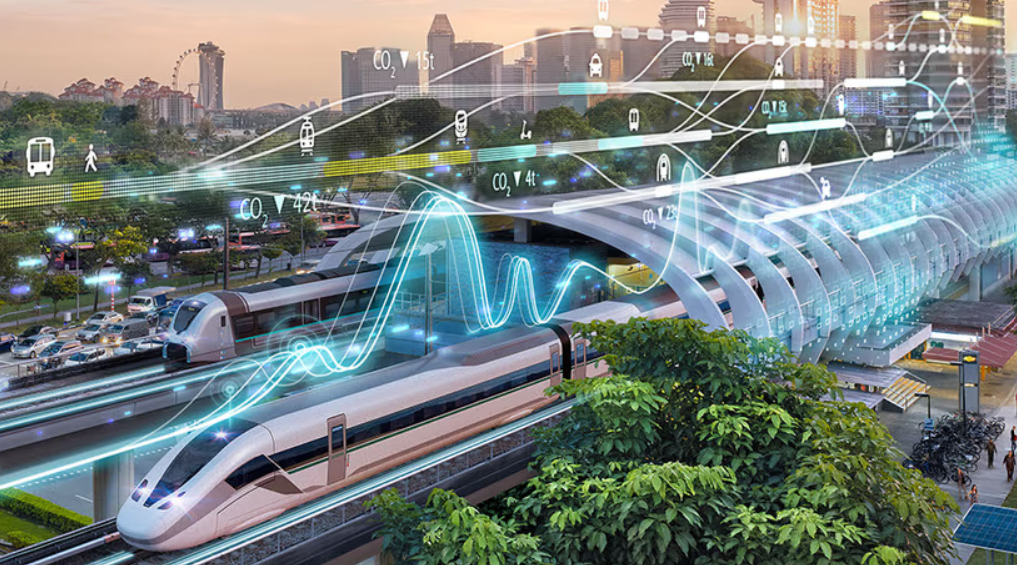
Unlike infrastructure-focused railway cybersecurity, this field concentrates on the digital environment installed on locomotives, passenger coaches, multiple units, high-speed trains, metros, trams and other railway vehicles. It covers both operational systems that can influence train behaviour and supporting systems that process passenger, maintenance or business information.
1. What Is Railway Rolling Stock Cybersecurity?
Railway rolling stock cybersecurity is the protection of electronic, software-based and networked systems installed on railway vehicles. It includes the identification and management of cyber risks affecting onboard equipment, internal communication networks, train-to-ground interfaces, maintenance systems and associated software throughout the vehicle lifecycle.
The objective is not simply to prevent malware or unauthorised access. A cybersecurity failure may affect the availability, integrity or confidentiality of information and systems. Depending on the equipment and its role, it may also create operational consequences that require assessment through the railway’s safety and risk-management processes.
Rolling stock cybersecurity therefore needs to address several connected objectives:
- Availability: keeping essential onboard systems operational and supporting controlled recovery when failures occur.
- Integrity: protecting software, configurations, commands and operational data against unauthorised modification.
- Confidentiality: protecting passenger information, operational data, credentials and commercially sensitive information.
- Authenticity: ensuring that devices, software updates, users and communication endpoints are genuine and authorised.
- Resilience: maintaining or safely restoring railway services when digital systems are compromised or unavailable.
2. The Digital Architecture of Modern Railway Vehicles
A modern railway vehicle is not a single computer system. It is a collection of interconnected subsystems with different operational functions, safety implications, communication requirements and lifecycle constraints.
The precise architecture varies between manufacturers, vehicle types and generations. Nevertheless, the following categories provide a useful starting point for cybersecurity assessment.
| Onboard system | Primary function | Cybersecurity considerations |
|---|---|---|
| TCMS | Monitoring and coordination of vehicle subsystems | Command integrity, network access, configuration protection |
| ETCS / ATP onboard | Train protection and supervision | Software integrity, authorised maintenance, interface protection |
| ATO | Automated train operation where implemented | Control interfaces, configuration and communication integrity |
| Train Communication Network (TCN) | Communication between onboard electronic equipment and train vehicles | Segmentation, device authentication and network monitoring |
| Traction and braking control | Control and supervision of propulsion and braking equipment | Integrity, availability and safety-related interface assessment |
| Passenger information systems | Passenger displays, announcements and journey information | Access control, content integrity and separation from operational systems |
| Onboard CCTV | Video surveillance and recording | Privacy, storage security and authorised access |
| Remote diagnostics | Vehicle condition monitoring and technical troubleshooting | Secure external connections, authentication and data integrity |
| Passenger connectivity | Wi-Fi and other passenger-facing digital services | Isolation from operational networks and abuse prevention |
These systems should not be treated as equally critical. A passenger information display and a train protection subsystem have different operational roles and risk profiles. Their cybersecurity requirements must reflect their functions, interfaces and potential consequences of compromise.
3. Train Control and Monitoring System (TCMS) Security
The Train Control and Monitoring System (TCMS) provides monitoring, control and coordination functions across multiple onboard subsystems. Depending on the vehicle design, it may exchange information with propulsion, braking, doors, HVAC, auxiliary power, diagnostics and driver interfaces.
TCMS architecture is therefore an important part of the onboard cybersecurity assessment. The system may collect data from different equipment, present status information to drivers or maintenance personnel, and communicate with other onboard controllers through dedicated networks.
3.1 Typical TCMS cybersecurity risks
- Unauthorised access to engineering or maintenance interfaces.
- Modification of configuration parameters or software files.
- Compromise of connected engineering laptops or maintenance workstations.
- Malicious or incorrectly validated software updates.
- Uncontrolled connections between TCMS and less trusted onboard networks.
- Insufficient logging of configuration changes and maintenance activity.
- Use of default, shared or inadequately protected credentials.
Not every TCMS installation has the same level of external connectivity or exposure. Some vehicle architectures use highly restricted communication paths, while others include more extensive diagnostic and fleet-management connections. Risk assessment must be based on the actual vehicle architecture rather than assumptions about all trains.
3.2 Protecting TCMS
Practical protection measures include controlled engineering access, role-based permissions, secure configuration management, integrity checks, network separation, protected maintenance interfaces and documented software-change procedures.
Where operationally appropriate, engineering activities should be performed through authorised workstations and approved maintenance processes. Changes to parameters or software should be recorded, reviewed and traceable to an approved work order or change request.
4. Train Communication Networks and IEC 61375
The Train Communication Network (TCN) provides communication between programmable electronic equipment installed on railway vehicles. It can also support communication between vehicles forming a train and, depending on the architecture, data exchange between the train and ground systems.
The IEC 61375 series addresses train communication network architecture and related technologies. The 2026 edition of IEC 61375-1 introduces changes to train backbone topologies, wireless train backbone and consist networks, virtual networks and communication requirements for additional onboard domains. Importantly, the 2026 edition also introduces a specific clause on cybersecurity in train communication networks.
This development makes IEC 61375-1:2026 particularly relevant when specifying, designing or assessing modern onboard network architectures. It does not mean that compliance with this standard alone establishes complete cybersecurity for an entire vehicle.
4.1 Train backbone and consist networks
A train communication architecture may include a train backbone connecting vehicle sections and consist networks connecting equipment within individual vehicles. Gateways and network nodes can provide communication between these segments.
From a cybersecurity perspective, the architecture should make clear:
- Which devices are connected to each network segment.
- Which systems are permitted to exchange data.
- Which gateways enforce communication boundaries.
- Which services and protocols are necessary for operation.
- How configuration and software changes are authorised.
- How wireless and external connections are protected.
4.2 Network segmentation onboard trains
Network segmentation reduces the possibility that a compromise in one onboard system will spread to unrelated systems. For example, passenger Wi-Fi, infotainment and administrative services should not have unrestricted connectivity to TCMS or other operational networks.
Segmentation should be based on security zones, communication requirements and risk assessment. VLANs can support separation, but VLAN configuration alone does not establish a complete security boundary. Firewalls, gateways, access policies, monitoring and secure configuration are also relevant.
For a broader explanation of railway network architecture and security zones, see Railway Cybersecurity Architecture: IT, OT and Network Segmentation.
5. Onboard ETCS, ATP and ATO Cybersecurity
Modern trains may carry onboard equipment for the European Train Control System (ETCS), other Automatic Train Protection (ATP) systems or Automatic Train Operation (ATO). These systems have different functions and architectures, but their cybersecurity must be considered as part of the overall vehicle and railway system risk assessment.
5.1 ETCS onboard equipment
ETCS onboard equipment receives and processes information from trackside and train-related interfaces to support train protection functions. Depending on the ETCS level and implementation, communication may involve Eurobalises, Radio Block Centres (RBCs), radio networks and other trackside equipment.
Rolling stock cybersecurity assessment should consider:
- Integrity and authenticity of onboard software and configuration data.
- Protection of maintenance and diagnostic interfaces.
- Secure handling of software updates and approved configuration changes.
- Protection of communication interfaces and associated equipment.
- Physical access to onboard cabinets, connectors and maintenance ports.
- Coordination between vehicle manufacturers, railway undertakings and infrastructure managers.
ETCS onboard cybersecurity cannot be assessed independently of its wider operational environment. Interfaces between onboard equipment, trackside systems, radio communication and maintenance processes must be understood.
5.2 ATP and other train protection systems
Railway vehicles may use national or supplier-specific train protection systems in addition to, or instead of, ETCS. Their age, architecture, software support and maintenance arrangements can differ considerably.
Older equipment may have limited security functionality, restricted logging or no straightforward method for applying modern authentication controls. In such cases, compensating measures may include physical access restrictions, controlled maintenance procedures, network isolation and additional monitoring.
5.3 ATO and automated train functions
ATO supports automated train operation at different grades of automation. Its relationship with train protection, signalling and vehicle control depends on the implementation.
Cybersecurity measures should protect operational commands, configuration data, communication interfaces and software updates. ATO should not be treated as a replacement for train protection functions; the roles of ATO and the applicable ATP or ETCS arrangements remain distinct.
6. Traction, Braking, Doors and Other Vehicle Subsystems
Digital control and monitoring are increasingly embedded in traction converters, braking systems, door controllers, auxiliary power equipment and other vehicle subsystems. These components may communicate with TCMS or other onboard networks.
The cybersecurity significance of each subsystem depends on its function, architecture and interfaces. A vulnerability in a connected component does not automatically mean that an attacker can control the train. The possible consequences must be established through system-specific analysis.
Risk assessment should consider:
- Unauthorised modification of software or configuration parameters.
- Compromise of supplier engineering tools.
- Uncontrolled data exchange between subsystems.
- Inadequate protection of maintenance connectors.
- Unsupported software and unpatched vulnerabilities.
- Loss of availability or integrity of monitoring information.
Cybersecurity controls must be introduced without undermining the functional safety, reliability or availability requirements of the vehicle. Testing and changes affecting safety-related equipment require appropriate engineering approval and controlled procedures.
7. Passenger Information, CCTV and Onboard Wi-Fi
Passenger-facing digital systems are an important part of the rolling stock attack surface. They may include passenger information displays, public address interfaces, onboard entertainment, CCTV, ticketing-related equipment and wireless internet access.
These systems are not necessarily safety-critical, but compromise can still cause operational disruption, reputational damage, privacy violations or unauthorised access to other onboard networks.
7.1 Passenger information systems
Passenger information systems display journey details, announcements, station information and other service messages. Cybersecurity measures should protect the integrity of displayed information and prevent unauthorised access to content management interfaces.
Where passenger information equipment communicates with central servers or external networks, the connection should be controlled and separated from operational vehicle networks.
7.2 CCTV and video systems
Onboard CCTV systems generate and store potentially sensitive video data. Security controls should cover device access, recording storage, data transfer, retention, maintenance and authorised retrieval.
Weak credentials, exposed management interfaces or insecure data transfer can create privacy and security risks. Video systems should not be given unnecessary access to operational control networks.
7.3 Passenger Wi-Fi
Passenger Wi-Fi is a particularly important segmentation consideration because it provides connectivity to devices that are outside the railway operator’s direct control.
Passenger internet access should be isolated from TCMS, train protection, maintenance and other operational networks. The design should also consider abuse prevention, traffic management, secure administration and the protection of passenger data.
8. Train-to-Ground Connectivity and Fleet Management
Connected trains exchange information with depots, fleet-management platforms, maintenance centres and operational systems. This connectivity supports predictive maintenance, remote diagnostics, performance monitoring, software management and operational planning.
However, every external connection creates an interface that needs to be identified, documented and controlled.
Typical train-to-ground data flows include:
- Vehicle health and condition-monitoring information.
- Fault codes and diagnostic records.
- Operational performance and energy-consumption data.
- Software and configuration management information.
- Maintenance requests and engineering reports.
- Remote diagnostic sessions and authorised technical access.
Security assessment should establish whether connections are one-way or bidirectional, which systems can initiate communication, how devices and users are authenticated, and whether data can be used to change onboard configurations.
Remote connectivity should not be assumed to be safe simply because it uses a VPN or a private mobile network. Strong authentication, least-privilege access, approved maintenance windows, session logging and controlled authorisation remain necessary.
For further detail on the governance of external maintenance connections, see Railway Remote Access Security.
9. Common Cybersecurity Threats to Rolling Stock
Rolling stock faces a combination of conventional IT threats, industrial control system risks and vehicle-specific attack paths. The likelihood and consequences of these threats depend on the vehicle’s age, architecture, connectivity and maintenance arrangements.
| Threat | Possible onboard exposure | Potential consequence |
|---|---|---|
| Malware and ransomware | Engineering laptops, maintenance systems and connected IT equipment | Loss of data availability, maintenance disruption or recovery costs |
| Unauthorised access | Diagnostic ports, engineering interfaces and remote connections | Unauthorised configuration changes or access to sensitive information |
| Software tampering | Firmware, application updates and configuration files | Loss of software integrity or unexpected system behaviour |
| Supply-chain compromise | Supplier software, hardware and third-party components | Introduction of vulnerabilities or malicious functionality |
| Network intrusion | Weakly separated onboard networks and gateways | Movement between connected systems |
| Credential compromise | Shared accounts, default passwords and stolen credentials | Unauthorised maintenance or administrative access |
| Physical access abuse | Unsecured cabinets, connectors and maintenance interfaces | Connection of unauthorised devices or manipulation of equipment |
| Wireless compromise | Wi-Fi, wireless diagnostics and other radio interfaces | Unauthorised connectivity or data interception, depending on design |
10. Software Updates, Firmware and Configuration Management
Railway vehicles have long operational lifecycles. Their onboard software and electronic components may remain in service for many years, sometimes across multiple refurbishment and upgrade programmes.
This creates a challenge: software vulnerabilities may be identified after a vehicle has entered service, while updates must be assessed against compatibility, safety, reliability and operational availability requirements.
10.1 Secure software updates
Software update processes should include:
- Verification of the origin and authenticity of update packages.
- Integrity checks before installation.
- Authorisation by designated engineering personnel.
- Compatibility assessment for the affected vehicle and subsystem.
- Testing under controlled conditions before fleet deployment.
- Version tracking and records of completed updates.
- Recovery or rollback arrangements where technically and operationally appropriate.
10.2 Configuration management
Configuration management should establish which software and hardware versions are installed on each vehicle, which parameters have been changed, who authorised the changes and whether the vehicle remains within its approved configuration baseline.
Without reliable configuration records, it becomes difficult to determine whether a vulnerability affects a particular fleet, whether a patch has been installed or whether an unexpected change has occurred.
10.3 Legacy equipment
Older vehicles may contain unsupported operating systems, obsolete hardware or components that cannot be upgraded without major redesign. A risk-based approach may therefore require compensating controls, such as stronger physical security, isolation, restricted maintenance access, monitoring and documented operational procedures.
Legacy status should not be treated as an automatic reason to replace an entire vehicle. The appropriate response depends on the risk, available mitigations, operational constraints and remaining asset life.
11. Maintenance, Depots and Engineering Workstations
Maintenance activities are among the most important cybersecurity considerations for rolling stock. Vehicles regularly connect to diagnostic equipment, engineering laptops, software loading tools and depot systems.
These activities may involve manufacturers, maintenance contractors, component suppliers and the railway undertaking’s own engineering teams. Each participant may have different responsibilities and levels of access.
Good practices include:
- Registering and approving diagnostic devices before use.
- Maintaining an inventory of engineering laptops and software tools.
- Restricting removable media and scanning authorised files before transfer.
- Using individual accounts rather than shared maintenance credentials.
- Recording maintenance sessions and configuration changes.
- Applying role-based access and time-limited permissions.
- Verifying software and firmware packages before installation.
- Removing temporary access after maintenance is completed.
- Ensuring that contractors follow approved cybersecurity procedures.
Maintenance workstations should be treated as important security assets. A compromised engineering laptop may provide access to several vehicles or subsystems if it is not properly controlled.
12. Physical Security of Onboard Digital Equipment
Cybersecurity is not limited to network connections. Physical access to onboard equipment can provide opportunities to connect unauthorised devices, remove storage media, access maintenance ports or interfere with electronic components.
Protection measures may include locked equipment cabinets, controlled depot access, tamper-evident arrangements where appropriate, secure storage of engineering tools and procedures for reporting suspicious physical activity.
Physical security requirements should be proportionate to the function and exposure of each component. A passenger-facing display controller and an onboard train protection unit may require different levels of protection.
13. Cybersecurity and Functional Safety: Two Related but Different Disciplines
Railway cybersecurity and functional safety are closely related, but they are not interchangeable. Functional safety addresses risks arising from malfunctioning systems, while cybersecurity addresses risks arising from malicious actions and other security threats.
A cyber incident may cause a system to behave unexpectedly or become unavailable. Such consequences may have safety implications, but the relationship must be analysed for the specific system and operational context.
Several principles are important:
- A Safety Integrity Level (SIL) is not the same as a Security Level (SL).
- A system’s safety approval does not automatically demonstrate adequate cybersecurity.
- Cybersecurity measures must not introduce unacceptable delays or interference into safety-related functions.
- Changes to safety-related software or equipment must follow the applicable engineering and assurance processes.
- Cybersecurity and safety teams should coordinate their risk assessments and lifecycle activities.
CLC/TS 50701:2023 provides railway-sector guidance for managing cybersecurity in the context of the RAMS lifecycle. It covers communications, signalling and processing, rolling stock and fixed installations. It does not replace functional safety standards or provide a standalone safety approval.
14. Rolling Stock Cybersecurity Standards and Guidance
Several standards and technical publications are relevant to onboard railway cybersecurity. Their applicability depends on the system, contractual requirements, national adoption and the vehicle’s lifecycle stage.
| Standard or guidance | Relevance to rolling stock cybersecurity |
|---|---|
| CLC/TS 50701:2023 | Railway-sector cybersecurity management across the RAMS lifecycle, including rolling stock. |
| IEC 61375 series | Train communication network architecture and related onboard communication technologies. IEC 61375-1:2026 includes a cybersecurity clause. |
| IEC 62443 series | Industrial automation and control system cybersecurity, including security programmes, risk assessment, system requirements and secure product development. |
| EN 50126 series | Railway RAMS lifecycle processes that provide an important coordination framework for safety and cybersecurity activities. |
| ISO/IEC 27001 | Information security management systems relevant to manufacturers, operators and maintenance organisations. |
| ISO/IEC 27002 | Information security controls that can support organisational and technical protection measures. |
| ISO 22301 | Business continuity management, including preparation for service disruption and recovery. |
| RSSB TN2312 | UK rail industry technical note on cybersecurity essentials for rolling stock design and related stakeholders. |
IEC 63452: As of November 2026, IEC 63452:2026 is in its pre-release/ballot stage rather than a final published edition. Its scope includes rolling stock, fixed installations, operational management systems, supply chain and railway lifecycle cybersecurity. It should therefore be described according to its current publication status, not treated as an established final requirement.
Standards should be checked against the applicable national catalogue and contract documentation before being used as mandatory acceptance criteria.
15. Cybersecurity Responsibilities Across the Rolling Stock Lifecycle
Rolling stock cybersecurity is a shared responsibility. Manufacturers, railway undertakings, vehicle owners, leasing companies, maintenance organisations and component suppliers all influence the security of the vehicle.
| Stakeholder | Key cybersecurity responsibilities |
|---|---|
| Vehicle manufacturer | Secure design, architecture documentation, software integrity, vulnerability management and product lifecycle support. |
| Railway undertaking | Operational risk management, onboard access control, fleet configuration and incident coordination. |
| Vehicle owner or lessor | Contractual security requirements, lifecycle oversight and coordination between operators and maintainers. |
| Entity in charge of maintenance (ECM) | Secure maintenance processes, engineering workstation control, software updates and maintenance records. |
| Component supplier | Secure development, vulnerability disclosure, software support and technical documentation. |
| Infrastructure manager | Coordination where onboard systems interface with trackside systems, communications and railway infrastructure. |
Contracts should define cybersecurity responsibilities clearly, including vulnerability notification, software support periods, access to technical documentation, update procedures, incident cooperation and end-of-support arrangements.
16. A Practical Cybersecurity Assessment for Existing Fleets
Railway undertakings and vehicle owners can use a structured assessment to understand the cybersecurity condition of their fleets. The process should be evidence-based and adapted to the vehicle type, supplier architecture and operational environment.
Step 1: Build an onboard asset inventory
Identify electronic control units, communication devices, onboard networks, operating systems, software versions, diagnostic interfaces and external connections. Record the function and owner of each asset.
Step 2: Map network architecture and data flows
Document train backbone networks, consist networks, gateways, wireless interfaces, passenger networks and train-to-ground connections. Identify which systems exchange information and why.
Step 3: Identify critical interfaces
Review connections to maintenance laptops, depot systems, fleet-management platforms, supplier services, trackside equipment and passenger-facing networks.
Step 4: Assess threats and vulnerabilities
Evaluate access weaknesses, unsupported software, insecure configurations, supply-chain risks, physical exposure and the consequences of losing system availability or integrity.
Step 5: Review maintenance and update processes
Examine engineering access, removable media, software loading, credential management, configuration records and supplier maintenance arrangements.
Step 6: Define and prioritise controls
Prioritise measures according to risk, operational criticality, feasibility and the expected lifecycle of the vehicle. Include compensating controls where legacy equipment cannot be upgraded.
Step 7: Test detection and recovery arrangements
Verify that relevant events can be identified, reported and investigated. Test backup, restoration and incident coordination arrangements through controlled exercises.
17. Cybersecurity Testing and Assurance for Railway Vehicles
Cybersecurity assurance should be integrated into vehicle procurement, design reviews, factory acceptance, integration testing, commissioning, maintenance and refurbishment.
Possible assurance activities include:
- Architecture and interface reviews.
- Configuration and hardening assessments.
- Software composition and dependency reviews.
- Vulnerability assessments of approved test environments.
- Verification of update authenticity and integrity.
- Access-control and authentication testing.
- Review of security logs and monitoring capabilities.
- Controlled penetration testing where authorised and technically safe.
Testing must be planned carefully. Uncontrolled penetration testing or vulnerability scanning on operational vehicles may interfere with equipment, affect availability or create unacceptable safety risks. Testing should use representative test environments wherever possible, with clear approval, scope, rollback and emergency procedures.
18. Emerging Trends in Rolling Stock Cybersecurity
18.1 Connected and software-defined trains
Increasing connectivity and software-based functionality are expanding the number of interfaces that must be secured. Vehicle architecture, software dependencies and configuration management are becoming more important throughout the asset lifecycle.
18.2 Predictive maintenance and onboard analytics
Condition monitoring and predictive maintenance can improve fleet availability, but they also increase the flow of data between trains, depots and cloud or central platforms. Data integrity, secure interfaces and access governance remain essential.
18.3 Wireless train communication
Wireless technologies can support new train communication architectures and operational flexibility. They also require appropriate authentication, encryption, network separation and resilience against interference or unauthorised access.
18.4 Embedded cybersecurity monitoring
Onboard monitoring solutions can help identify abnormal communication patterns and suspicious activity. However, their deployment must account for limited processing resources, network performance, equipment compatibility and the operational constraints of railway vehicles.
Europe’s Rail has described an onboard cybersecurity monitoring and threat-detection solution based on an embedded edge device. The published project information identifies it as a developing solution, with further validation and industrialisation activities still relevant to deployment. It should not be presented as a universally deployed railway product.
18.5 Artificial intelligence
Artificial intelligence may assist with anomaly detection, fleet-wide event correlation and predictive security analysis. Such tools should support qualified personnel rather than autonomously changing safety-related vehicle configurations or control behaviour.
19. Practical Recommendations for Railway Operators and Manufacturers
A proportionate rolling stock cybersecurity programme should include the following priorities:
- Maintain an accurate inventory of onboard hardware, software and communication interfaces.
- Document train communication networks and enforce appropriate segmentation.
- Separate passenger-facing services from operational vehicle systems.
- Protect TCMS, train protection and engineering interfaces according to their risk and function.
- Use controlled, authenticated and traceable software update procedures.
- Secure diagnostic laptops, removable media and depot maintenance equipment.
- Control supplier and third-party access throughout the vehicle lifecycle.
- Establish vulnerability reporting and coordinated remediation procedures.
- Monitor relevant onboard and train-to-ground communications.
- Test incident response and recovery arrangements with manufacturers and maintenance partners.
20. Frequently Asked Questions
What is rolling stock cybersecurity?
Rolling stock cybersecurity is the protection of digital systems installed on railway vehicles, including TCMS, train communication networks, onboard signalling, diagnostics, passenger systems and external connectivity.
Why is TCMS important for railway cybersecurity?
TCMS exchanges information with multiple onboard subsystems. Its interfaces, configuration and maintenance access therefore need to be assessed as part of the vehicle’s overall cybersecurity architecture.
Does IEC 61375 address cybersecurity?
Yes. IEC 61375-1:2026 includes a specific clause on cybersecurity in train communication networks, alongside updates to the train communication network architecture.
Is passenger Wi-Fi a risk to train control systems?
Passenger Wi-Fi creates an additional network exposure. Proper network separation and controlled gateways are important to prevent passenger-facing services from obtaining unnecessary access to operational vehicle networks.
Can older trains be protected against cyber threats?
Yes. Even when legacy equipment cannot support modern security features, risk can be reduced through network isolation, restricted physical access, controlled maintenance, monitoring and other compensating measures.
Is a VPN sufficient to secure remote access to a train?
No. A VPN may protect a communication channel, but secure remote access also requires strong authentication, least-privilege permissions, authorisation, session monitoring and controlled maintenance procedures.
Does a railway vehicle’s safety certification prove its cybersecurity?
No. Functional safety and cybersecurity address different risk categories. Safety approval does not automatically demonstrate that cyber threats have been adequately assessed and controlled.
Who is responsible for rolling stock cybersecurity?
Responsibility is shared between manufacturers, railway undertakings, vehicle owners, maintenance organisations and component suppliers. Contracts and governance arrangements should define their respective responsibilities.
Conclusion
Railway rolling stock is becoming a connected digital platform, combining train control, monitoring, communication, passenger services and maintenance technologies. Protecting these systems requires more than securing individual devices. It requires a lifecycle approach that covers onboard network architecture, software integrity, supplier relationships, depot maintenance, external connectivity and operational resilience.
For railway operators and manufacturers, the priority is to understand the vehicle’s digital architecture, identify critical interfaces and apply security measures that are proportionate to operational risk. As train communication networks and onboard software continue to evolve, cybersecurity must become an integral part of vehicle procurement, engineering, maintenance and fleet management.
References and Further Reading
- IEC 61375-1:2026 – Electronic Railway Equipment: Train Communication Network, General Architecture.
- UK Department for Transport – Rail Rolling Stock Procurement: Cyber-Security (2026).
- RSSB – TN2312: Rolling Stock – Cyber Security Essentials (2023).
- BSI – CLC/TS 50701:2023: Railway Applications – Cybersecurity.
- ENISA – Railway Cybersecurity (2020).
- ENISA – Railway Cybersecurity: Good Practices in Cyber Risk Management (2021).
- Europe’s Rail – On-Board Cybersecurity Monitoring and Threat Detection for Rolling Stock (2026).
- IEC 63452:2026 – Railway Applications: Cybersecurity (pre-release version).
Related RailwayNews Wiki articles: