
Europe Mandates: Fire-Safe Trains Must Keep Running
Explore EN 50553: the critical standard ensuring trains maintain running capability during onboard fires, preventing dangerous stops and guiding passengers to safety.
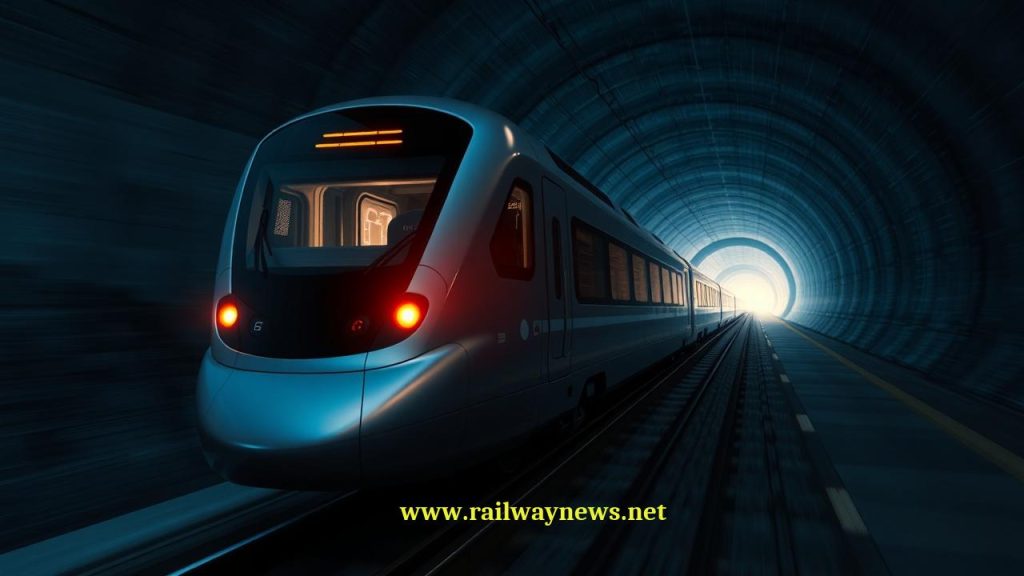
Understanding EN 50553: Ensuring Running Capability in Case of Fire
EN 50553 is a critical European standard for the railway industry, titled “Railway applications – Requirements for running capability in case of fire on board of rolling stock.” Its primary objective is to enhance passenger and crew safety by ensuring that a train can continue to operate for a specific duration and distance even when a fire is detected on board.
The core principle of this standard is to prevent a train from stopping in a high-risk location, such as a tunnel or on a viaduct, where evacuation would be extremely difficult and dangerous. Instead, the standard mandates that essential systems remain functional, allowing the vehicle to proceed to a designated place of safety where emergency services can intervene and passengers can be evacuated safely.
The Core Principle: Avoiding High-Risk Stops
A fire on a train presents a dual threat: the fire itself and the potential for a hazardous stop. Stopping a train inside a long tunnel, for example, creates a confined space where smoke and heat can accumulate rapidly, severely hampering evacuation efforts and rescue operations. EN 50553 directly addresses this risk by shifting the safety paradigm from an immediate stop to a controlled continuation of the journey.
This capability is not just a recommendation but a foundational requirement for modern rolling stock, especially for vehicles intended to operate on lines with significant tunnel sections or other areas with restricted access. The standard defines the technical requirements for systems to withstand fire conditions and continue performing their essential functions.
Key Technical Requirements of EN 50553
To achieve the required running capability, EN 50553 outlines stringent requirements for the survivability and performance of critical train systems during a fire event. These requirements are designed to ensure that the driver maintains control and the train remains mobile.
System Survivability
The standard demands that key systems are designed and protected to resist the effects of fire for a specified period. This often involves fire-resistant cabling, strategic placement of components away from high-risk areas, and protective enclosures. The essential systems include:
- Traction System: At least a portion of the traction equipment must remain operational to provide the necessary motive power to keep the train moving, often at a specified minimum speed.
- Braking System: The brakes must remain functional to ensure the train can be safely controlled and stopped at the designated safe location. The standard specifies that no single fire event should lead to an uncontrolled application of the brakes that would stop the train prematurely.
- Auxiliary Systems: Critical auxiliary systems must continue to operate. This includes emergency lighting for visibility, communication systems (public address and driver-to-control communication), and specific ventilation modes to manage smoke.
- Control and Communication (Train Control and Management System – TCMS): The driver’s controls and the onboard communication networks must be robust enough to function, allowing the driver to monitor the train’s status and operate it effectively.
Operational Categories and Performance Criteria
EN 50553 doesn’t apply a one-size-fits-all approach. Instead, it aligns with operational categories, often defined by the Technical Specifications for Interoperability (TSI), particularly the ‘Safety in Railway Tunnels’ (SRT) part. These categories dictate the required duration and speed for which the train must maintain its running capability.
The performance is typically defined as a combination of time and speed, for example, being able to run for 15 minutes at a minimum average speed of 80 km/h after a fire is detected. This ensures the train can clear most long tunnels in the European network.
Comparison of Running Capability Categories
The requirements for rolling stock vary based on the infrastructure it is designed to operate on. The following table illustrates a simplified comparison of categories commonly referenced in conjunction with EN 50553 principles, as stipulated by the TSI SRT.
| Category | Typical Operating Environment | Required Running Capability (Example) | Key System Requirements |
|---|---|---|---|
| Category A (TSI) | Urban/suburban networks with short distances between stations and escape routes (e.g., metro systems). | 4 minutes at an average speed defined by the network (e.g., 60 km/h). | Essential systems (traction, braking, control) must survive for the specified duration. Focus is on reaching the next station. |
| Category B (TSI) | Mainline networks with tunnels and/or elevated sections up to 20 km in length. This is the most common category for high-speed and intercity trains. | 15 minutes at a minimum average speed of 80 km/h. | High level of system redundancy and fire protection for cabling and critical components. Ensures capability to clear very long tunnels. |
| No Specific Requirement | Lines without any tunnels or elevated sections where a train can be stopped and evacuated safely almost anywhere. | Not applicable. The train is designed to stop immediately upon a confirmed fire alarm. | Standard fire safety measures apply, but extended running capability is not required. |
Relationship with Other Standards: EN 45545
EN 50553 works in tandem with another cornerstone of railway fire safety: EN 45545 – “Railway applications – Fire protection on railway vehicles.” While EN 50553 ensures the train can *move* during a fire, EN 45545 ensures that the materials used in the train’s construction have low flammability, slow flame spread, and low smoke and toxicity emissions.
Together, they form a detailed safety strategy:
- EN 45545 (Passive Safety): Aims to prevent a fire from starting and to limit its growth and effects if it does. It “buys time” by containing the fire.
- EN 50553 (Active Safety): Uses that “bought time” to move the train and its occupants out of a hazardous location to a place of safety.
A train cannot be compliant with modern fire safety regulations without addressing both the material properties (EN 45545) and the system functionality under fire conditions (EN 50553).
Conclusion
EN 50553 represents a fundamental shift in railway fire safety philosophy. By prioritizing the continued operation of the train to reach a safe evacuation point, it significantly mitigates the risks associated with fires in tunnels and other confined spaces. Its detailed technical requirements for the survivability of traction, braking, and control systems ensure that this running capability is not just a concept but a reliable, engineered safety function. For designers, manufacturers, and operators of modern rolling stock, compliance with EN 50553 is essential for ensuring the highest levels of passenger safety in the event of a fire on board.

Railway infrastructure, rolling stock and transport technologies specialist focused on global rail industry developments, high-speed rail systems, signaling technologies and freight transportation. Covering railway investments, public transport modernization, rail operations and international mobility projects across Europe, Asia and North America.