
Why EN 50367 Powers Europe’s Seamless Rail Network
Discover EN 50367: the vital standard ensuring seamless, safe, and reliable electric train operation by standardizing pantograph-overhead line interaction across Europe.
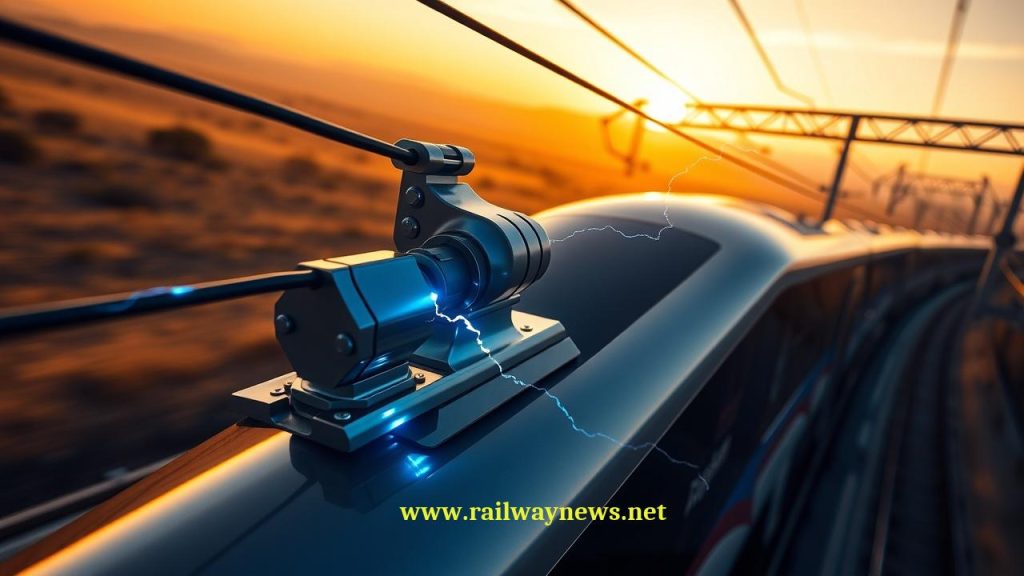
Understanding EN 50367: Technical Criteria for Pantograph-Overhead Line Interaction
EN 50367 is a crucial European standard within the railway sector that defines the technical criteria for the interaction between a pantograph and the overhead contact line. Its primary objective is to ensure interoperability and “free access” for trains across different national railway networks by standardizing the dynamic performance of current collection systems.
This standard is fundamental for the safe, reliable, and efficient operation of electric trains, particularly on high-speed and conventional trans-European lines. It provides a common framework for manufacturers, infrastructure managers, and railway undertakings to design, assess, and validate their systems, guaranteeing that a compliant pantograph can operate on any compliant overhead line without compromising performance or safety.
The Core Principle: Managing Dynamic Interaction
The heart of EN 50367 lies in managing the complex dynamic relationship between the moving pantograph and the stationary (but flexible) overhead line (OHL). This interaction is not static; it is a high-frequency event influenced by train speed, OHL tension and stiffness, pantograph design, and aerodynamic forces. The standard sets performance limits on key parameters to ensure continuous power supply while minimizing mechanical wear and electrical arcing.
- Continuous Contact: The primary goal is to maintain an unbroken electrical connection. Any loss of contact, even for milliseconds, can result in arcing, which causes power disruption, significant wear on the contact wire and collector strips, and electromagnetic interference.
- Controlled Force: The force exerted by the pantograph on the contact wire must be within a specific range. Too little force leads to contact loss (bouncing), while excessive force causes premature wear of the contact wire and pantograph components, and can lead to excessive uplift.
- System Compatibility: By defining the characteristics of both the pantograph and the OHL, the standard ensures that their combined performance meets the required quality criteria, regardless of their individual manufacturers.
Key Technical Criteria Specified in EN 50367
EN 50367 is highly technical and details specific parameters and their acceptable values. These criteria are grouped around the pantograph, the overhead line, and the resulting interaction performance.
Pantograph Characteristics
The standard specifies requirements for the pantograph to ensure its dynamic behavior is predictable and compatible. Key parameters include:
- Static Contact Force: The vertical force exerted by the pantograph on the OHL when the vehicle is stationary. This is the baseline force and must be set within a defined range to ensure proper contact at low speeds.
- Aerodynamic Behavior: As train speed increases, aerodynamic forces can either increase or decrease the contact force. The standard requires the characterization of this behavior to ensure the pantograph maintains the correct contact force across its entire operating speed range.
- Dynamic Mass and Response: The effective mass and dynamic performance of the pantograph head are specified to ensure it can follow the vertical variations of the contact wire without inducing excessive oscillations or losing contact.
Overhead Line (OHL) Characteristics
The standard defines the expected dynamic performance of the OHL to ensure a pantograph can interact with it successfully. This is not about the OHL’s civil design but its dynamic response.
- Uplift: The vertical displacement of the contact wire at a support (mast) when the pantograph passes. EN 50367 sets limits on this uplift to prevent mechanical damage and ensure proper clearance from infrastructure.
- Contact Wire Geometry: While detailed in other standards, EN 50367 relies on defined values for contact wire height and stagger (the horizontal side-to-side variation of the wire) to assess the interaction.
- Wave Propagation Speed: The speed at which a disturbance travels along the contact wire. This is a critical factor in the OHL’s dynamic response, especially at high train speeds.
Interaction Performance Metrics
This is the ultimate measure of system compatibility. The standard defines how the quality of the current collection should be measured and what values are acceptable. These measurements are typically performed during on-track dynamic testing.
- Mean Contact Force (Fm): The average contact force measured over a specific distance or time. It is a primary indicator of overall current collection quality.
- Standard Deviation of Contact Force: This value indicates the variability of the contact force. A low standard deviation means a stable, smooth interaction, while a high value suggests bouncing or force peaks, leading to wear and arcing.
- Maximum and Minimum Contact Force: The standard sets absolute limits to prevent extreme events that could damage the system.
- Percentage of Arcing: The percentage of time or distance during which electrical arcing occurs. The standard sets a very low threshold (e.g., < 0.1% or 0.2%) to ensure high-quality power transfer and minimize wear.
Comparison of Key Interaction Parameters
The following table summarizes the most critical parameters defined in EN 50367 and their importance for achieving interoperability.
| Parameter | Description | Importance for Interoperability |
|---|---|---|
| Mean Contact Force (Fm) | The average vertical force exerted by the pantograph on the contact wire during a measurement run at a specific speed. | Ensures a consistent and sufficient force for stable current transfer across different OHL designs, minimizing both arcing (if too low) and mechanical wear (if too high). |
| Standard Deviation of Contact Force | A statistical measure of the fluctuation of the contact force around the mean value. | A low value indicates a high-quality, stable interaction. It is a key performance indicator to prevent micro-interruptions and excessive dynamic stress. |
| Contact Wire Uplift (at support) | The maximum vertical displacement of the contact wire at a support structure as the pantograph passes underneath. | Limits mechanical stress on the OHL components (e.g., droppers, registration arms) and guarantees safe clearance from fixed structures like tunnels and bridges. |
| Percentage of Arcing | The proportion of time that electrical arcing is detected between the collector strip and the contact wire. | Directly measures the quality of electrical contact. Keeping this value extremely low is critical for preventing wear, power loss, and electromagnetic interference. |
The Role of Amendments (EN 50367/AC & EN 50367/A1)
Standards evolve to reflect technological advancements, address ambiguities, and incorporate feedback from the industry. The amendments to EN 50367 are important for this reason:
- EN 50367/AC (Corrigendum): This type of update is issued to correct errors, typos, or ambiguities in the original publication. It does not introduce new technical requirements but clarifies the existing ones to ensure consistent interpretation.
- EN 50367/A1 (Amendment): This is a more substantial update that introduces technical changes. An amendment might refine acceptance criteria, introduce new measurement methods, or update parameters based on new research and operational experience, such as addressing the specific challenges of multi-system operation or higher speeds.
Conclusion: A Foundation for a Unified European Railway
EN 50367 is more than just a technical document; it is an enabler of the modern, interoperable European railway network. By providing a clear, evidence-based set of rules for the dynamic interaction between pantographs and overhead lines, it allows for seamless cross-border operation of electric trains. It promotes competition, reduces technical barriers, and ultimately ensures that the current collection system—a vital component of electric traction—is safe, reliable, and efficient across the continent.

Railway infrastructure, rolling stock and transport technologies specialist focused on global rail industry developments, high-speed rail systems, signaling technologies and freight transportation. Covering railway investments, public transport modernization, rail operations and international mobility projects across Europe, Asia and North America.