
TRU Report: £706.5M Boosts North Economy, Sets Sustainability Bar
Transpennine Route Upgrade’s report reveals £706.5M local investment, electrifying lines and boosting communities, setting a new sustainability standard.
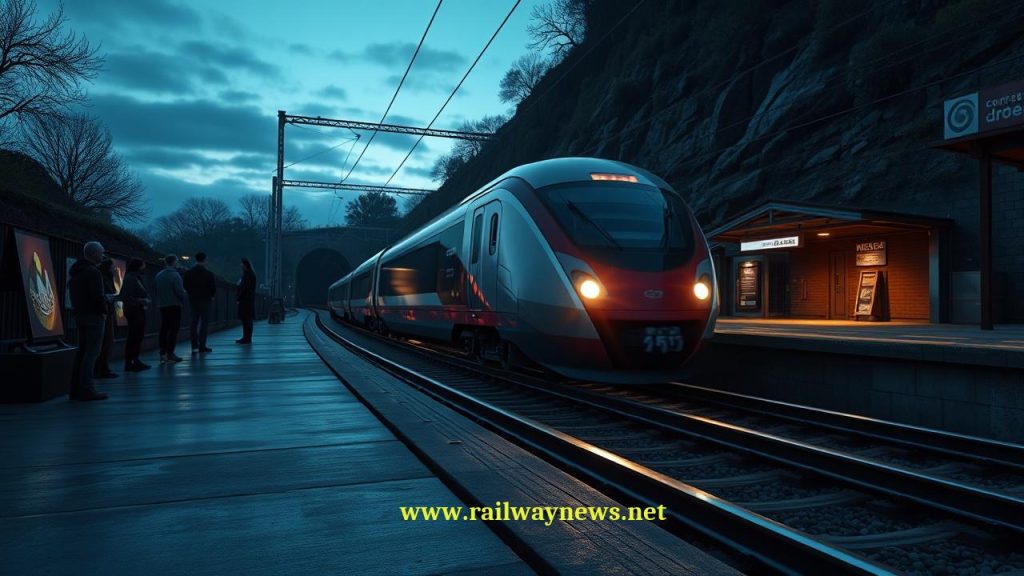
The Transpennine Route Upgrade (TRU) has released its 2024/2025 Sustainable Development Annual Report, detailing significant progress in its mission to create a lasting socio-economic and environmental legacy across the North of England. The report highlights a massive £706.5 million injection into the local economy through targeted spending, alongside key environmental milestones including line electrification and the introduction of innovative composite sleepers.
| Category | Details |
|---|---|
| Project | Transpennine Route Upgrade (TRU) |
| Report Period | 1 April 2024 – 31 March 2025 |
| Total Local Investment | £706.5 million |
| SME Spending | £323.4 million |
| Key Technical Initiative | Introduction of Sustainable Composite Sleepers |
| Youth Engagement | 14,550 young people reached across 187 events |
The detailed report, guided by TRU’s “Our Guiding Compass” sustainability strategy, outlines achievements across four core pillars: Northern Jobs, Enhanced Environment, Satisfied Customers, and Working with Communities. Alex Peters, Acting Head of Sustainability for TRU, emphasized the programme’s holistic impact, stating, “This report demonstrates that TRU is doing far more than improving railway infrastructure – it’s making a real, positive difference in communities along our route and leaving a sustainable legacy.” The release chronicles a landmark year, celebrating the launch of the TRU Community Fund, continued line electrification, and tangible progress in delivering Biodiversity Net Gain.
On the environmental front, the programme has pushed beyond foundational engineering. The introduction of its first sustainable composite sleepers marks a significant step in material innovation, while ongoing electrification is central to the route’s decarbonisation. This multi-faceted approach, which includes a detailed assessment of climate-related risks and opportunities, reflects a broader trend across the global transport sector. Major infrastructure projects are increasingly adopting certified decarbonisation frameworks, similar to the Airport Carbon Accreditation schemes in aviation, to validate their environmental commitments. The focus is expanding beyond the primary infrastructure to include the electrification of all associated ground and service equipment, a critical step for achieving holistic carbon neutrality.
The report underscores TRU’s role as a powerful engine for regional regeneration. A core priority has been investment in the local supply chain, with 69% of non-core spend—amounting to £706.5m in total local spending—awarded to suppliers located within 25 miles of the 70-mile route. Small and medium-sized enterprises (SMEs) were major beneficiaries, receiving £323.4m. The investment in human capital is equally robust, with the second cohort of PlanBEE Rail apprenticeships launched in collaboration with 12 industry partners. Additionally, the establishment of the TRU Community Fund provides a mechanism for direct grassroots support, a model gaining traction across large projects to ensure tangible benefits reach local charities and initiatives.
Key Takeaways
- Hyper-Local Economic Boost: TRU has injected over £706.5 million into the regional economy, with a significant £323.4 million directed towards SMEs, reinforcing its commitment to local job growth and supply chain resilience.
- Tangible Environmental Progress: The project is advancing its green agenda with key milestones in line electrification, the deployment of sustainable materials like composite sleepers, and on-the-ground biodiversity enhancements.
- Deep Community Integration: Beyond the tracks, TRU has engaged over 14,500 young people in STEM and careers events and launched community-led initiatives like public art installations to transform stations into vibrant local hubs.
Editor’s Analysis
The Transpennine Route Upgrade’s latest report is more than a project update; it’s a blueprint for the future of state-funded infrastructure. By embedding sustainability and socio-economic development into its core delivery model, TRU demonstrates a crucial evolution from a pure engineering project to a holistic regional regeneration programme. The emphasis on local supply chains, apprenticeship schemes, and direct community funding sets a new benchmark for how major rail investments can deliver quantifiable value far beyond improved journey times. For the global rail market, this approach provides a compelling case study on how to secure public buy-in and create a lasting, positive legacy that is both environmentally responsible and economically inclusive.
Frequently Asked Questions
What is the Transpennine Route Upgrade (TRU)?
The TRU is a major railway infrastructure programme in the North of England, upgrading the 70-mile line between Manchester, Leeds, and York. It aims to improve connectivity, reliability, and capacity while delivering significant economic, social, and environmental benefits to the region.
What are the main achievements in the 2024/2025 TRU sustainability report?
Key achievements include investing £706.5m in the local economy, launching the second cohort of PlanBEE Rail apprentices, engaging 14,550 young people, introducing sustainable composite sleepers, and establishing the TRU Community Fund to support local initiatives.
How is TRU supporting the local economy and communities?
TRU supports the local economy by prioritising local suppliers, with 69% of non-core spending going to businesses within 25 miles of the route. It supports communities through job and training creation, extensive school outreach programmes, public art projects, and direct funding for grassroots organisations via its Community Fund.

Transport and railway industry editor covering global rail infrastructure, sustainable mobility, urban transit systems and next-generation railway technologies with a focus on accessible and industry-focused reporting.
RELATED POSTS
October 1, 2026 10:14 am
HS2 installed a 55-metre steel span in Birmingham, completing phase...
October 1, 2026 8:12 am
Knorr-Bremse expanded its UK rail adhesion trial on Chiltern Railways...
October 9, 2026 10:15 am
Costain secured a £700 million contract from Transport for London...
October 7, 2026 8:12 pm
$65.33 billion marks the global digital rail market size by...
October 9, 2026 11:16 am
RSSB approved new rail standards for UK station design, freight,...
October 5, 2026 2:13 am
Britain confirmed a £1.75 billion rail link in Birmingham to...