
GoUpSafely: Railway Safety Innovation for Australia, EU & Beyond
New railway safety system GoUpSafely prevents electrical contact, detecting and stopping machines near power lines. It’s designed for Australian and global rail and construction sites.
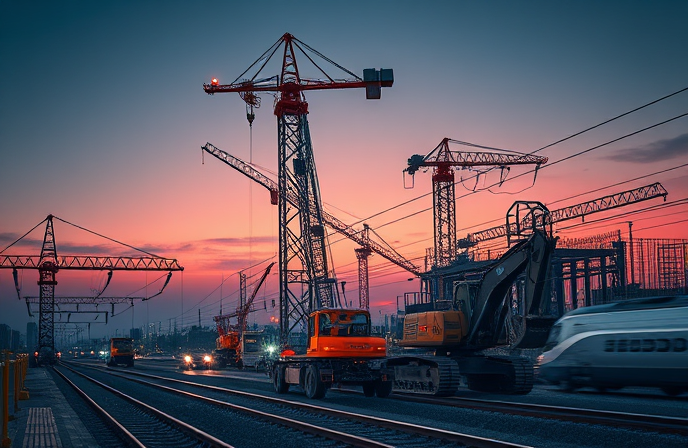
Revolutionizing Railway Safety: Preventing Electrical Contact with GoUpSafely
Every year, thousands of workers are tragically killed in electrical accidents worldwide, with a significant portion attributed to contact with overhead power lines. In Australia alone, power line incidents occur daily, highlighting the persistent danger on construction and industrial sites. Karl Rosewarne, a seasoned electrical engineer, witnessed firsthand the devastating impact of these accidents, inspiring him to develop a groundbreaking safety solution. This article explores the development and functionality of GoUpSafely, a revolutionary system designed to mitigate the risk of electrical contact by actively preventing machines from interacting with high-voltage power lines. We will delve into the technology behind GoUpSafely, its implementation, and its potential to significantly improve safety across the railway and construction industries.
Protecting the Workforce: The Genesis of GoUpSafely
Karl Rosewarne, drawing upon his extensive experience and background in electrical engineering, recognized the urgent need for a proactive safety system to prevent the devastating consequences of electrical accidents. Witnessing the aftermath of preventable incidents fueled his determination to find a solution. The challenge, as Rosewarne saw it, was removing the hazard associated with human interaction near power lines. His unique upbringing on a remote sheep station instilled in him a problem-solving approach that focused on innovation. This resulted in a five-year process of research and development, culminating in the creation of GoUpSafely, a system capable of detecting, warning, and preventing contact with high-voltage power lines.
How It Works: Advanced Detection and Intervention
GoUpSafely works by employing advanced sensor technology to identify and assess the risk of contact with live power lines. The system uses frequency sensors, a crucial element of the technology, to differentiate between harmless static electricity and dangerous, live power lines. These sensors can identify the specific 50 or 60 Hertz frequencies emitted by AC power lines, triggering a warning sequence. The system provides multiple levels of alert, beginning with an amber warning, followed by an increasingly urgent tone, before ultimately halting the machine’s movement, preventing physical contact. The system’s ability to integrate with a machine’s control system, physically stopping the machine, sets it apart from other warning systems on the market. This control integration provides an unprecedented level of protection.
Expanding Capabilities: Addressing DC Power and Rail Industry Applications
GoUpSafely currently offers detection capabilities for high-voltage alternating current (AC) power, and significant effort is going into expanding its utility for the rail industry. Rosewarne’s company, Protective Engineered Safety, is actively working on incorporating the detection of Direct Current (DC) electricity, which is prevalent in many railway systems, including tram networks and smaller, private lines. This expansion of functionality is particularly important because there are few alternatives to human spotters, and they are often susceptible to errors, especially because it can be difficult to see an electric field. Live testing of the DC detection system is scheduled in Melbourne, Australia, with anticipated market release by July 2025. This makes GoUpSafely the first and only product of its kind.
Customization and Regulatory Landscape
GoUpSafely offers operators flexibility. The system includes a smartphone app that allows users to adjust the sensitivity settings for AC detection, crucial in areas with varying voltage levels. Operators also have the option to choose between alert-only systems or control integration, as well as customizable alert mechanisms (e.g., control panels, sirens). The system is designed to be adaptable and easily fitted to a wide range of machinery, including cranes, excavators, and fire trucks. GoUpSafely has patent protection in 57 countries. Additionally, it is important to note that the European Union is mandating power line detection technology in all construction environments, effective January 2027. The industry is evolving, which can be seen with systems like GoUpSafely, making its introduction even more impactful.
Conclusion
GoUpSafely represents a significant advancement in worker safety, offering a proactive approach to preventing electrical contact incidents. By combining advanced detection technology with physical intervention capabilities, the system significantly reduces the risk of fatalities and equipment damage, which often plague the construction and rail industries. The system’s ability to detect both AC and DC power, alongside its flexibility in adapting to varying voltages and equipment types, makes it a versatile and valuable tool for any organization prioritizing safety. The upcoming EU mandate, and the evolution of safety standards worldwide, underlines the growing importance of such technologies. As the rail and construction industries increasingly prioritize worker safety and compliance, systems like GoUpSafely are poised to become a standard for all work sites, saving lives and promoting a safer work environment for operators across the globe.

Railway infrastructure, rolling stock and transport technologies specialist focused on global rail industry developments, high-speed rail systems, signaling technologies and freight transportation. Covering railway investments, public transport modernization, rail operations and international mobility projects across Europe, Asia and North America.
RELATED POSTS

October 1, 2026 7:09 am
United States regulators confirmed a September 30 deadline for the...

October 8, 2026 1:15 pm
Alstom secured a €1bn contract to build 13 automated trains,...

October 4, 2026 5:14 pm
Alstom secured a CA$4.7 billion order from VIA Rail Canada...

October 1, 2026 12:13 am
Illinois approved $1.5 billion annually for the Northern Illinois Transit...
October 6, 2026 2:14 am
Union Pacific launched export rail shipments with Ferromex to deliver...

October 1, 2026 6:10 am
Amtrak approved a System Expansion Committee on July 30 to...