
FRA Penalties: US Railroads Pay $15.4M for Safety Lapses
FRA slaps $15.4M in civil penalties on major railroads, accelerating safety compliance. This initiative aims to improve risk mitigation and prevent future incidents.
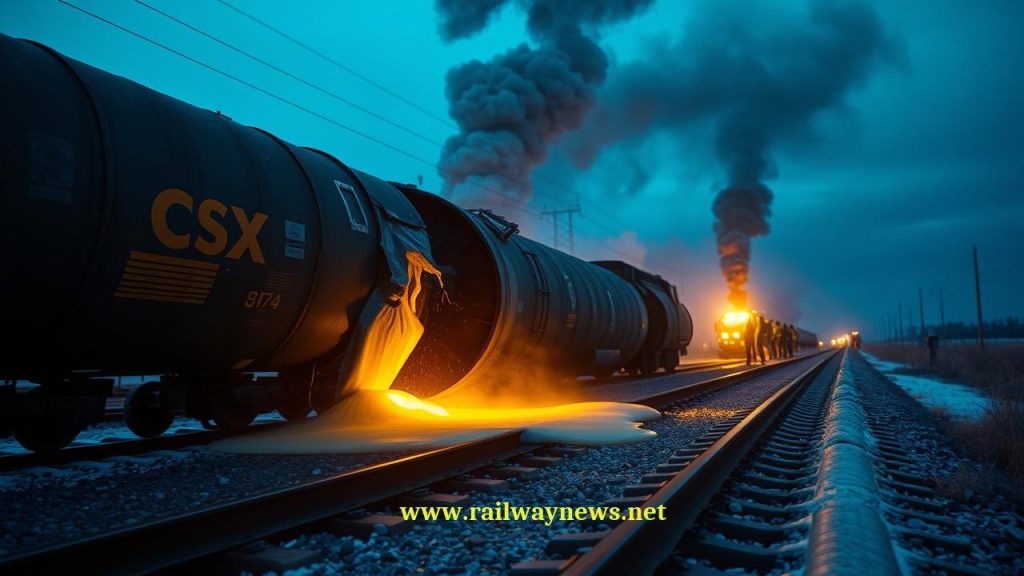
The U.S. Federal Railroad Administration (FRA) has collected $15.4 million in civil penalties from North America’s largest freight railroads under a new, streamlined settlement process aimed at accelerating safety compliance. The initiative comes as the industry faces heightened scrutiny over operational safety, underscored by recent incidents such as a CSX chemical train derailment in Kentucky.
| Category | Details |
|---|---|
| Initiative | FRA Streamlined Civil Penalty Process |
| Total Penalties Collected | $15.4 Million |
| Affected Parties | Class I Railroads (BNSF, CN, CPKC, CSX, NS, UP) & Amtrak |
| Objective | Expedite correction of safety violations and improve risk mitigation |
| Contextual Incident | Recent CSX derailment in Kentucky involving molten sulfur leak |
Main Body:
The Federal Railroad Administration announced today that its newly implemented settlement negotiation framework has successfully secured $15.4 million from all Class I railroads and Amtrak for safety violations. According to an official press release, the streamlined process targets noncompliance issues identified by FRA inspectors, such as defective wheels, and is designed to drive timely corrections and stronger risk mitigation practices. Participating railroads, including BNSF Railway, CN, CPKC, CSX, Norfolk Southern, and Union Pacific, can receive reductions on penalties by promptly making repairs and holding collaborative discussions with mechanical craft employees to prevent recurrence. “Our new civil penalty process is already delivering results — forcing Class I railroads to step up, improve safety and address immediately noncompliance,” said FRA Administrator David Fink.
The urgency of this initiative is highlighted by recent operational failures across the network. A CSX train derailment in rural Kentucky, for example, involved 31 rail cars and resulted in a significant leak of molten sulfur, sparking a fire that prompted a temporary shelter-in-place order for local residents. While no injuries were reported, the incident serves as a stark reminder of the potential consequences of mechanical failures and the critical importance of the robust inspection and repair regimen the FRA’s new process aims to enforce. By linking financial penalties directly to the speed and efficacy of safety responses, the agency is creating a powerful incentive for carriers to address defects before they escalate into major incidents.
This regulatory pressure is being applied in an environment of high operational intensity. In key rail corridors like Chesterton, Indiana, an average of 85 trains pass through daily, underscoring the limited margin for error across the national network. High traffic density amplifies the risk associated with any single point of failure, making proactive maintenance and swift correction of identified safety defects paramount. The FRA’s streamlined process acknowledges this reality, shifting the focus from prolonged litigation over penalties to immediate, collaborative action on the ground to ensure the integrity of equipment and infrastructure.
Key Takeaways
- Financial Accountability: The FRA’s new process has secured $15.4 million, directly linking safety lapses to significant financial penalties for all Class I railroads.
- Proactive Safety Culture: The framework encourages not just immediate repairs but also collaboration with mechanical staff to prevent future issues, aiming for systemic improvements.
- Increased Urgency: The streamlined approach is designed to cut through bureaucratic delays, forcing railroads to address safety noncompliance immediately in a high-pressure operational environment.
Editor’s Analysis
This move by the FRA represents a significant strategic shift from a purely punitive regulatory stance to a more dynamic, corrective model. By creating a fast track for resolving civil penalties, the agency is prioritizing on-the-ground safety improvements over lengthy enforcement battles. For the global rail market, this signals that U.S. regulators are demanding greater agility and accountability from rail operators, particularly as public and political scrutiny of derailments and service disruptions intensifies. This “act now, discuss later” approach could become a new benchmark for rail safety oversight, forcing carriers to invest more heavily in predictive maintenance and rapid-response repair teams to avoid immediate financial consequences.
Frequently Asked Questions
What is the FRA’s new streamlined settlement process?
It is a new framework designed to expedite the collection of civil penalties for rail safety violations. It allows railroads to potentially reduce their fines by making swift repairs and collaborating with employees to prevent future incidents.
How much was collected in penalties and from whom?
The process collected $15.4 million from all Class I railroads (BNSF, CN, CPKC, CSX, Norfolk Southern, Union Pacific) and Amtrak.
What is the primary goal of this new FRA initiative?
The main goal is to reinforce safety as the top priority by driving timely corrections of safety issues, improving maintenance practices, and strengthening overall risk mitigation across the rail network.

Railway infrastructure, rolling stock and transport technologies specialist focused on global rail industry developments, high-speed rail systems, signaling technologies and freight transportation. Covering railway investments, public transport modernization, rail operations and international mobility projects across Europe, Asia and North America.
RELATED POSTS

October 8, 2026 1:15 pm
Alstom secured a €1bn contract to build 13 automated trains,...

October 1, 2026 7:09 am
United States regulators confirmed a September 30 deadline for the...

October 8, 2026 12:18 pm
Siemens Mobility signed an agreement with VinSpeed to supply 350...

October 4, 2026 5:14 pm
Alstom secured a CA$4.7 billion order from VIA Rail Canada...

October 5, 2026 6:12 pm
AECOM and Jacobs secured a contract in September 2026 to...

October 1, 2026 12:13 am
Illinois approved $1.5 billion annually for the Northern Illinois Transit...