
Renfe Secures €1.5B 5-Yr Haramain Rail Extension in Saudi Arabia
Renfe secured a €1.5 billion, five-year extension for its Haramain high-speed rail operation in Saudi Arabia, managing the 453 km line until 2038.
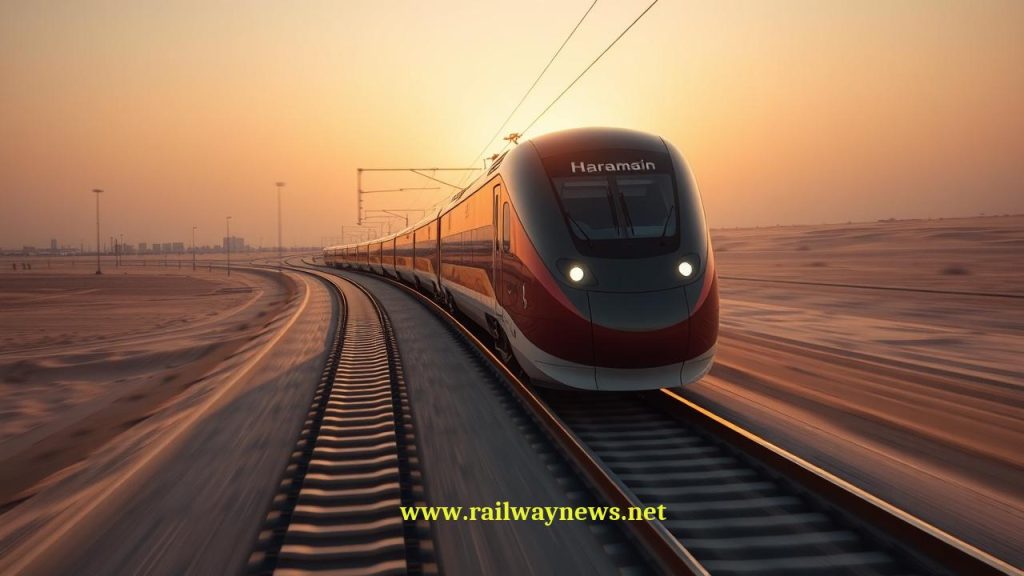
Renfe Secures €1.5 Billion Haramain High-Speed Rail Extension
Renfe has secured a five-year, €1.5 billion extension to its operating and maintenance contract for the Haramain high-speed line in Saudi Arabia, covering the period from 2033 to 2038. The agreement, averaging €300 million annually, was announced by Spain’s Transport Minister Óscar Puente following a meeting with the Saudi Transport Minister in Riyadh. This arrangement ensures the Spanish operator’s continued management of the 453 km line connecting Mecca and Medina.
Operational and Financial Framework
The contract extension formalizes Renfe’s role in the project for an additional five years beyond its current agreement. The total value of €1.5 billion provides a stable revenue forecast for the company’s international operations. While the primary source confirms these financial details, external verification data sources confirm the contract extension but state that specific cost and technical figures were not disclosed in publicly available information.
The agreement guarantees continuity for Renfe’s operational model in Saudi Arabia, where it currently employs over 1,000 staff members. The workforce composition is notable, with women comprising one-third of the total staff and nearly half of all management positions. Renfe has been instrumental in introducing women to high-speed train driving roles within the Middle East.
“US mandates English proficiency for border rail crews, restricting Mexican operations.” – Full article title (Jan 2026)
Infrastructure and Fleet Specifications
The Haramain high-speed line is a 453 km double-track electrified railway designed for a maximum commercial speed of 300 km/h. The corridor is equipped with an ERTMS Level 2 signaling system. The line serves five stations, connecting the holy cities of Mecca and Medina with stops at King Abdullah Economic City, King Abdulaziz International Airport in Jeddah, and a downtown Jeddah station.
The existing operational fleet consists of 35 high-speed trains previously delivered by a consortium. These trains feature 13 cars with a total capacity of 417 seats. Under the contract terms, the fleet will be expanded with the delivery of 20 new trains from the manufacturer, each also comprising 13 cars and providing capacity for over 400 passengers. The integration of this new rolling stock will be a key task under the extended operational mandate.
| Metric | Value |
|---|---|
| Contract Extension Value | €1.5 Billion |
| Contract Extension Period | 2033–2038 |
| Line Length | 453 km |
| Maximum Commercial Speed | 300 km/h |
| Signaling System | ERTMS Level 2 |
| Existing Fleet Size | 35 trains |
| New Fleet Order | 20 trains |
| 2025 Passenger Volume | ~10 million |
| 2024 Passenger Volume | 9.1 million |
Strategic Context and Market Position
The long-term extension provides Renfe with revenue stability and solidifies its position as a primary international operator of high-speed rail systems, particularly in the Middle East. The continued operation by a European-standard operator is necessary for maintaining the technical and safety integrity of the ERTMS Level 2-equipped corridor, which handles high-density passenger traffic.
This infrastructure project is a central component of Saudi Arabia’s Vision 2030 national strategy, which aims to diversify the country’s economy, develop public service sectors, and expand capacity for religious tourism. The Haramain line provides critical transport capacity for managing the high-volume passenger flows between Jeddah, Mecca, and Medina, particularly during the Hajj and Umrah pilgrimages. Ridership figures reflect this importance, with the line carrying a record of nearly 10 million passengers in 2025, up from 9.1 million in 2024.
Next Steps
The operator’s immediate focus will involve managing the integration of the 20 new high-speed trains into the existing fleet and service schedules. Operational planning will also need to address the projected continued growth in passenger demand on the corridor through the remainder of the current contract and into the extension period.

Railway infrastructure, rolling stock and transport technologies specialist focused on global rail industry developments, high-speed rail systems, signaling technologies and freight transportation. Covering railway investments, public transport modernization, rail operations and international mobility projects across Europe, Asia and North America.
RELATED POSTS

October 5, 2026 6:12 pm
AECOM and Jacobs secured a contract in September 2026 to...

October 4, 2026 11:08 pm
Sound Transit confirmed the September 30 opening of Seattle Pinehurst...
October 6, 2026 9:17 am
Illinois approved $1.1M in state funds to upgrade two McHenry...
October 6, 2026 12:16 am
FTA awarded $233 million in grants to eight US rail...

October 5, 2026 3:13 pm
DART launched a 90-day fare enforcement pilot across 5 light-rail...
October 6, 2026 12:12 pm
Amey secured an eight-year contract from Irish Rail to design,...