
Thailand’s Rail Revolution: ETCS Level 2 Deployment
Thales Thailand successfully deployed ETCS Level 2 on-board units on 50 locomotives for SRT, a project showcasing global adoption of advanced railway safety systems and highlighting the importance of interoperability and technological advancements in modernizing infrastructure.
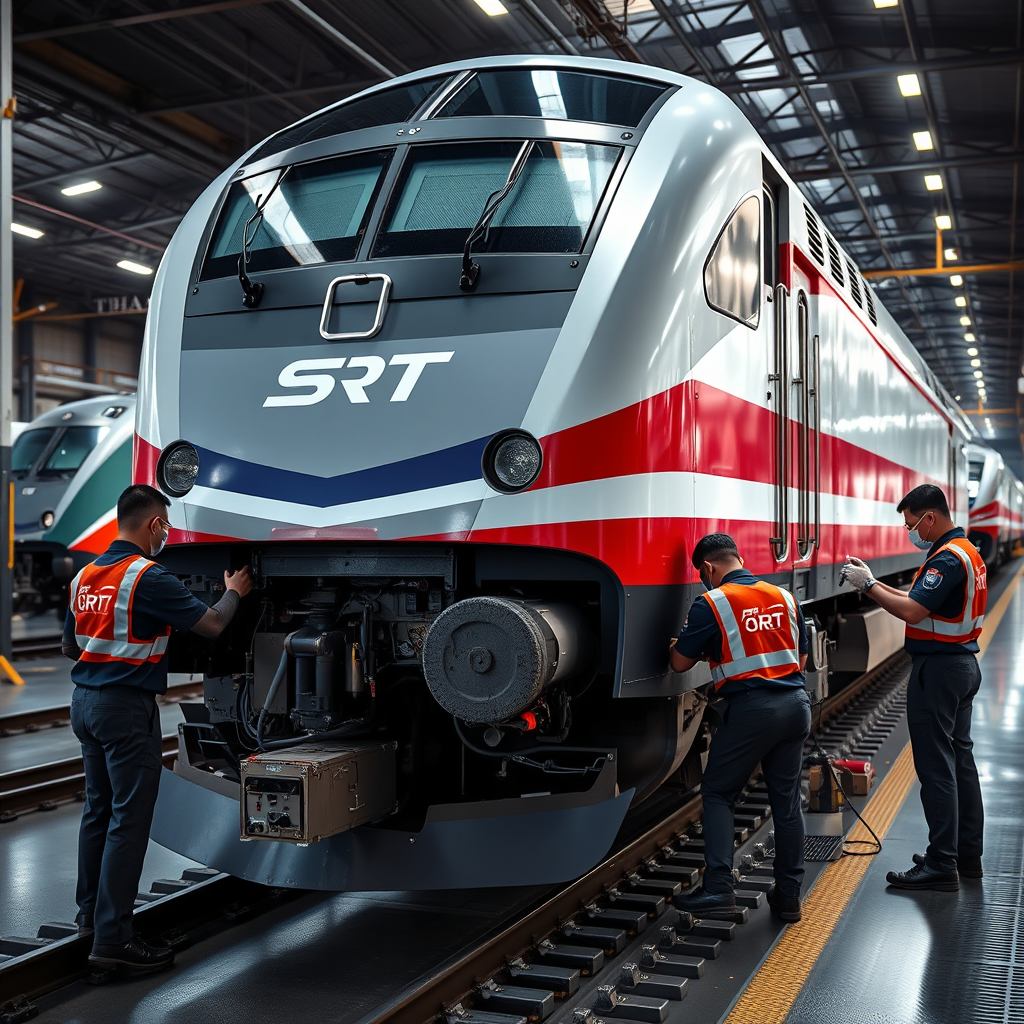
This article examines the recent successful deployment of the European Train Control System (ETCS) Level 2 on 50 locomotives in Thailand, a project undertaken by Thales Thailand in collaboration with CRRC Qishuyan, a leading Chinese locomotive manufacturer. The project highlights the increasing global adoption of ETCS as a vital component in modernizing railway infrastructure and enhancing safety and operational efficiency. This collaboration signifies a significant step forward in the modernization of the State Railway of Thailand (SRT) and underscores the growing importance of interoperability and technological advancements in the railway sector. We will explore the specifics of the Thales RailBot ETCS On-Board Unit System, its modular design advantages, and the broader implications of this project for the future development of Thailand’s railway network. Further, the article will analyze the significance of this project within the context of the global Intelligent Transportation Systems (ITS) market and the role of centralized train control systems in achieving sustainable and efficient rail transportation.
Thales’ ETCS Deployment in Thailand: A Case Study in Railway Modernization
Thales Thailand, a subsidiary of the French multinational Thales Group, recently completed the installation of its ETCS Level 2 (European Train Control System) on-board units on 50 locomotives belonging to the State Railway of Thailand (SRT). This project, executed in partnership with CRRC Qishuyan, a major Chinese rolling stock manufacturer, represents a significant advancement in the modernization of Thailand’s railway infrastructure. The adoption of ETCS, a sophisticated train control system, enhances safety by preventing collisions and overspeeding, thereby improving overall operational efficiency.
The Thales RailBot ETCS On-Board Unit System: A Modular Approach to Future-Proofing
The core technology employed in this project is the Thales RailBot ETCS On-Board Unit System. Its modular design is a key feature, enabling future upgrades to higher ETCS levels as the SRT’s infrastructure evolves. This forward-thinking approach minimizes the need for complete system replacements as technology advances, making the investment cost-effective over the long term. This modularity also facilitates easier maintenance and troubleshooting, reducing downtime and operational disruption.
Strategic Partnerships and Global Collaboration in the Rail Industry
The collaboration between Thales Thailand and CRRC Qishuyan demonstrates the growing trend of international partnerships in the railway industry. This synergy combines Thales’ expertise in ETCS technology with CRRC Qishuyan’s locomotive manufacturing capabilities, resulting in a successful and efficient implementation. This partnership also highlights the global reach and growing influence of ETCS as a standardized train control system, promoting interoperability across different railway networks worldwide.
Modernizing Thailand’s Railway Network: Implications for Capacity and Sustainability
The modernization of the SRT through ETCS implementation offers substantial benefits. Increased safety, resulting from collision avoidance and speed monitoring, is paramount. Additionally, the improved efficiency and capacity of the railway network will contribute to the economic development of Thailand. The use of advanced technology contributes to a more sustainable transportation system, reducing reliance on road transport and its associated environmental impacts. The project signifies a commitment to creating a more efficient, reliable, and environmentally responsible railway infrastructure in Thailand.
Conclusions
The successful installation of ETCS Level 2 on 50 locomotives by Thales Thailand, in collaboration with CRRC Qishuyan, marks a significant milestone in the modernization of the State Railway of Thailand (SRT). This project showcases the advantages of the Thales RailBot ETCS On-Board Unit System, emphasizing its modular design for future adaptability and its contribution to enhanced safety and operational efficiency. The collaboration itself highlights a significant trend: the increasing prevalence of international partnerships in the railway industry, driven by the global adoption of standardized train control systems such as ETCS. This strategic partnership leverages the expertise of both Thales and CRRC Qishuyan, resulting in a timely and effective implementation. The overall impact on Thailand’s railway system is transformative. The increased capacity and reliability provided by ETCS will not only contribute to economic growth but also pave the way for a more sustainable transportation infrastructure. The project’s success underscores the importance of continued investment in modern railway technologies for enhancing safety, efficiency, and environmental sustainability in the global rail sector. It serves as a compelling example for other countries seeking to modernize their railway networks and demonstrates the significant role of international collaboration in achieving this goal. The future of railway modernization hinges on the adoption of advanced technologies such as ETCS, alongside strategic partnerships that leverage global expertise for the mutual benefit of all stakeholders involved. This project in Thailand represents a significant step in this direction.

Railway infrastructure, rolling stock and transport technologies specialist focused on global rail industry developments, high-speed rail systems, signaling technologies and freight transportation. Covering railway investments, public transport modernization, rail operations and international mobility projects across Europe, Asia and North America.
RELATED POSTS

October 1, 2026 7:09 am
United States regulators confirmed a September 30 deadline for the...

October 8, 2026 1:15 pm
Alstom secured a €1bn contract to build 13 automated trains,...

October 4, 2026 5:14 pm
Alstom secured a CA$4.7 billion order from VIA Rail Canada...

October 8, 2026 12:18 pm
Siemens Mobility signed an agreement with VinSpeed to supply 350...

October 5, 2026 6:12 pm
AECOM and Jacobs secured a contract in September 2026 to...

October 4, 2026 11:08 pm
Sound Transit confirmed the September 30 opening of Seattle Pinehurst...