
UEEIV Railway Forum 2026: AI and Rail Resilience
UEEIV Railway Forum 2026 takes place in Kraków on 5–6 November, covering AI, railway digitalisation, cybersecurity and infrastructure resilience.
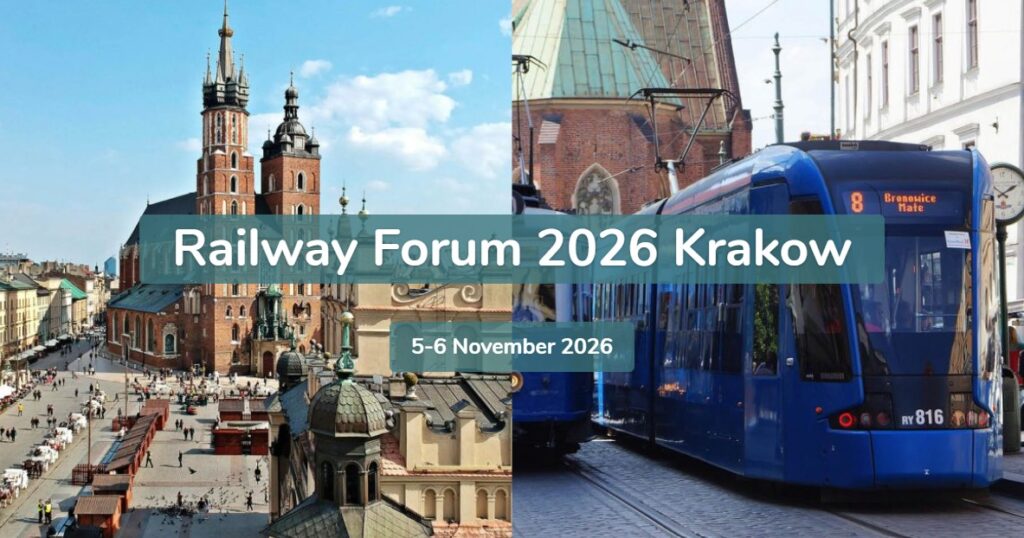
The UEEIV Railway Forum 2026 will take place on 5–6 November 2026 in Kraków, Poland, bringing together railway engineering professionals to examine the technological and operational challenges facing Europe’s railways. Organised by the Union of European Railway Engineer Associations (UEEIV), with SITK as the local host, the event will focus on digitalisation, automation, artificial intelligence and the resilience of railway infrastructure.
Held under the theme “Resilience meets Technology – New Challenges for European Railways”, the forum will address how railway engineering can respond to emerging technological requirements, security risks and climate-related challenges.
AI and digitalisation in railway engineering
Artificial intelligence, automation and digital technologies are among the key topics of the 2026 forum. Discussions will cover railway infrastructure, track systems, signalling, train control, rolling stock and infrastructure condition monitoring.
The technical agenda includes several important railway technologies and initiatives, including the European Rail Traffic Management System (ERTMS), the Future Railway Mobile Communication System (FRMCS), Communications-Based Train Control (CBTC) and EULYNX.
These technologies support the development of more integrated, digitally connected railway systems. Their implementation also raises important questions about interoperability, cybersecurity, maintenance and the skills required by railway engineers.
AI-assisted condition monitoring is another relevant area, particularly for identifying potential infrastructure or rolling stock issues through the analysis of operational data. As railway systems become increasingly digitalised, integrating these technologies into existing infrastructure remains an important engineering challenge.
Cybersecurity and climate resilience on the agenda
Railway resilience extends beyond the performance of physical infrastructure. Cybersecurity, protection against sabotage and the ability to withstand extreme weather events are increasingly important considerations for railway operators and infrastructure managers.
The forum will address these challenges alongside traditional railway engineering topics. Cybersecurity is particularly relevant as signalling, communications and traffic management systems become more interconnected.
Climate resilience is another significant issue for European railways. Extreme temperatures, flooding and other weather-related events can affect infrastructure availability, maintenance requirements and operational reliability.
By bringing these subjects together, the forum will examine the relationship between technological progress, infrastructure protection and the long-term resilience of railway systems.
Supporting the next generation of railway engineers
The event will also highlight the role of young railway engineers. According to the organisers, young engineers are scheduled to speak on the first day following the opening address.
The initiative provides an opportunity to bring emerging professionals into discussions about the future of railway engineering, while encouraging knowledge exchange between experienced specialists and younger members of the profession.
As railway systems adopt new digital technologies, developing the skills needed to design, implement and maintain them remains an important challenge for the sector.
UEEIV Railway Forum 2026: Dates, venue and programme
The main conference will be held at the Qubus Hotel in Kraków on 5–6 November 2026.
The programme also includes a pre-event at Kraków University of Technology on the evening of 4 November, a networking dinner on 5 November and an optional excursion scheduled for 7 November. Separate arrangements apply to the additional activities.
The forum is organised by UEEIV, the European umbrella organisation for railway engineer associations, with SITK’s railway section serving as the local host in Poland.
Registration and participation fees
The official event page lists registration fees ranging from €280 to €540, depending on the participant category. A fee of €280 is listed for representatives of public institutions and universities, while students under the age of 27 are offered a rate of €190.
The published fees are exclusive of VAT. Participants should consult the official registration information to confirm eligibility, documentation requirements and the latest participation conditions.
Further details about the programme, registration and additional activities are available on the official event website:
Official event page: https://ueeiv.eu/events/railway-forum-2026/
Frequently Asked Questions
When will UEEIV Railway Forum 2026 take place?
The main conference will take place on 5–6 November 2026 in Kraków, Poland. An optional excursion is scheduled for 7 November.
Where will Railway Forum 2026 be held?
The event will be hosted at the Qubus Hotel in Kraków, Poland.
What are the main topics of UEEIV Railway Forum 2026?
The forum will focus on railway digitalisation, artificial intelligence, automation, signalling, cybersecurity and infrastructure resilience, including responses to climate-related risks.
Who organises UEEIV Railway Forum 2026?
The event is organised by the Union of European Railway Engineer Associations (UEEIV), with SITK’s railway section acting as the local host in Poland.
How much does registration cost?
Published registration fees range from €280 to €540 depending on participant category. A €280 rate is listed for public institution and university representatives, while students under 27 can register for €190. Fees are exclusive of VAT, and current conditions should be checked on the official event website.

Transport and railway industry editor covering global rail infrastructure, sustainable mobility, urban transit systems and next-generation railway technologies with a focus on accessible and industry-focused reporting.
RELATED POSTS
October 8, 2026 6:13 pm
Koleje Mazowieckie ordered 11 Stadler FLIRT trains in Poland, completing...