
Hitachi Rail Upgrades UK Rail Grinder With ETCS Level 2
Hitachi Rail launched ETCS Level 2 installation on Colas rail grinder C44-02 in Derby to deliver digital signalling for the East Coast Main Line by 2027.
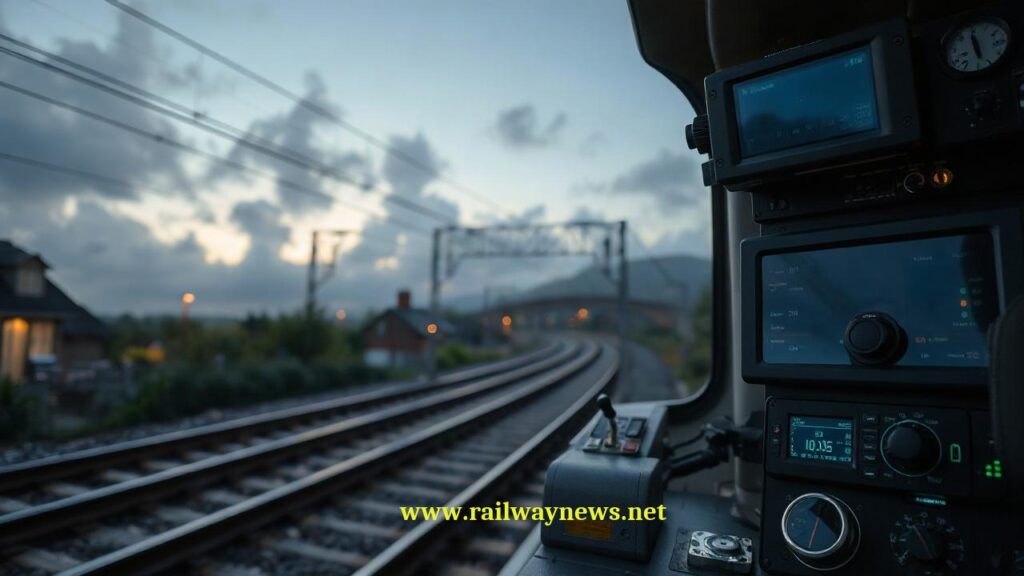
⚡ In Brief: Loram and Hitachi Rail have started retrofitting European Train Control System equipment to vehicle C44-02 in Derby, aiming to return the upgraded rail grinder to Colas for East Coast Main Line operations by early 2027.
DERBY, UK – Loram and Hitachi Rail commenced the installation of European Train Control System (ETCS) in-cab signalling onto Colas-operated rail grinder C44-02 at Loram’s Derby engineering facility in June 2024. Dynamic testing of the machine will take place at Network Rail’s Melton Test Track before the end of the year, preceding an early 2027 operational hand-back. The retrofit represents Loram’s first fitment financed directly through Network Rail’s multi-billion-pound East Coast Digital Programme (ECDP).
What Are the Technical Specifications?
Hitachi Rail’s ETCS Level 2 onboard architecture provides continuous speed control, automated track protection, and direct digital signalling to the driver cab without reliance on fixed lineside signals. Vehicle C44-02 will initially operate in “ETCS dormant mode,” maintaining compatibility with legacy lineside systems until official assurance processes permit full Level 2 activation on the southern East Coast Main Line. The onboard configuration integrates European Vital Computers (EVC), driver-machine interfaces, odometry radar, and underframe balise antennas calibrated to withstand high vibration levels generated during rail grinding. Static testing will be conducted at the Railway Technical Centre in Derby prior to dynamic testing at Melton. Following operational evaluation of C44-02, Loram plans to initiate identical retrofits on a third machine, vehicle C44-03.
Key Technical Data
| Parameter | Value |
|---|---|
| Technology / System Name | Hitachi Rail ETCS Level 2 Onboard System |
| Total Value | Not disclosed |
| Parties Involved | Hitachi Rail, Loram, Network Rail (ECDP), Colas |
| Timeline / Completion | June 2024 – early 2027 operational hand-back |
| Country / Corridor | United Kingdom / East Coast Main Line |
Where Does This Technology Stand in the Market?
The UK railway signalling market was valued at USD 21.10 billion in 2025, is projected to reach USD 21.99 billion in 2026, and is forecast to expand to USD 32.60 billion by 2033 at a 5.8% compound annual growth rate (Source: MarketsandMarkets, 2025). Applying onboard digital signalling to non-standard On Track Machines (OTMs) presents installation complexities distinct from standard passenger or freight locomotives. In the broader onboard market, competitor Alstom offers its Atlas ETCS onboard package across 250 vehicle types with over 20,000 onboard installations globally, versus Hitachi Rail’s specialized engineering fitment tailored for specialized British track maintenance machinery (Source: Alstom, 2024). Competitor Siemens Mobility supplies its Trainguard 200 onboard baseline architecture across dozens of European operators, featuring standardized OBU modules compared to the custom vibration-isolated mountings required on C44 grinders (Source: Siemens Mobility, 2023). Contractual fitment expenditure for vehicle C44-02 was not disclosed by the participating partners.
Editor’s Analysis
Achieving the planned “signals-away” decommission of trackside equipment on the East Coast Main Line hinges on converting specialized yellow-plant machinery, which often forms the technical bottleneck in digital corridor transitions. By proving that mechanical rail grinding plant can run ETCS without signal degradation from grinding vibrations, Network Rail eliminates the risk of running dual-signalled corridors solely for engineering maintenance. This shift supports the long-term migration of signalling infrastructure toward integrated software ecosystems, remote diagnostics, and condition-based asset protection (Source: Market Data Forecast, 2025).
FAQ
Q: When will the C44-02 rail grinder enter full operational service with digital signalling?
A: Colas will receive C44-02 for active deployment in early 2027 following dynamic trials at Melton. The vehicle will run in dormant ETCS mode until Network Rail formally commissions Level 2 signalling on target routes.
Q: What is the total financial cost of the C44-02 ETCS installation?
A: Network Rail and Loram have not disclosed the specific unit cost for fitting vehicle C44-02. The project is funded through the capital budget allocated to the East Coast Digital Programme.
Q: Why does an on-track maintenance grinder require ETCS in-cab signalling?
A: Network Rail is removing physical lineside signals along parts of the East Coast Main Line, requiring all track-occupying vehicles to communicate via in-cab digital radios. Without ETCS Level 2 capabilities, track maintenance vehicles would be barred from operating on lineside-free routes.

Railway infrastructure, rolling stock and transport technologies specialist focused on global rail industry developments, high-speed rail systems, signaling technologies and freight transportation. Covering railway investments, public transport modernization, rail operations and international mobility projects across Europe, Asia and North America.
RELATED POSTS

October 1, 2026 7:09 am
United States regulators confirmed a September 30 deadline for the...

October 8, 2026 1:15 pm
Alstom secured a €1bn contract to build 13 automated trains,...

October 4, 2026 5:14 pm
Alstom secured a CA$4.7 billion order from VIA Rail Canada...

October 1, 2026 12:13 am
Illinois approved $1.5 billion annually for the Northern Illinois Transit...
October 6, 2026 2:14 am
Union Pacific launched export rail shipments with Ferromex to deliver...
October 1, 2026 6:10 am
Amtrak approved a System Expansion Committee on July 30 to...