
China High-Speed Rail Completes 50,000 km by 2025
China expanded its high-speed rail network to 50,000 km by the end of 2025, serving 4.28 billion passengers.
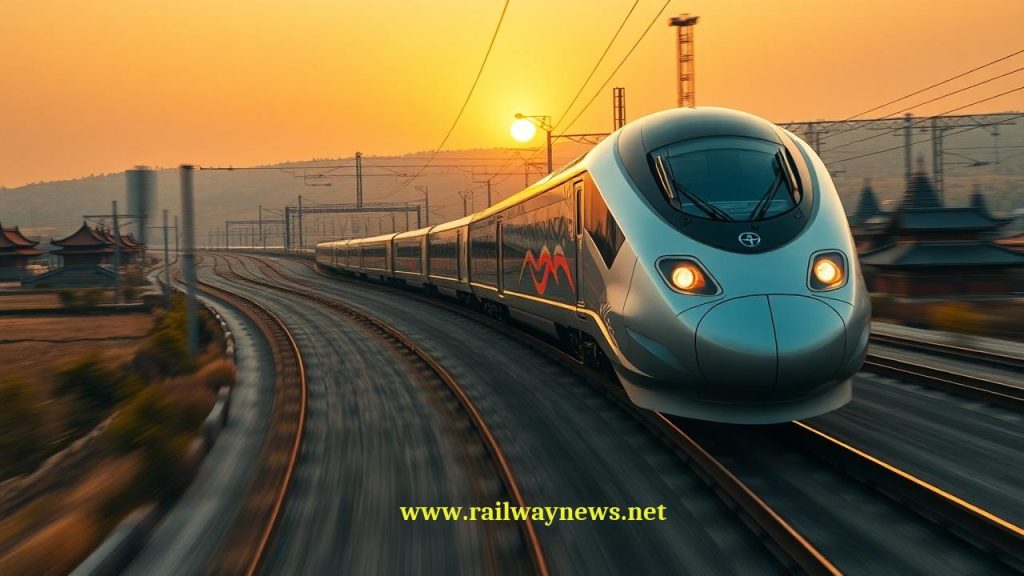
⚡ In Brief: China’s high-speed rail network expanded to 50,000 km by the end of 2025, now comprising over 75% of the global total and serving 4.28 billion passengers annually across 97% of its major cities.
BEIJING – China’s national railway operator confirmed its high-speed rail (HSR) network reached 50,000 km by the end of 2025, a milestone achieved after adding approximately 5,000 km of new lines in just two years. The system handled a record 4.28 billion passenger trips in 2025, an increase of 6.6% over the previous year. The network now connects 97% of Chinese cities with populations exceeding 500,000.
What Is the Full Scope of This Project?
The national HSR network expansion is an ongoing strategic infrastructure project with multiple phases of construction and planning. As of the end of 2025, the operational network stands at 50,000 km, with an additional 8,656 km currently under construction and 3,754 km formally planned. The long-term vision includes a further 7,134 km of lines, which will bring the total network length to nearly 70,000 km. The project includes significant engineering works, such as the construction of extensive underwater tunnels beneath major waterways like the Yangtze River, to ensure direct, high-speed connections between economic hubs.
Key Project Data
| Parameter | Value |
|---|---|
| Project / Contract Name | China National High-Speed Rail Network Expansion |
| Total Value | Not disclosed |
| Parties Involved | China State Railway Group Co., Ltd. (National Operator) |
| Timeline / Completion | 50,000 km operational by end of 2025; ongoing expansion |
| Country / Corridor | People’s Republic of China |
How Does This Compare to Similar Projects?
China’s 50,000 km HSR network is more than four times the size of the entire high-speed network in Europe, which totals approximately 11,500 km across multiple countries. The pace of development is also unmatched; China added nearly half of Europe’s total network length in just two years (2023-2025). In contrast, the United States has no comparable high-speed rail network operating at speeds of 250 km/h or higher. The Acela service in the Northeast Corridor, often cited as the premier US passenger rail line, reaches a maximum speed of 240 km/h on only limited sections of its 735 km route. (Source: International Union of Railways, 2025)
Editor’s Analysis
The immense scale of China’s passenger HSR investment highlights a dual-track national transport strategy that should not be viewed in isolation. While HSR is reshaping passenger mobility and economic geography, the country is simultaneously strengthening its rail freight capabilities to power its manufacturing and e-commerce sectors, with the China-Europe trade lane being a primary focus. This detailed rail strategy is complemented by a rapid shift in road logistics, where battery-electric models captured a 22% share of China’s heavy truck market in the first half of 2025, indicating a multi-modal approach to increasing efficiency and sustainability across the entire transport ecosystem. (Source: Cleantechnica, 2026)
FAQ
Q: How much of the global high-speed rail network is in China?
A: With 50,000 km operational out of a global total of approximately 65,000 km, China’s network now constitutes over 75% of all high-speed rail lines in the world. The country also accounts for the majority of new lines currently under construction globally.
Q: What was the total investment cost for this network expansion?
A: An official aggregated figure for the total capital expenditure on the HSR network since 2008 has not been disclosed. Based on the costs of individual lines, the total investment is estimated to be well over one trillion US dollars.
Q: Does China’s high-speed network also carry freight?
A: The high-speed network is almost exclusively dedicated to passenger services. Freight transport is handled by China’s extensive conventional rail network, which is also undergoing significant upgrades to support growing e-commerce and manufacturing, contributing to a 5.6% rise in Asia-Pacific air and rail cargo demand. (Source: Logistics Management, 2026)

Railway infrastructure, rolling stock and transport technologies specialist focused on global rail industry developments, high-speed rail systems, signaling technologies and freight transportation. Covering railway investments, public transport modernization, rail operations and international mobility projects across Europe, Asia and North America.
RELATED POSTS

October 1, 2026 7:09 am
United States regulators confirmed a September 30 deadline for the...

October 1, 2026 12:13 am
Illinois approved $1.5 billion annually for the Northern Illinois Transit...

October 1, 2026 6:10 am
Amtrak approved a System Expansion Committee on July 30 to...

October 1, 2026 4:10 am
DART launched two public ridership dashboards in March 2026 to...

October 1, 2026 3:12 am
Greenbrier confirmed Brian Comstock as new president and CEO effective...

October 1, 2026 5:14 am
Siemens confirmed delivery of the first new S200 train to...