
California High-Speed Rail Awards $3.5B Track Systems Contract
California High-Speed Rail Authority awarded a $3.5 billion track and systems contract to a Kiewit-led consortium for 191 km of U.S. Central Valley line.
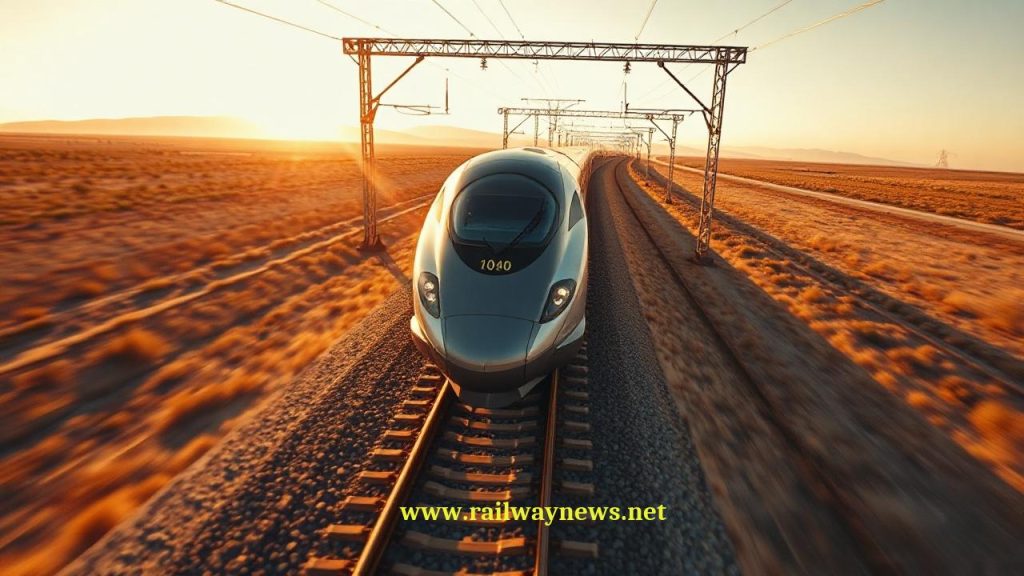
⚡ In Brief: The California High-Speed Rail Authority has awarded a USD 3.5 billion track and systems contract to a Kiewit-led consortium to electrify 191 kilometers of the Central Valley line for speeds up to 354 km/h.
SACRAMENTO, UNITED STATES – The California High-Speed Rail Authority officially awarded a USD 3.5 billion rail infrastructure and systems contract in November 2025 to a consortium comprising Kiewit, Stacey Witbeck, and Herzog. This agreement initiates the transition of the 191-kilometer Central Valley segment from civil works to active railway installation. The contract targets the delivery of electrified track and signalling systems capable of supporting operational train speeds of up to 354 km/h.
What Does This Contract Cover?
The USD 3.5 billion contract covers the design, installation, and commissioning of track, overhead contact systems, signalling, and telecommunications for the 191-kilometer Central Valley section. This scope transforms the existing civil infrastructure into an operational, electrified high-speed corridor. The contract features a phased structure, allowing the consortium to begin installation on individual civil engineering sections as soon as they are completed. To accelerate delivery, the Authority has bypassed traditional sequencing by directly purchasing long-lead materials, including concrete sleepers, steel rails, and ballast, prior to the consortium’s mobilization. Additionally, the agreement mandates a 25% small business participation target, which includes a 3% allocation for microbusinesses and 3% for disabled veteran-owned enterprises. However, the specific financial allocation among Kiewit, Stacey Witbeck, and Herzog was not publicly disclosed.
Key Contract Data
| Parameter | Value |
|---|---|
| Contract Name | California High-Speed Rail Track and Systems Contract |
| Total Value | USD 3.5 billion |
| Parties Involved | California High-Speed Rail Authority, Kiewit, Stacey Witbeck, Herzog |
| Timeline / Completion | Phased execution (Final completion date not disclosed) |
| Country / Corridor | United States / California Central Valley (Merced to Bakersfield) |
How Does This Compare to Similar Contracts?
Within the North American passenger rail market, this USD 3.5 billion infrastructure contract represents one of the largest single-site systems procurement exercises of the decade. For comparison, NJ Transit expanded its fleet modernization efforts in September 2025 by exercising options with Alstom for 200 Multilevel III commuter rail cars and 12 dual-power locomotives, demonstrating significant capital deployment toward rolling stock rather than greenfield high-speed infrastructure (Source: Alstom, 2025). On a global scale, the integration of advanced signalling and control systems reflects a broader industry push toward digital rail technologies. The global railway signalling market is projected to experience rapid expansion through 2025, driven by the adoption of automated train operations and real-time predictive maintenance tools (Source: IndexBox, 2025). Direct cost-per-kilometer comparisons with European or Asian high-speed track-laying contracts for 2024 and 2025 were not publicly available at the time of publication due to differing structural scopes and local civil work bundling.
Editor’s Analysis
By transitioning from civil engineering to systems installation, the California High-Speed Rail Authority is shifting its risk profile from heavy earthworks to complex software and electrical integration. This phase will test the domestic supply chain’s capacity to deliver high-speed rail standards, particularly given the historical lack of local expertise in 350+ km/h systems. This milestone aligns with a broader North American trend of updating project delivery models, as seen in the Authority’s revised construction sequencing and updated funding strategies to manage long-term capital risks (Source: Railway News, 2025).
FAQ
Q: Which companies are building the track and systems for the California High-Speed Rail?
A: The California High-Speed Rail Authority selected a consortium consisting of American firms Kiewit, Stacey Witbeck, and Herzog. This group will deliver the USD 3.5 billion contract covering track, signalling, and electrification.
Q: What is the maximum operating speed designed for this rail corridor?
A: The infrastructure and overhead contact systems are engineered to support train speeds of up to 354 km/h. This capability will establish the corridor as the first true high-speed rail system in the United States.
Q: When will passenger service officially begin on the Central Valley section?
A: A definitive passenger service commencement date for the Central Valley section has not been officially confirmed by the Authority. Operations are contingent on the sequential completion of the remaining civil works and subsequent system testing.

Railway infrastructure, rolling stock and transport technologies specialist focused on global rail industry developments, high-speed rail systems, signaling technologies and freight transportation. Covering railway investments, public transport modernization, rail operations and international mobility projects across Europe, Asia and North America.
RELATED POSTS

October 8, 2026 1:15 pm
Alstom secured a €1bn contract to build 13 automated trains,...

October 1, 2026 7:09 am
United States regulators confirmed a September 30 deadline for the...

October 4, 2026 5:14 pm
Alstom secured a CA$4.7 billion order from VIA Rail Canada...

October 8, 2026 12:18 pm
Siemens Mobility signed an agreement with VinSpeed to supply 350...

October 1, 2026 12:13 am
Illinois approved $1.5 billion annually for the Northern Illinois Transit...

October 1, 2026 6:10 am
Amtrak approved a System Expansion Committee on July 30 to...