
HS2 Completes 4,200-Tonne Curzon 2 Deck Birmingham
HS2 completed the 4,200-tonne Curzon 2 deck over Birmingham’s Cross City line in May 2026, enabling future HS2 services.
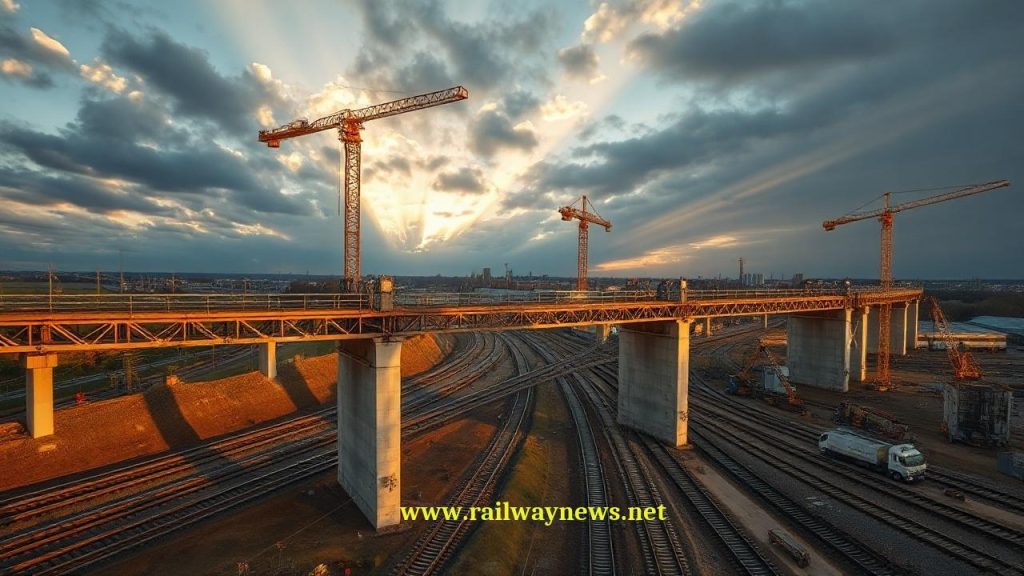
⚡ In Brief: High-speed rail developer HS2 has completed the installation of the 4,200-tonne Curzon 2 viaduct deck over Birmingham’s Cross City line, utilising an engineering method that allows subsequent work to proceed without suspending local train services.
BIRMINGHAM, UNITED KINGDOM – High-speed rail developer HS2, in partnership with Network Rail, successfully installed a 150-metre-long, 4,200-tonne viaduct deck near the site of the future Curzon Street station between 29 May and 31 May 2026. This complex engineering maneuver required a scheduled three-day closure of the Cross City line before passenger services resumed on 1 June 2026. The installation represents a critical structural step in connecting future high-speed services to the West Midlands regional transport network.
What Is the Full Scope of This Project?
The Curzon 2 viaduct project establishes a grade-separated intersection carrying high-speed rail lines over the existing West Midlands passenger and freight corridors. The 4,200-tonne steel and concrete structure spans the active railway between Duddeston and Birmingham New Street. To minimize service disruptions, engineers utilized a “fully restrained” launching method. This technique secures the structure dynamically, allowing subsequent deck sections to be rolled into place directly above live overhead lines without requiring further blockades. While the primary deck installation is complete, auxiliary works on the viaduct piers and parapets will continue throughout 2026.
Key Project Data
| Parameter | Value |
|---|---|
| Project / Contract Name | Curzon 2 Viaduct (HS2 Phase One) |
| Total Value | Not disclosed |
| Parties Involved | HS2 Ltd, Network Rail, West Midlands Railway |
| Timeline / Completion | Main deck installed May 2026; overall viaduct completion timeline not disclosed |
| Country / Corridor | United Kingdom / West Midlands (Cross City Line) |
How Does This Compare to Similar Projects?
The scale of the Curzon 2 viaduct deck reflects a broader trend of deploying heavy modular infrastructure to minimize rail network blockades across the United Kingdom. While the specific capital expenditure for this segment was not disclosed, its engineering approach contrasts with traditional bridge-building techniques that require multi-week line closures. The project’s emphasis on maintaining existing lines is critical as regional rail freight demand rises. The broader West Midlands infrastructure push aligns with a forecast surge in UK rail freight demand driven by mega-projects like HS2 and Sizewell C (Source: Construction News, 2026). A single freight train operating on these upgraded corridors can replace between 70 and 80 heavy goods vehicle (HGV) movements, significantly reducing regional highway congestion and carbon emissions (Source: Construction News, 2026).
Editor’s Analysis
The successful deployment of the “fully restrained” launching technique at Curzon Street highlights a strategic shift toward minimizing possession windows on highly congested commuter lines. By avoiding prolonged blockades on the Cross City line, HS2 mitigates the severe political and economic pushback typically associated with major infrastructure delivery. This approach is increasingly vital as UK regional supply chains struggle to keep pace with simultaneous mega-project demands (Source: Construction News, 2026).
FAQ
Q: What is the primary purpose of the Curzon 2 viaduct?
A: The structure will carry future high-speed HS2 passenger services into the new Birmingham Curzon Street station. It elevates these tracks over the existing conventional rail lines operating between Duddeston and Birmingham New Street.
Q: How much did the Curzon 2 viaduct installation cost?
A: The specific capital expenditure for the Curzon 2 viaduct structure and its three-day installation has not been officially disclosed by HS2 Ltd or Network Rail.
Q: What is the “fully restrained” engineering method used for this installation?
A: This method secures the viaduct deck during movement to ensure absolute stability over active infrastructure. It allows engineers to continue positioning subsequent structural sections without suspending passenger train services underneath.

Railway infrastructure, rolling stock and transport technologies specialist focused on global rail industry developments, high-speed rail systems, signaling technologies and freight transportation. Covering railway investments, public transport modernization, rail operations and international mobility projects across Europe, Asia and North America.
RELATED POSTS

October 8, 2026 1:15 pm
Alstom secured a €1bn contract to build 13 automated trains,...

October 1, 2026 7:09 am
United States regulators confirmed a September 30 deadline for the...

October 8, 2026 12:18 pm
Siemens Mobility signed an agreement with VinSpeed to supply 350...

October 4, 2026 5:14 pm
Alstom secured a CA$4.7 billion order from VIA Rail Canada...

October 1, 2026 12:13 am
Illinois approved $1.5 billion annually for the Northern Illinois Transit...

October 5, 2026 6:12 pm
AECOM and Jacobs secured a contract in September 2026 to...