
European Rail: EN 50125-3 Ensures Safety in All Conditions
EN 50125-3 defines crucial environmental conditions for railway signalling and telecom equipment, guaranteeing robust operation, safety, and reliability across all trackside locations.
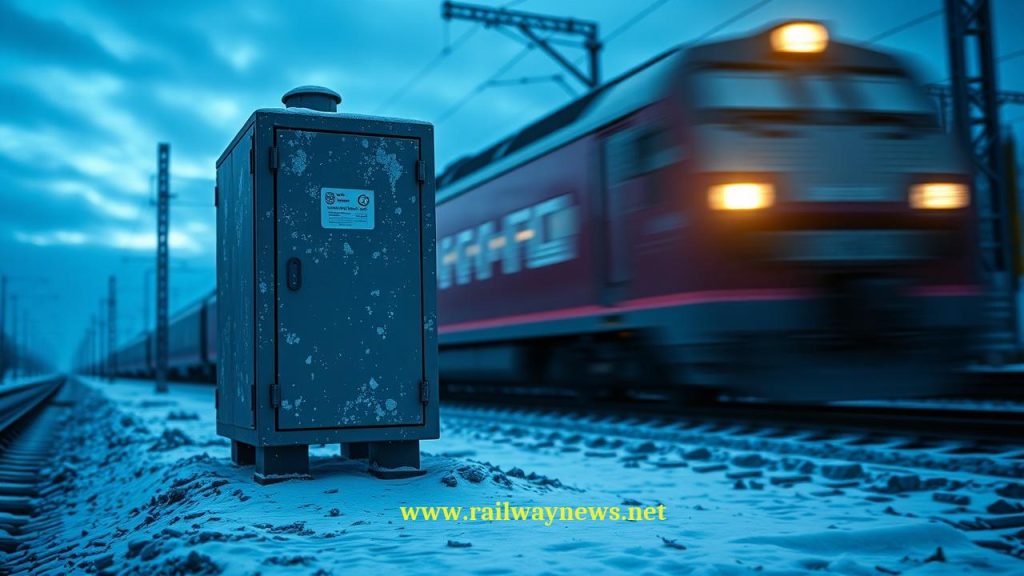
Understanding EN 50125-3: Environmental Conditions for Railway Signalling and Telecommunications Equipment
EN 50125-3 is a critical European standard that specifies the environmental conditions under which fixed signalling and telecommunications equipment within railway systems must reliably operate. Its primary purpose is to define a uniform set of environmental parameters to ensure the safety, reliability, and interoperability of essential railway infrastructure.
This standard provides manufacturers, system integrators, and railway operators with a common framework for designing, testing, and deploying equipment. By defining conditions such as temperature, humidity, and vibration, EN 50125-3 ensures that vital systems can withstand the harsh and variable environments found along railway lines, from climate-controlled relay rooms to exposed trackside locations.
Core Environmental Parameters Defined in EN 50125-3
The standard categorizes environmental influences into several key groups, providing specific classes and limit values for each. This allows for precise engineering without over-specification, ensuring both safety and cost-effectiveness.
1. Climatic Conditions
These are the most prominent parameters and have a direct impact on electronic and mechanical component performance and longevity.
- Temperature: The standard defines several operating temperature classes (e.g., T1, T2, T3) to cover different installation locations, ranging from temperature-controlled indoor environments to outdoor locations exposed to extreme heat and cold.
- Humidity: It specifies limits for relative humidity, considering the risk of condensation which can lead to short circuits and corrosion. Both average and peak humidity levels are considered.
- Air Pressure (Altitude): Defines the range of altitudes at which equipment must function correctly. Lower air pressure at high altitudes can affect heat dissipation (convection cooling) and dielectric strength.
- Solar Radiation: For outdoor equipment, the standard accounts for the heating effect of direct sunlight and the degrading effect of ultraviolet (UV) radiation on materials like plastics and cable insulation.
- Precipitation: It sets requirements for tolerance to rain, snow, and ice. This is closely linked to the Ingress Protection (IP) rating of an enclosure, which defines its resistance to water and dust.
2. Mechanical Conditions
Railway environments are subject to constant mechanical stresses that can damage sensitive equipment.
- Vibration and Shock: The standard specifies the levels of sinusoidal and random vibration, as well as mechanical shocks, that equipment must endure. These originate from passing trains, nearby construction, or shunting operations. Compliance is often tested in conjunction with standards like EN 61373.
3. Chemical and Biological Substances
The operational environment can expose equipment to various contaminants that can cause corrosion or material degradation.
- Pollution Degree: EN 50125-3 references pollution degrees (typically 1 to 4) which quantify the level of conductive or hygroscopic dust, gases, and salt present. This directly influences requirements for enclosure sealing and the design of internal electrical clearances and creepage distances. For example, coastal or industrial areas have a higher pollution degree.
Location Classes and Their Technical Requirements
A fundamental aspect of EN 50125-3 is its classification of installation locations. Equipment designed for one class is not necessarily suitable for another. The table below provides a simplified comparison of typical location classes.
| Parameter | Class for Internal Locations (e.g., Relay Room) | Class for Sheltered Trackside Locations (e.g., Cabinet) | Class for Outdoor/Exposed Locations |
|---|---|---|---|
| Typical Designation | Temperature Class T1 | Temperature Class T2/T3 | Special Thermal Requirements |
| Operating Temperature Range | +5°C to +40°C (Controlled) | -25°C to +55°C (Uncontrolled, Ventilated) | -40°C to +70°C (Exposed to elements) |
| Humidity | Low, controlled humidity. Condensation unlikely. | High humidity with frequent condensation possible. | Exposure to 100% relative humidity, rain, snow, and ice. |
| Vibration & Shock | Low, primarily building-borne vibrations. | Moderate, from nearby passing trains. | High, direct transmission from track and train movements. |
| Solar Radiation | Not applicable. | Indirect or partial exposure. | Full and direct exposure, requiring UV-resistant materials and heat management. |
| Ingress Protection (Typical) | IP20 or higher. | IP54 or higher. | IP65 or higher. |
Why is EN 50125-3 Crucial for the Railway Industry?
Adherence to EN 50125-3 is not merely a matter of compliance; it is fundamental to the operational integrity of a railway network.
- Ensuring Safety: Signalling systems are safety-critical. Equipment failure due to environmental stress (e.g., a signal control unit overheating) could have catastrophic consequences. This standard mitigates that risk by ensuring robust design.
- Maximizing Reliability and Availability: Railway networks demand extremely high availability. Equipment designed to EN 50125-3 standards is less likely to fail, reducing downtime, maintenance costs, and service disruptions.
- Promoting Interoperability: It provides a common technical language for operators and suppliers across Europe. An operator can procure equipment from various manufacturers with the confidence that it will perform reliably in their specific trackside environment.
- Optimizing Lifecycle Costs: While building equipment to withstand harsh conditions may increase upfront costs, it significantly reduces long-term costs associated with repairs, replacements, and service penalties caused by failures. It prevents both under-engineering (leading to failure) and over-engineering (leading to excessive cost).
Conclusion
EN 50125-3 is a cornerstone standard for the design and deployment of fixed railway signalling and telecommunications equipment. By meticulously defining the climatic, mechanical, and chemical stresses found in railway environments, it provides a clear and essential roadmap for engineers. It ensures that the vital nervous system of the railway—its signalling and communication networks—remains robust, reliable, and safe under all specified operating conditions.

Railway infrastructure, rolling stock and transport technologies specialist focused on global rail industry developments, high-speed rail systems, signaling technologies and freight transportation. Covering railway investments, public transport modernization, rail operations and international mobility projects across Europe, Asia and North America.