
EN 14033-1: Europe’s Blueprint for Rail Machine Safety
EN 14033-1 ensures safe, reliable running of railbound construction and maintenance machines, protecting railway infrastructure and promoting European network interoperability.
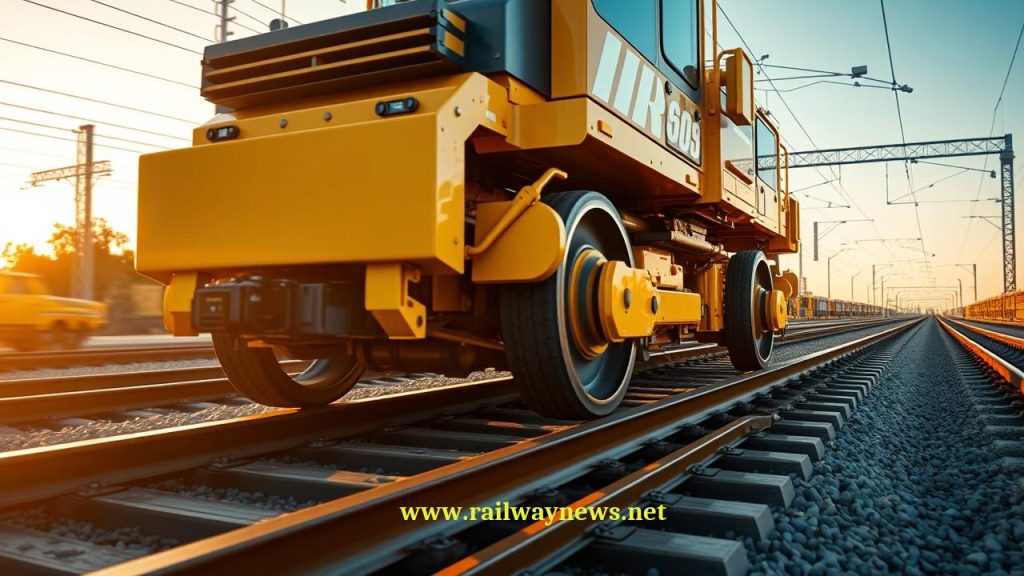
Understanding EN 14033-1: Technical Requirements for Running of Railbound Machines
EN 14033-1 is a crucial European Standard that specifies the technical requirements for the running of railbound construction and maintenance machines on railway networks. This standard ensures that these specialized vehicles can travel safely, reliably, and without causing damage to the track infrastructure or disrupting other rail traffic.
As an essential part of the EN 14033 series, Part 1 focuses exclusively on the characteristics of the machine when it is travelling, either under its own power (self-propelled) or when being towed within a train. It establishes a harmonized set of rules for manufacturers, operators, and infrastructure managers, promoting interoperability and safety across the European railway system.
Core Technical Requirements of EN 14033-1
The standard explores several critical technical areas to guarantee the safe running performance of on-track machines (OTMs). These requirements cover the machine’s interaction with the track, its structural soundness, and its fundamental operational systems.
Vehicle Gauge and Kinematic Envelope
One of the most fundamental requirements is adherence to the specified vehicle gauge. EN 14033-1 mandates that the machine, in its travelling configuration, must fit within a defined kinematic envelope. This ensures that the machine will not collide with line-side structures such as platforms, signals, bridges, or tunnel walls, nor will it foul adjacent tracks, especially on curves and canted track. The standard provides methodologies for calculating and verifying the vehicle’s profile under various dynamic conditions.
Axle Load and Load Distribution
To protect the integrity of the track and underlying structures like bridges and viaducts, the standard sets strict limits on axle loads and the total mass of the machine. It requires that the weight is distributed as evenly as possible among the axles. Uneven load distribution can cause excessive stress on individual rails and sleepers, leading to premature wear and potential track damage. The compliance process involves precise weighing of the machine in its ready-to-run state.
Running Gear and Suspension
The running gear, comprising wheels, axles, and suspension, is critical for safe and stable running. EN 14033-1 details requirements for:
- Wheel Profile: The shape of the wheel tread and flange must be compliant with established railway profiles (e.g., S1002 or P8) to ensure proper guidance and minimize wear on both the wheel and the rail.
- Axle Guidance: The system must provide adequate guidance to the wheelsets, ensuring stability at the maximum permitted running speed and preventing derailment.
- Suspension: The suspension system must effectively absorb track irregularities, maintain wheel-rail contact, and limit the transmission of vibrations and shocks to the machine’s body.
Braking System Performance
A reliable and effective braking system is paramount for safety. The standard specifies performance requirements for multiple braking systems, which must be independent of each other.
- Service Brake: Used for normal operational speed control and stopping.
- Emergency Brake: Provides the shortest possible stopping distance in a hazardous situation. It must be infallible and automatically apply in case of a major system failure (e.g., loss of brake pipe pressure).
- Parking Brake: A mechanical brake capable of holding the machine stationary on the steepest gradient of its intended operational route.
Performance is defined by calculated stopping distances from maximum speed, and the system must be designed to be compatible with standard railway braking systems when the machine is towed.
Structural Integrity and Strength
The machine’s chassis and body must be designed to withstand all static and dynamic loads encountered during its service life. This includes forces generated during running, braking, traction, and lifting/jacking operations. EN 14033-1 references other standards (like EN 12663) for defining the load cases and structural validation methods, often requiring Finite Element Analysis (FEA) and physical load tests to prove compliance.
Key Parameters and Compliance Summary
The following table summarizes the core technical domains covered by EN 14033-1 and their significance for safe railway operation.
| Parameter / System | Key Requirement as per EN 14033-1 | Significance in Operation |
|---|---|---|
| Vehicle Gauge | The machine must remain within the specified kinematic profile during all running conditions. | Prevents collision with infrastructure and ensures safe passage on the network. |
| Axle Load | Maximum weight per axle must not exceed the limits for the intended route category. Even load distribution is required. | Protects track and bridges from overload and damage, ensuring infrastructure integrity. |
| Braking System | Must have independent service, emergency, and parking brake systems meeting defined performance criteria (stopping distances). | Guarantees the ability to safely control speed and stop the machine, preventing accidents. |
| Running Dynamics | The machine must demonstrate stable running behaviour up to its maximum authorized speed without risk of derailment. | Ensures vehicle safety and ride quality, minimizing wear and tear on track components. |
| Structural Strength | The vehicle frame and body must withstand defined operational loads without permanent deformation or failure. | Ensures the long-term reliability and safety of the machine’s main structure. |
| Draw Gear & Buffers | Coupling systems must be compatible with standard rolling stock and strong enough for towing operations. | Enables the machine to be safely integrated and transported within a conventional train. |
The Role of EN 14033-1 in the Railway Ecosystem
Compliance with EN 14033-1 is a prerequisite for obtaining the necessary authorization for a railbound machine to operate on most European railway networks. It provides a clear framework for manufacturers to design and build compliant vehicles and gives infrastructure managers the confidence that a machine approved under this standard will not pose a risk to their network. By harmonizing these technical requirements, the standard facilitates a single market for railway construction and maintenance equipment, reducing administrative barriers and enhancing overall safety across the industry.
Conclusion
EN 14033-1 is a foundational standard for the railway maintenance and construction sector. By meticulously defining the technical requirements for the running of railbound machines, it plays a vital role in upholding the safety, reliability, and interoperability of the entire railway system. It ensures that these highly specialized and essential vehicles can perform their duties without compromising the integrity of the very infrastructure they are designed to build and maintain.
Frequently Asked Questions (FAQ) about EN 14033-1

Railway infrastructure, rolling stock and transport technologies specialist focused on global rail industry developments, high-speed rail systems, signaling technologies and freight transportation. Covering railway investments, public transport modernization, rail operations and international mobility projects across Europe, Asia and North America.