
EN 13481-2: Ensuring European Rail Safety & Interoperability
Discover EN 13481-2, the vital standard ensuring railway fastening systems on concrete sleepers meet rigorous performance, safety, and reliability requirements for robust tracks.
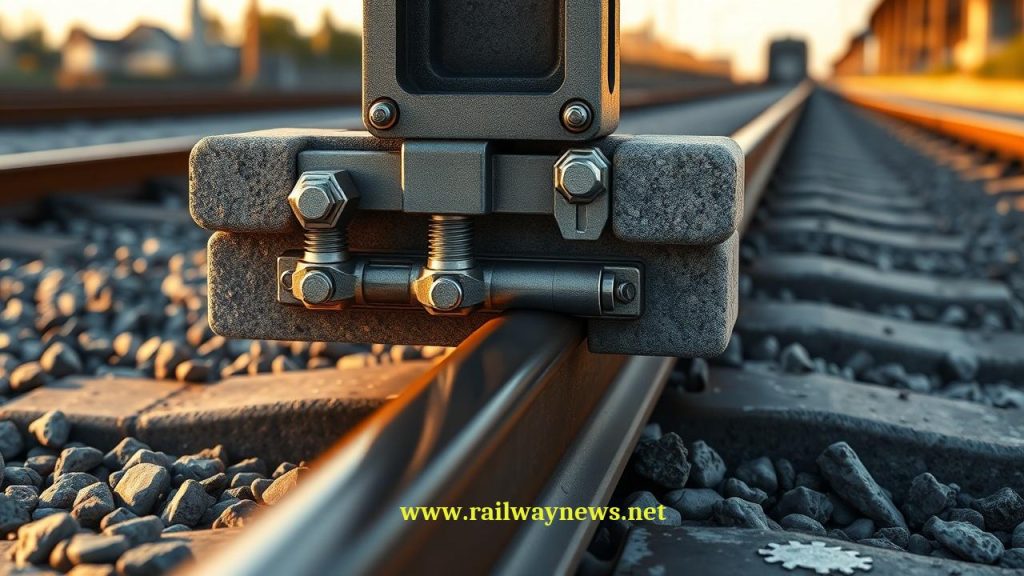
Understanding EN 13481-2: Performance Requirements for Fastening Systems on Concrete Sleepers
EN 13481-2 is a key European standard that specifies the performance requirements for fastening systems used with concrete sleepers in ballasted railway tracks. It is part of the broader EN 13481 series, which covers various aspects of track fastening systems, ensuring safety, reliability, and interoperability across the European rail network.
The primary function of a fastening system is to securely attach the rail to the sleeper, maintaining correct track gauge and alignment while resisting vertical, lateral, and longitudinal forces exerted by passing trains. This standard provides a detailed framework for testing and validating that these systems can perform their function effectively and safely over their intended service life.
Core Objectives and Scope of the Standard
The main objective of EN 13481-2 is to establish a unified set of laboratory test procedures and performance criteria for fastening systems. This ensures that products from different manufacturers meet a consistent level of quality and safety. The key objectives include:
- Defining Performance Criteria: Establishing clear, measurable benchmarks for static and dynamic load resistance, clamping force, and durability.
- Ensuring Safety: Validating that fastening systems can withstand the extreme forces of railway operations without failure.
- Promoting Interoperability: Facilitating the use of compliant components across different European railway networks, a cornerstone of the Technical Specifications for Interoperability (TSI).
- Providing a Basis for Type Approval: Creating a standardized procedure for manufacturers to demonstrate product compliance and for infrastructure managers to specify procurement requirements.
The scope of this standard is specifically for fastening systems on concrete sleepers in ballasted track for mainline railways. Other parts of the EN 13481 series cover systems for slab track, switches and crossings, and different sleeper materials.
Key Performance Requirements and Test Categories
EN 13481-2 outlines a series of rigorous laboratory tests designed to simulate the harsh conditions experienced by fastening systems in the field. These tests are grouped into several key categories.
Static Load Tests
These tests evaluate the system’s response to non-moving loads. A critical parameter measured is the static stiffness of the rail pad. The rail pad is the elastomeric component sitting between the rail and the sleeper. Its stiffness determines how load is transferred to the sleeper and influences the overall track stiffness, which affects ride comfort and component wear.
Dynamic and Fatigue Load Tests
Fatigue is a primary failure mode for track components. These tests simulate the repeated loading cycles from millions of passing wheelsets. The fastening assembly is subjected to high-frequency vertical and lateral loads to assess its fatigue resistance. The goal is to ensure that no components fracture and that the system maintains its clamping force and structural integrity over a long service life.
Clamping Force and Longitudinal Rail Restraint
Clamping force is the downward pressure exerted by the clips or screws on the rail foot. It is essential for preventing the rail from moving vertically or rotating. The standard defines requirements for the initial clamping force and how much it is allowed to decrease after being subjected to dynamic loading. Additionally, the test for longitudinal rail restraint measures the system’s ability to resist the rail’s tendency to creep or slip in the direction of train travel, which is critical for maintaining the stability of continuously welded rail (CWR).
Electrical Resistance
For tracks equipped with track circuit signalling systems, the fastening system must provide sufficient electrical insulation between the two rails. EN 13481-2 specifies a minimum electrical resistance value, which is tested under both dry and wet conditions to ensure reliable signal operation and prevent false occupations.
Comparison of Fastening System Categories
The standard defines different categories of fastening systems based on the expected traffic conditions, such as axle load and train speed. This allows for a more tailored and cost-effective selection of components for different types of railway lines. The table below illustrates typical categorizations.
| Category | Typical Maximum Axle Load (tonnes) | Minimum Clamping Force per Clip (kN) | Typical Application |
|---|---|---|---|
| Category A | Up to 18 | > 7.0 | Light traffic lines, metro systems |
| Category B | Up to 22.5 | > 9.0 | Conventional mixed-traffic main lines |
| Category C | Up to 26 | > 10.0 | Heavy-haul freight and high-speed passenger lines |
| Category D | Up to 30 | > 12.5 | Dedicated heavy-haul freight corridors |
| Category E | Over 30 | > 18.0 | Very heavy-haul applications |
Importance in the Railway Industry
Compliance with EN 13481-2 is non-negotiable for manufacturers and railway operators in Europe and many other regions that have adopted European standards. Its importance can be summarized as follows:
- Quality Assurance: It provides a common language and benchmark for quality, allowing infrastructure managers to procure components with confidence.
- Risk Mitigation: By verifying performance against fatigue, extreme loads, and environmental factors, the standard helps mitigate the risk of catastrophic track failures.
- Asset Management: The performance data obtained through these tests helps in predicting the service life of components, enabling more effective maintenance and renewal strategies.
- Innovation Benchmark: It sets a performance baseline that new and innovative fastening system designs must meet or exceed, driving technological advancement in the sector.
Conclusion
EN 13481-2 is a foundational standard for modern railway track engineering. By setting detailed performance requirements and a robust testing regime for fastening systems on concrete sleepers, it plays a critical role in ensuring the safety, durability, and operational efficiency of ballasted tracks. It acts as a vital link between component design, manufacturing, and in-track performance, underpinning the integrity of railway infrastructure across Europe and beyond.

Railway infrastructure, rolling stock and transport technologies specialist focused on global rail industry developments, high-speed rail systems, signaling technologies and freight transportation. Covering railway investments, public transport modernization, rail operations and international mobility projects across Europe, Asia and North America.