
CAF Gelsenkirchen-Bismarck Depot: Germany’s BEMU Rail Transformation
CAF starts Gelsenkirchen-Bismarck depot, a battery-electric rail hub, opening 2027.
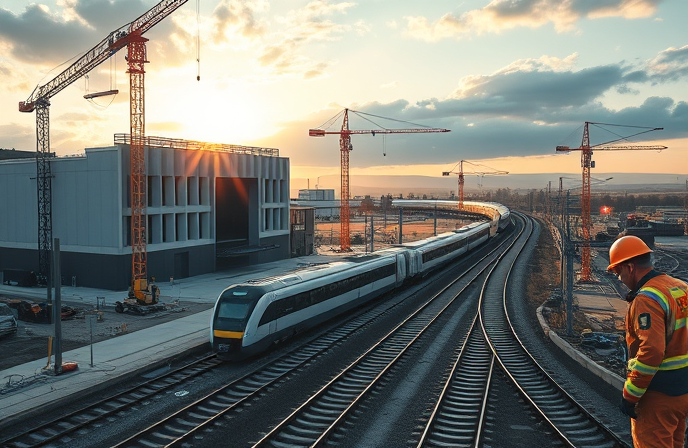
CAF Breaks Ground on Gelsenkirchen-Bismarck Depot, Ushering in Battery-Electric Era
In a significant step toward sustainable regional rail transport, CAF, a global leader in railway solutions, officially commenced construction and modernisation of the historic rail depot in Gelsenkirchen-Bismarck on July 9th, marked by a cornerstone-laying ceremony. This pivotal project, situated in Gelsenkirchen, Germany, aims to create a state-of-the-art maintenance hub for the new battery-electric multiple units (BEMU) scheduled to operate on the Niederrhein-Münsterland network, beginning in 2027. The “Who” is CAF and key regional stakeholders. The “What” is the construction of a modern maintenance depot. The “When” is now, with completion expected by the end of 2026. The “Where” is Gelsenkirchen-Bismarck. The “Why” is to support the long-term maintenance of a new, zero-emission train fleet, and the “How” involves a detailed depot overhaul and expansion. This article will delve into the specifics of the depot’s construction, its technological innovations, and its critical role in decarbonising regional rail services.
Revitalising Historic Infrastructure: The Depot’s Rebirth
The redevelopment of the Gelsenkirchen-Bismarck depot represents a substantial investment in regional rail infrastructure. Following the successful completion of the complex planning approval process in February 2025, CAF secured the construction permit, enabling the initiation of preparatory works ahead of the main construction phase. The project, spread across a 90,000-square-metre site, encompasses the installation of approximately 14 new switches and 3,500 metres of new track. The layout includes electrified tracks for vehicle delivery, dedicated areas for train parking, and fast battery charging facilities. Moreover, two critical access lines connecting the depot to the existing Deutsche Bahn (DB) infrastructure on both the eastern and western sides will be built, ensuring seamless operational integration. This detailed approach aims to transform a disused industrial site into a modern, efficient maintenance facility.
Technological Advancements: Key Features of the New Depot
The new depot is designed to incorporate cutting-edge technology to support the BEMU fleet. The facility will feature a three-track maintenance hall and several technical buildings, including a train exterior cleaning system and a wheelset processing unit. The incorporation of these advanced systems underlines CAF’s commitment to operational efficiency and the long-term sustainability of the BEMU fleet. The three-track maintenance hall allows for multiple trains to be serviced simultaneously, optimizing turnaround times. The wheelset processing unit is a critical element for ensuring the longevity and safety of the rolling stock. The entire facility, with its technical infrastructure and operational design, will promote efficiency and facilitate a faster transition to BEMU technology.
The Battery-Electric Revolution: Driving Decarbonisation
The Gelsenkirchen-Bismarck depot will play a crucial role in the ongoing transition from diesel-powered trains to zero-emission operations across the Niederrhein-Münsterland network. CAF is supplying 76 BEMUs to the regional transport authorities Verkehrsverbund Rhein-Ruhr (VRR) and Nahverkehrsverbund Westfalen-Lippe (NWL), who have prioritized the decarbonisation of public transport. The new BEMUs are scheduled to enter service starting in 2027, gradually replacing the existing diesel fleet. This initiative is a crucial step toward meeting regional climate goals and improving the quality of life for residents. The depot’s capacity to handle the maintenance requirements of the new electric fleet is therefore a strategic investment and the key to the ongoing success of this pivotal project.
Strategic Significance: Impact on Regional Development
The Gelsenkirchen-Bismarck depot project extends beyond mere infrastructure development. It has significant implications for the economic and urban regeneration of the surrounding area. The project combines sustainability, digitalisation, and operational efficiency, offering a model for future railway depot projects. The creation of a modern maintenance facility is expected to boost employment opportunities and stimulate related economic activities in the region. The project signifies a move toward sustainable and efficient transport systems. The project showcases how investments in modern railway infrastructure can revitalize industrial sites, drive regional economic growth, and contribute to a greener future.
Conclusion
The cornerstone-laying ceremony at Gelsenkirchen-Bismarck marks an important milestone in the advancement of sustainable rail transport in North Rhine-Westphalia. The new depot, scheduled for completion by the end of 2026, represents a significant investment in the region’s rail infrastructure. Its focus on modern maintenance technologies, electrified infrastructure, and efficient operational processes aligns with broader industry trends toward decarbonisation and operational efficiency. The successful delivery of the new BEMU fleet, coupled with the support provided by the Gelsenkirchen-Bismarck depot, will have a profound impact on the region’s rail network. The project underscores the critical role of robust maintenance infrastructure in enabling the large-scale adoption of zero-emission train technologies. This strategic investment is not only supporting the modernisation of regional rail systems but also fostering economic development and advancing the decarbonisation of public transport. The project serves as a case study for integrating sustainability, digitalisation, and operational efficiency in railway infrastructure, which should be a model for other industry initiatives looking to modernise their rail networks.
Company Summary: CAF
Construcciones y Auxiliar de Ferrocarriles (CAF) is a global designer and manufacturer of railway vehicles and components, based in Spain. CAF’s detailed portfolio includes high-speed trains, commuter trains, trams, locomotives, and metro vehicles. With a strong emphasis on innovation, CAF has been a pioneer in adopting new technologies such as battery-electric propulsion and advanced signaling systems. The company is deeply involved in project management, manufacturing, and after-sales services, making it a key player in the railway sector worldwide. CAF’s focus on sustainability and eco-friendly solutions is a key aspect of its projects.

Railway infrastructure, rolling stock and transport technologies specialist focused on global rail industry developments, high-speed rail systems, signaling technologies and freight transportation. Covering railway investments, public transport modernization, rail operations and international mobility projects across Europe, Asia and North America.
RELATED POSTS

October 1, 2026 7:09 am
United States regulators confirmed a September 30 deadline for the...

October 4, 2026 5:14 pm
Alstom secured a CA$4.7 billion order from VIA Rail Canada...

October 8, 2026 1:15 pm
Alstom secured a €1bn contract to build 13 automated trains,...

October 1, 2026 12:13 am
Illinois approved $1.5 billion annually for the Northern Illinois Transit...

October 6, 2026 2:14 am
Union Pacific launched export rail shipments with Ferromex to deliver...

October 1, 2026 6:10 am
Amtrak approved a System Expansion Committee on July 30 to...