
Network Rail Secures Barking Eurohub for £15M Freight Relaunch
Network Rail secured control of Barking Eurohub with a £15 million investment to relaunch UK-Europe rail freight services.
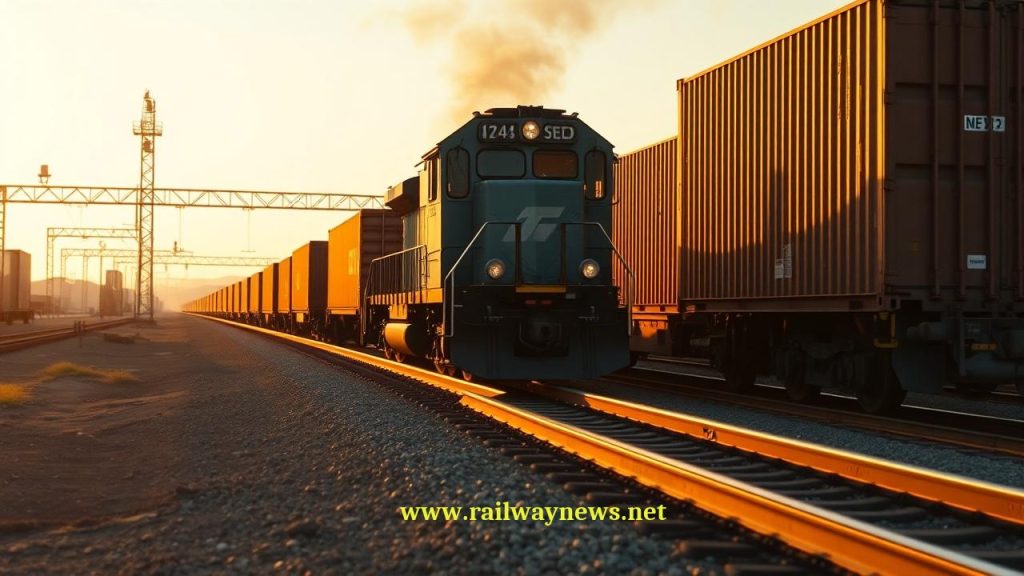
⚡ In Brief: The UK government has backed a GBP 15 million private investment plan for Network Rail to take control of the Barking Eurohub site in London, aiming to relaunch regular intermodal rail freight services to continental Europe through the Channel Tunnel.
LONDON – A GBP 15 million private investment will redevelop the Barking Eurohub in east London into an international logistics hub, following an agreement announced on February 25. The plan involves Network Rail and its property arm, Platform4, taking long-term control of the site from current owner Legal & General. This initiative is designed to restore regular intermodal freight services between the UK and mainland Europe via the Channel Tunnel.
What Is the Full Scope of This Project?
The project involves the transformation of the Barking Eurohub site to facilitate the relaunch of regular intermodal transport services through the Channel Tunnel. This investment will enable direct rail freight links for British companies to key European markets including France, Germany, Italy, and Spain. The government’s stated goal is to transfer freight from road to rail, thereby reducing congestion on critical routes in south-east England, such as the Dartford Crossing, M20, and M2 corridors.
Key Project Data
| Parameter | Value |
|---|---|
| Project / Contract Name | Barking Eurohub International Logistics Hub Redevelopment |
| Total Value | GBP 15 million (private investment) |
| Parties Involved | Network Rail, Platform4, Legal & General, UK Government |
| Timeline / Completion | Not disclosed in the announcement |
| Country / Corridor | UK / Channel Tunnel (linking to France, Germany, Italy, Spain) |
How Does This Compare to Similar Projects?
The GBP 15 million private investment for the Barking Eurohub is a targeted logistics infrastructure project. For scale, major public transport infrastructure projects are significantly larger; for example, AECOM secured a $1 billion contract in February 2026 for engineering services related to Seattle’s regional light rail expansion (Source: Construction Dive, 2026). While different in scope (freight vs. passenger), this comparison highlights the focused, commercially-driven nature of the Barking redevelopment versus large-scale, publicly funded network builds.
Editor’s Analysis
This investment in fixed infrastructure at Barking arrives at a critical juncture for the UK’s logistics sector. It directly addresses the chronic under-utilisation of the Channel Tunnel for freight and aligns with geopolitical pressures to secure reliable European trade routes. The project’s targeted nature contrasts with the wider UK rail freight market, which has seen underinvestment in new rolling stock, even as aging fleets create latent demand (Source: FreightCar America, 2025). By improving terminal capacity, this initiative could act as a catalyst, stimulating demand for new cross-channel services and potentially encouraging future investment in the intermodal wagon fleet.
FAQ
Q: Why is the Barking Eurohub important for UK-Europe trade?
A: It provides a dedicated international rail terminal in a key location in east London, enabling direct, regular intermodal freight services to continental Europe. This reduces reliance on trucks and short-sea shipping, aiming to ease road congestion.
Q: When will the new rail freight services start?
A: The announcement did not specify a completion date for the GBP 15 million redevelopment or a start date for the new services. This timeline will depend on the completion of the site transformation by Network Rail and Platform4.
Q: What specific impact will this have on road traffic?
A: The government aims to reduce truck congestion on key arteries in south-east England, specifically targeting the Dartford Crossing, M20, and M2 corridors. The volume of freight to be shifted and the resulting quantitative impact on traffic levels have not yet been officially confirmed.

Railway infrastructure, rolling stock and transport technologies specialist focused on global rail industry developments, high-speed rail systems, signaling technologies and freight transportation. Covering railway investments, public transport modernization, rail operations and international mobility projects across Europe, Asia and North America.
RELATED POSTS

October 1, 2026 7:09 am
United States regulators confirmed a September 30 deadline for the...

October 8, 2026 1:15 pm
Alstom secured a €1bn contract to build 13 automated trains,...

October 4, 2026 5:14 pm
Alstom secured a CA$4.7 billion order from VIA Rail Canada...

October 1, 2026 12:13 am
Illinois approved $1.5 billion annually for the Northern Illinois Transit...

October 6, 2026 2:14 am
Union Pacific launched export rail shipments with Ferromex to deliver...

October 1, 2026 6:10 am
Amtrak approved a System Expansion Committee on July 30 to...