
VR Completes €250M Rolling Stock Transfer in Finland
Finland’s VR transferred €250 million in rolling stock to state-owned Suomen Ostoliikennekalusto to boost rail competition.
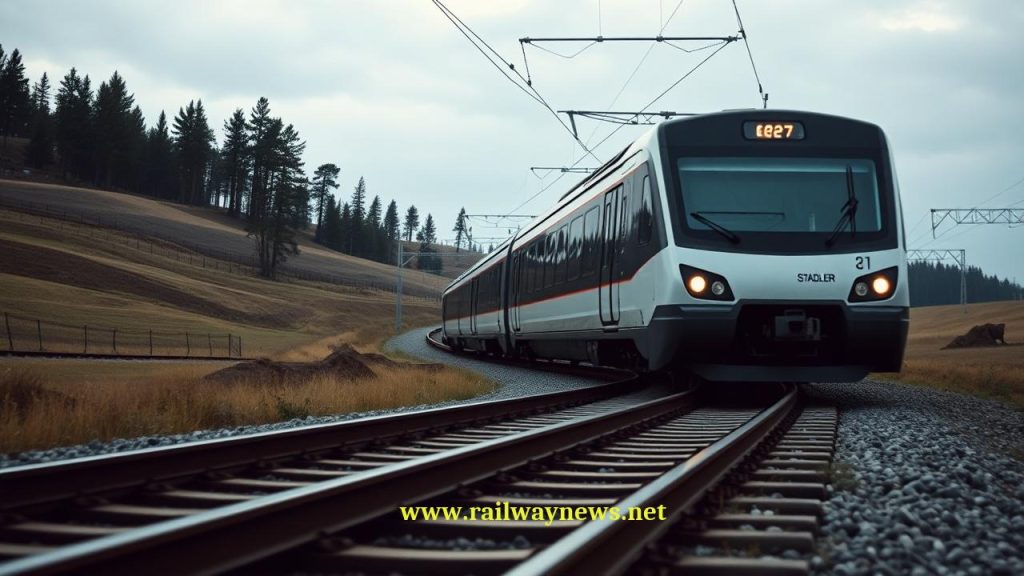
⚡ In Brief: Finland’s state rail operator, VR, is transferring rolling stock valued at approximately €250 million to a new state-owned leasing company, Suomen Ostoliikennekalusto, to facilitate open competition for subsidized passenger rail services ahead of new tenders.
HELSINKI, FINLAND – The Finnish state-owned rail operator, VR, signed an agreement on February 11, 2026, to transfer its publicly subsidized rolling stock to a newly established national leasing company, Suomen Ostoliikennekalusto. The transaction, valued at approximately €250 million, will occur in two stages during 2026. This move formalizes the separation of asset ownership from rail operations to prepare for competitive tendering.
What Is the Full Scope of This Development?
This business transfer establishes a state-owned rolling stock company (ROSCO) to own and manage assets for publicly funded passenger transport. The transfer from VR is structured in two phases, with the first, completing on March 2, 2026, including all suburban trains (such as 20 new Stadler Sm7 Flirt EMUs), existing night train carriages, and light railbuses. The second phase, scheduled for later in 2026, will cover newly delivered night train and car-carrier wagons. A decision on transferring the required locomotives has not yet been made. This follows the November 2025 transfer of Suomen Ostoliikennekalusto’s shares, valued at €15.1 million, from VR to direct state ownership.
Key Development Data
| Parameter | Value |
|---|---|
| Company / Organisation | VR-Yhtymä Oyj, Suomen Ostoliikennekalusto, Finnish State |
| Total Value | ~€250 million (rolling stock) + €15.1 million (share capital) |
| Parties Involved | VR, Suomen Ostoliikennekalusto, Ministry of Transport |
| Timeline / Completion | Phase 1: March 2, 2026; Phase 2: H2 2026 |
| Country / Corridor | Finland (Nationwide subsidized services) |
How Does This Compare to Industry Trends?
The creation of Suomen Ostoliikennekalusto is a structural reorganization, not a simple procurement deal. This contrasts with a recent major European rolling stock transaction, such as Comboios de Portugal’s contract with Alstom for 153 new trains, which is a direct fleet acquisition (Source: Alstom S.A., 2026). The Finnish model of separating asset ownership into a state-owned ROSCO is a well-established strategy in Europe to lower market entry barriers for new operators, who can then lease equipment rather than fund a large upfront capital purchase. This approach aligns with the principles of the EU’s Fourth Railway Package, which aims to stimulate competition by unbundling incumbent state operators.
Editor’s Analysis
This move is a critical step in Finland’s strategy to liberalize its passenger rail market. By creating an independent asset pool, the government ensures that all potential bidders for the next public service contract, effective after 2030, have equal access to the necessary rolling stock. This structural reform, combined with Finland’s ongoing investment in infrastructure modernization to increase capacity, demonstrates a coherent policy to boost competition and service quality. The trend of leveraging leasing models to manage fleets efficiently is growing across the European rail sector as operators focus on core transport services rather than asset management.
FAQ
Q: Why is VR transferring its trains to a new company?
A: The transfer creates a neutral, state-owned leasing company, Suomen Ostoliikennekalusto. This allows any operator who wins a future public service tender to lease the required trains, creating a level playing field for competition against the incumbent, VR.
Q: What specific trains are being transferred?
A: The initial transfer includes all suburban trains, such as the 20 new Stadler Sm7 Flirt EMUs, along with night train carriages, car transport wagons, and light railbuses. A decision regarding the transfer of locomotives will be made at a later date.
Q: Will this change affect passenger services immediately?
A: No, for passengers, services will remain unchanged. VR will continue to operate the trains under its current contract with the Ministry of Transport until the end of 2030, and the travel experience will be the same.

Railway infrastructure, rolling stock and transport technologies specialist focused on global rail industry developments, high-speed rail systems, signaling technologies and freight transportation. Covering railway investments, public transport modernization, rail operations and international mobility projects across Europe, Asia and North America.
RELATED POSTS

October 8, 2026 1:15 pm
Alstom secured a €1bn contract to build 13 automated trains,...

October 1, 2026 7:09 am
United States regulators confirmed a September 30 deadline for the...

October 8, 2026 12:18 pm
Siemens Mobility signed an agreement with VinSpeed to supply 350...

October 4, 2026 5:14 pm
Alstom secured a CA$4.7 billion order from VIA Rail Canada...

October 5, 2026 6:12 pm
AECOM and Jacobs secured a contract in September 2026 to...

October 1, 2026 12:13 am
Illinois approved $1.5 billion annually for the Northern Illinois Transit...