
Banedanmark Launches Battery Train Operations on 67 km Line, Denmark
Banedanmark launched battery train operations on Denmark’s 67 km Skjern–Holstebro line, deploying 7 Siemens Mireo Plus B trains and cutting 1,900 tons CO₂ annually.
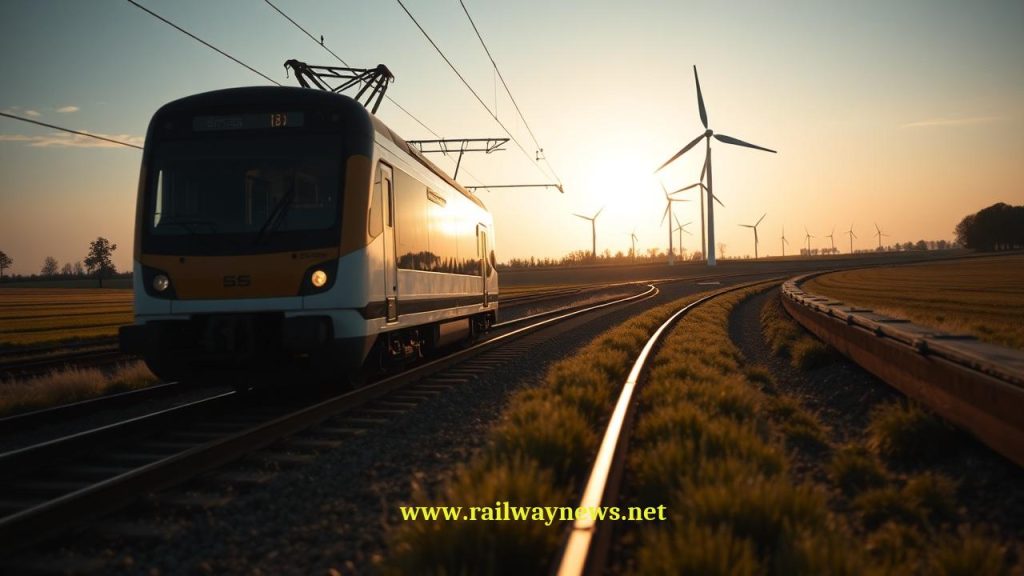
Banedanmark Launches Battery Train Operations on First State Line
Banedanmark, Denmark’s national railway infrastructure administrator, has commissioned the country’s first battery-train charging facilities on the 67 km Skjern–Holstebro state railway line. The new infrastructure supports a fleet of seven Siemens Mireo Plus B trains, making the route the first on the national network to transition from diesel to zero-emission battery-electric operation. This project eliminates approximately 1,900 tons of CO₂ emissions annually from the previously diesel-operated service.
Technical Implementation and Pilot Program
To evaluate different charging technologies, Banedanmark has deployed two distinct solutions at opposite ends of the line. At Holstebro station, a charging rail has been installed, requiring the train to stop at a precise position for power transfer. In contrast, Skjern station features a dedicated catenary system for charging. Both facilities operate at 25,000 V and can deliver a sufficient charge for the next leg of the journey in 7–8 minutes during a standard station stop.
The project required infrastructure upgrades along the corridor to accommodate the new rolling stock, which is heavier than the diesel railcars it replaced. According to Kasper Skovbro-Hansen, project manager for charging infrastructure at Banedanmark, integrating this new technology into an older railway network presented a complex technical challenge. The seven Siemens Mireo Plus B hybrid battery-electric trains are operated by the regional public transport company Midtjyske Jernbaner. The fleet serves both the Skjern–Holstebro state line and the Vemb–Lemvig–Thyborøn regional line.
“[China’s] $2.3B [funding] creates a crucial Eurasian trade route.” – China Secures CKU Railway Funding: $2.3B Loan Signed (Jan 2026) 📌
| Metric | Value |
|---|---|
| Affected Corridor | Skjern–Holstebro |
| Line Length | 67 km |
| Rolling Stock | 7 Siemens Mireo Plus B units |
| Charging Voltage | 25,000 V |
| Station Charging Time | 7–8 minutes |
| Annual CO₂ Reduction | ~1,900 tons |
Strategic Context and Market Implications
The commissioning of the Skjern–Holstebro line is a key early-stage implementation of Denmark’s “Infrastrukturplan 2035.” This national strategy mandates that all state-owned rail traffic becomes emission-free. The plan designates battery-powered trains as the default solution for lines that will not be electrified with traditional overhead catenary systems. The project’s pilot of two different charging systems provides Banedanmark with critical operational data to guide future procurement and deployment across the national network.
Denmark’s decision to standardize on battery-electric technology for non-catenary routes reflects a wider European trend away from hydrogen-based solutions for regional rail and bus transport. Recent data shows battery-electric systems offer a more favorable total cost of ownership. For instance, analysis from failed hydrogen bus projects in Aberdeen indicated that battery-electric vehicles operated at approximately £0.59 per km, compared to £1.76 to £2.23 per km for hydrogen-powered equivalents. Similar economic and infrastructural challenges have led to the cancellation of hydrogen train programs in parts of Germany, reinforcing the financial case for battery-electric technology in applications like the one in Denmark.
Next Steps
The operational data gathered from the Skjern and Holstebro charging facilities will inform the strategy for rolling out battery-train technology on other Danish state-owned railway lines not scheduled for full electrification under the “Infrastrukturplan 2035.”

Railway infrastructure, rolling stock and transport technologies specialist focused on global rail industry developments, high-speed rail systems, signaling technologies and freight transportation. Covering railway investments, public transport modernization, rail operations and international mobility projects across Europe, Asia and North America.
RELATED POSTS

October 8, 2026 1:15 pm
Alstom secured a €1bn contract to build 13 automated trains,...

October 1, 2026 7:09 am
United States regulators confirmed a September 30 deadline for the...

October 4, 2026 5:14 pm
Alstom secured a CA$4.7 billion order from VIA Rail Canada...

October 1, 2026 12:13 am
Illinois approved $1.5 billion annually for the Northern Illinois Transit...

October 5, 2026 6:12 pm
AECOM and Jacobs secured a contract in September 2026 to...

October 4, 2026 11:08 pm
Sound Transit confirmed the September 30 opening of Seattle Pinehurst...