
Bavaria, Czechia Relaunch 15-Yr, 2.8M Km/Yr Munich-Prague Rail Tender
Bavarian railway authority and Czech Ministry relaunch a 15-year Munich-Prague rail tender, covering 2.8 million km/yr after 2024 failure.
📉 Market Brief:
- Event: Second tender for Munich-Prague cross-border rail contract issued.
- Key Data: 15-year term covering 2.8 million train-kilometers annually.
- Impact: Revised terms aim to attract bidders after 2024 tender failure.
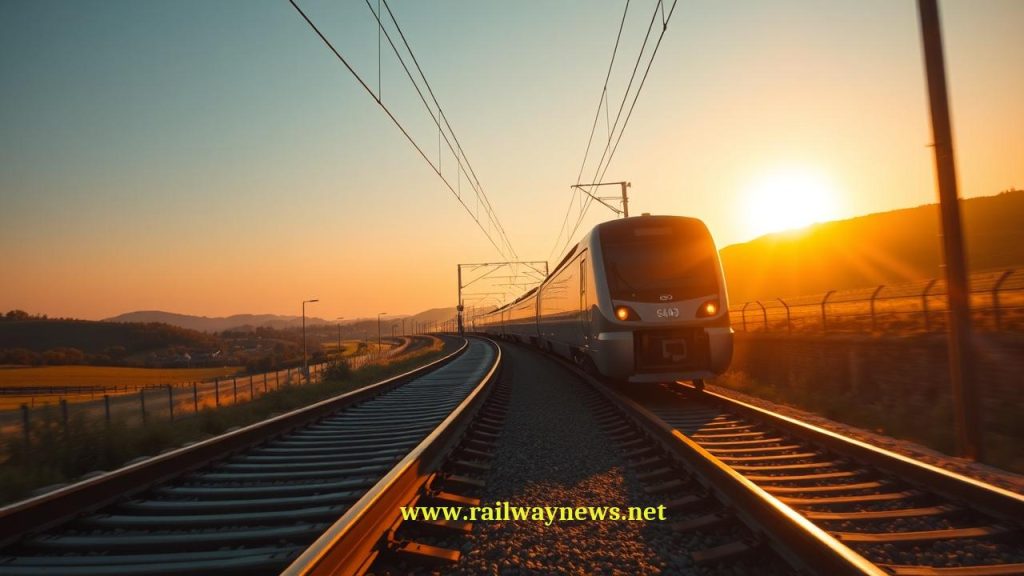
A second tender for the operation of the Munich–Regensburg–Prague rail corridor has been launched by the Bavarian railway authority Bayerische Eisenbahngesellschaft (BEG) and the Czech Ministry of Transport. The new procedure for the RE/Ex 36 regional line follows the cancellation of the initial tender in autumn 2024, which failed to produce any economically viable bids from operators. The contract is structured as a negotiation process with a preliminary selection stage at the European level.
The service agreement put to tender covers a 15-year period, scheduled to run from December 2031 to December 2046. This start date is noted in the primary tender documents, although separate verification data suggested a December 2030 commencement. The contract entails an annual volume of approximately 2.8 million train-kilometers, with 1.8 million of that total occurring within Bavaria. The transport offer maintains the existing two-hour service frequency. A new late evening service from Prague to Munich, with a departure from the Czech capital scheduled for approximately 19:45, will be introduced to enhance connectivity.
Officials have adjusted the award conditions based on the failure of the first procedure. Bärbel Fuchs, CEO of BEG, stated that important conclusions were drawn, leading to simplified requirements and conditions designed to limit costs for potential bidders. “In the future, fewer locomotives, fewer maneuvers, and, implicitly, fewer staff will be needed,” Fuchs explained. These changes are intended to lower operational expenditures and reduce congestion at the central stations in Munich and Regensburg.
Operational complexity on the route is a primary challenge, stemming from a mix of electrified and non-electrified sections and three distinct power supply systems. Currently, trains undergo three separate locomotive changes: in Regensburg, Schwandorf, and Plzeň. The new contract fundamentally alters this model. It mandates continuous operation between Munich and Plzeň without a locomotive change, a feat to be accomplished through the use of hybrid locomotives. A single locomotive change will remain necessary in Plzeň to accommodate the different power systems between Germany and the Czech Republic.
Despite the cost-reduction measures, BEG has retained the requirement for new rolling stock to maintain a high standard of passenger comfort on the international route. The current operator utilizes passenger cars dating to the 1980s on the Bavarian segment. The new contract requires vehicles with a minimum capacity of 500 seats to meet rising demand, especially on the Regensburg–Plzeň section. These new trains must be air-conditioned and equipped with Wi-Fi. While passenger cars must be new, the use of second-hand locomotives will be permitted.
“The rail link between the two major European centers of Prague and Munich is extremely important for both Bavaria and the Czech Republic,” said Christian Bernreiter, Bavarian Minister of Transport and Chairman of the BEG Supervisory Board. “This is a significant European mainline, and the high complexity of the project requires sufficient preparation time.”
| Metric | Value / Specification |
|---|---|
| Route Designation | RE/Ex 36 (Munich–Regensburg–Prague) |
| Contract Term | December 2031 – December 2046 |
| Annual Service Volume | ~2.8 million train-kilometers |
| Bavarian Service Volume | ~1.8 million train-kilometers |
| Minimum Seat Capacity | 500 per train |
| Locomotive Changes (Current) | 3 (Regensburg, Schwandorf, Plzeň) |
| Locomotive Changes (New Contract) | 1 (Plzeň) |
| Passenger Rolling Stock | New, air-conditioned, Wi-Fi equipped |
For the interim period between December 2028 and the start of the new long-term contract in December 2031, separate, shorter-term contracts will be established in both countries. The tender process for the Bavarian portion of this interim service has been underway since September 2025. Additionally, additional peak-hour train services on the Regensburg–Munich and Regensburg–Hof (RE 23) routes are not included in this tender and will be procured under separate rail service contracts.
The revised award procedure represents a concerted effort by German and Czech authorities to secure a stable, long-term operator for a vital cross-border rail project. The adjustments to technical and financial requirements are designed to make the complex route a more attractive and sustainable proposition for European rail operators.
When HS2 first announced this, the project aimed to minimize disruption. Full article title 📰

Railway infrastructure, rolling stock and transport technologies specialist focused on global rail industry developments, high-speed rail systems, signaling technologies and freight transportation. Covering railway investments, public transport modernization, rail operations and international mobility projects across Europe, Asia and North America.
RELATED POSTS
October 8, 2026 8:15 pm
Siemens Mobility secured an order from NWL to supply 61...
October 8, 2026 12:13 am
Europe expanded its railway management market to $19.3B in 2025...
October 8, 2026 7:13 pm
Infrabel confirmed the full rollout of ETCS Level 2 digital...
October 14, 2026 12:15 pm
EKFB completed the 320-metre Westbury viaduct for UK HS2 in...
October 16, 2026 6:12 pm
Salcef confirmed the March 2026 sale of Quality Track Equipment...