
Paris Metro’s Green Revolution: Stadler Battery Locomotives
This article discusses Stadler’s contract with RATP for twelve battery-powered locomotives designed for modernizing Paris Metro infrastructure, highlighting the industry trend towards sustainable rail solutions.
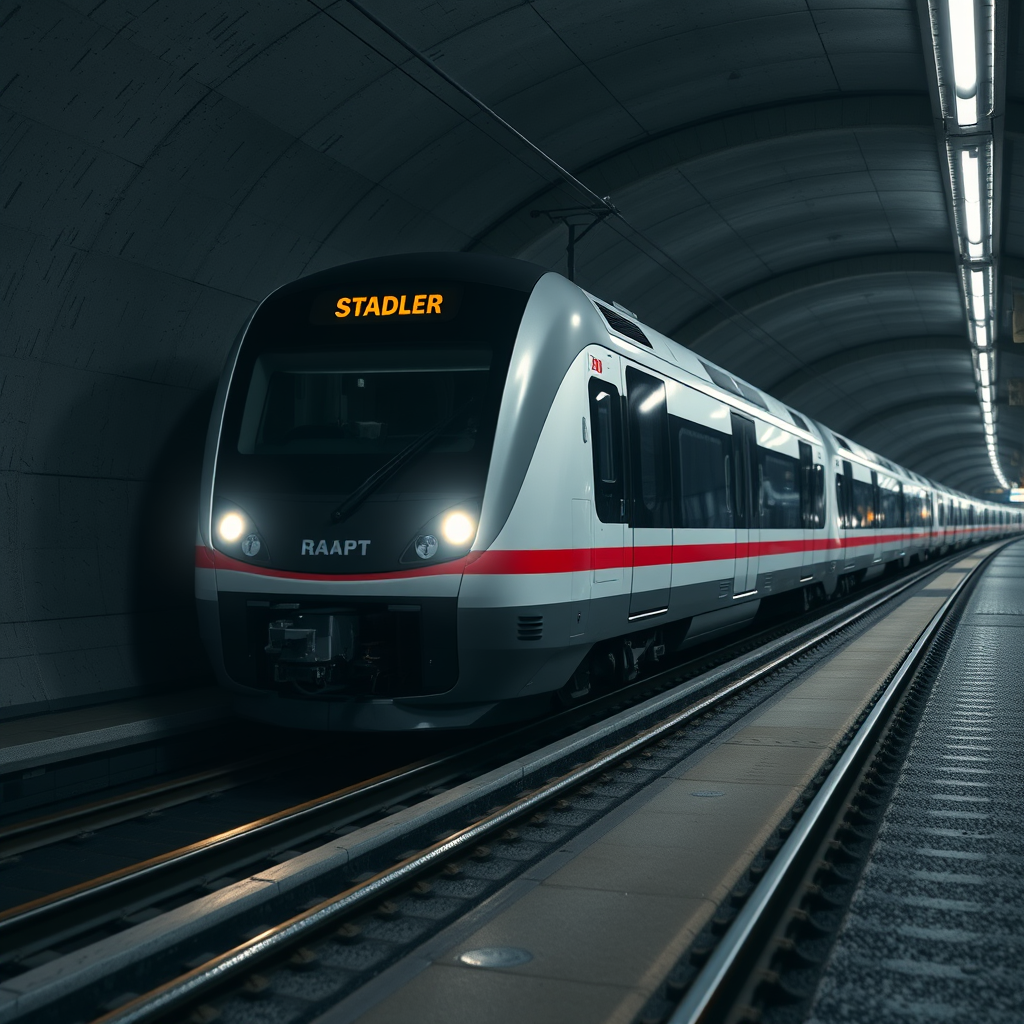
This article explores the recent order placed by the Régie Autonome des Transports Parisiens (RATP) (Paris Public Transport Authority) with Stadler, a Swiss rolling stock manufacturer, for twelve battery-powered locomotives designed for maintaining the extensive Paris Metro network. This significant investment highlights RATP’s commitment to modernizing its infrastructure and improving maintenance efficiency. The selection of battery-powered locomotives underscores a growing trend in the rail industry towards sustainable and environmentally friendly solutions. The article will delve into the technical specifications of these locomotives, their operational capabilities within the complex Paris Metro system, and the broader implications of this procurement for the future of urban rail maintenance. We will also examine the wider context of sustainable practices within the railway industry, considering both electric and hybrid locomotive technologies and their role in reducing the environmental impact of rail operations. The strategic importance of this deal, both for Stadler and RATP, will also be analyzed, along with a look at Stadler’s other projects and market presence.
State-of-the-Art Battery-Powered Locomotives for Paris Metro
Stadler’s contract with RATP represents a significant advancement in urban rail maintenance technology. The twelve custom-designed locomotives, with an option for two more, are specifically engineered for the unique challenges of the Paris Metro’s 245km network. Their four-axle design, 15-meter length, and fully automatic couplings allow for efficient operation in the network’s often tight curves and tunnels. The ability to operate in double traction further enhances operational flexibility and capacity. Crucially, these locomotives are compatible with both the conventional steel-wheeled trains and the rubber-tyred Pneu-Metro vehicles, ensuring versatility across all 14 lines of the Paris Metro.
Operational Capabilities and Sustainability
A key feature of these locomotives is their battery power capability. This allows them to operate independently of the conductor rail, a critical feature for tunnel operations and construction sites where the conductor rail might be deactivated. This flexibility significantly reduces downtime and enhances the efficiency of maintenance tasks. The adoption of battery power aligns directly with RATP’s commitment to environmental sustainability, reducing reliance on traditional power sources and minimizing the carbon footprint of maintenance activities. This is in line with the wider railway industry shift towards sustainable solutions, encompassing both electric and hybrid technologies.
Strategic Implications and Stadler’s Market Position
The RATP order strengthens Stadler’s position as a leading provider of innovative rolling stock solutions. The success in securing this contract highlights Stadler’s ability to deliver customized solutions that meet the specific needs of demanding urban rail networks. Stadler’s experience with EuroDual, Euro4001, and Euro6000 locomotives already operating in France, Belgium, and Spain demonstrates their proven track record in the European rail market. Additionally, their recent collaboration with SZU (Sihltal Zürich Uetliberg Bahn) on signaling system upgrades in Switzerland further showcases their expertise across various aspects of railway infrastructure development.
Environmental Considerations and Future Trends
The Paris Metro’s investment in battery-powered locomotives signifies a growing industry-wide trend toward sustainable practices in rail operations. The use of battery technology reduces reliance on fossil fuels, lowering emissions and contributing to a greener transportation system. This aligns with broader global efforts to mitigate the environmental impact of transportation networks. The success of this initiative could encourage other urban rail operators to adopt similar solutions, accelerating the transition towards a more sustainable future for urban rail systems. The development and implementation of hybrid locomotives, combining battery power with alternative energy sources, also represents a significant area of innovation within the industry. The focus on sustainability extends beyond the mere choice of power sources, encompassing the entire lifecycle of the locomotives, from manufacturing to eventual disposal or recycling.
Conclusion
The RATP’s acquisition of Stadler’s battery-powered locomotives marks a significant milestone in urban rail maintenance. These locomotives, tailored for the complexities of the Paris Metro, represent a powerful combination of advanced technology and environmental consciousness. Their ability to operate independently of the conductor rail enhances operational flexibility and efficiency, while their battery power significantly reduces environmental impact, aligning perfectly with RATP’s sustainability goals. Stadler’s success in securing this contract highlights their expertise in providing customized solutions and reinforces their position within the European rail market. The broader implications of this deal extend beyond a single procurement; it represents a key step towards the wider adoption of sustainable practices within the rail industry, pushing innovation in hybrid and battery-powered technologies and setting a precedent for other urban rail networks seeking to modernize and improve their operational efficiency while minimizing their environmental footprint. The long-term success of this initiative will depend on factors such as battery technology advancements, infrastructure adaptations, and cost-effectiveness, but the project provides a valuable case study for the future of sustainable urban rail maintenance. This successful partnership between RATP and Stadler provides a compelling example of how technological innovation and environmental responsibility can work hand-in-hand to improve urban transportation systems.

Railway infrastructure, rolling stock and transport technologies specialist focused on global rail industry developments, high-speed rail systems, signaling technologies and freight transportation. Covering railway investments, public transport modernization, rail operations and international mobility projects across Europe, Asia and North America.
RELATED POSTS

October 1, 2026 7:09 am
United States regulators confirmed a September 30 deadline for the...

October 8, 2026 1:15 pm
Alstom secured a €1bn contract to build 13 automated trains,...

October 4, 2026 5:14 pm
Alstom secured a CA$4.7 billion order from VIA Rail Canada...

October 8, 2026 12:18 pm
Siemens Mobility signed an agreement with VinSpeed to supply 350...

October 5, 2026 6:12 pm
AECOM and Jacobs secured a contract in September 2026 to...

October 4, 2026 11:08 pm
Sound Transit confirmed the September 30 opening of Seattle Pinehurst...