
Rail Baltica Reports 19-21% Tax Return for Baltic States
Baltic states recoup 19-21% direct tax revenue from every euro invested in Rail Baltica construction.
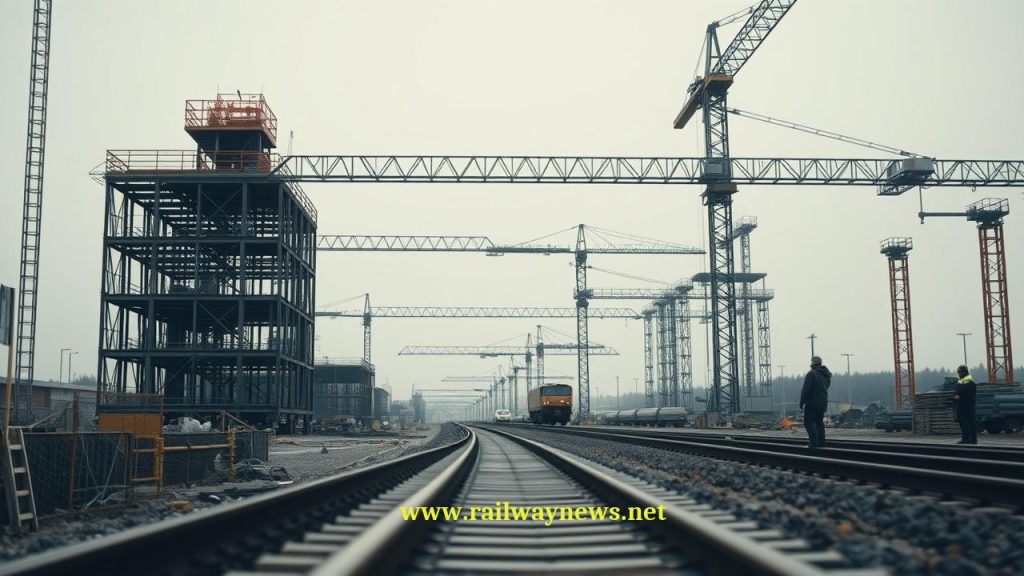
⚡ In Brief: A new fiscal analysis of the Rail Baltica project reveals that for every euro invested during construction in Estonia, Latvia, and Lithuania, between 19 and 21 cents will return to the respective state budgets as direct tax revenue.
[RIGA, LATVIA] – A fiscal analysis for the Rail Baltica project shows that for every euro invested in its construction across Estonia, Latvia, and Lithuania, state budgets will recoup between 19 and 21 cents in tax revenues. The study, which complements the 2024 cost-benefit analysis, finds the project fiscally viable even under conservative scenarios. This return is generated from VAT, income tax, and social contributions during the construction phase alone, providing a tangible short-term financial benefit to the host nations.
How Is the Funding Structured?
The analysis focuses strictly on the fiscal return to national budgets during the project’s construction phase. It models three financial scenarios (conservative, optimistic, and a public-private partnership for Latvia) to assess the net cost to each state after accounting for European Union funds and the recovery of domestic taxes. The study calculates that tax revenues from activities like earthworks, signalling, and station construction will generate a 19-21% return on every euro spent. This calculation does not include subsequent economic multipliers, such as local spending by employees, meaning the actual return could be higher. Significantly, the analysis excludes all long-term operational costs, maintenance expenses, and the procurement of rolling stock.
Key Funding Data
| Parameter | Value |
|---|---|
| Fund / Programme Name | Rail Baltica Fiscal Viability Analysis |
| Total Value | Project value not specified in analysis; focus is on a 19-21% tax return rate on investment. |
| Parties Involved | Governments of Estonia, Latvia, Lithuania; Bank of Latvia; CentAR research center |
| Timeline / Completion | Analysis covers the construction period only; specific end date not provided. |
| Country / Corridor | Estonia, Latvia, Lithuania (Rail Baltica corridor) |
How Does This Compare to Similar Funding Programs?
The Rail Baltica fiscal model, which quantifies tax clawback from investment, contrasts with fiscal incentive strategies used elsewhere in Europe to stimulate large-scale projects. For example, Portugal recently introduced a new tax framework for housing investment that includes reduced VAT rates on construction and exemptions from property transfer tax. This approach uses tax reduction as a direct incentive for development, whereas the Rail Baltica analysis measures the inherent fiscal return under existing tax laws. The 19-21% return figure provides a quantifiable justification for state expenditure, demonstrating a direct cash-flow benefit to the treasury rather than a tax concession. The total tax take from economic activity in larger economies like the UK, where income tax and National Insurance alone make up 42% of government revenue, provides a scale context for the importance of such revenue streams from mega-projects (Source: LBC, International Tax Review).
Editor’s Analysis
This fiscal analysis serves as a powerful political and financial communications tool for the Rail Baltica joint venture. By quantifying the immediate tax revenue, project backers can counter narratives focused solely on escalating costs and the long-term, often abstract, economic benefits. This strategy of highlighting short-term fiscal sustainability is becoming increasingly vital for securing public and political support for mega-projects, especially as other major initiatives, like Canada’s high-speed rail corridor, shift towards more transparent and structurally expensive cost estimates (Source: CleanTechnica). The analysis effectively reframes the national contribution not as a sunk cost but as a recirculating investment with a measurable return to the state budget.
FAQ
Q: What is the main finding of the Rail Baltica fiscal analysis?
A: The main finding is that during the construction phase, every euro invested is projected to return between 19 and 21 cents to the national budgets of Estonia, Latvia, and Lithuania through taxes like VAT, income tax, and social contributions.
Q: Does this analysis cover the total cost of the project over its lifetime?
A: No, the analysis focuses exclusively on the construction phase and its direct tax implications. It explicitly does not include long-term costs for operations, maintenance, or the future procurement of trains and other rolling stock.
Q: How does this tax return affect the net cost for the Baltic states?
A: By factoring in these recovered tax revenues, the net financial burden on each state’s budget is reduced. The report suggests this brings the national contribution much closer to the originally estimated 15% share, with the European Union’s co-financing covering the majority of the gross cost.

Railway infrastructure, rolling stock and transport technologies specialist focused on global rail industry developments, high-speed rail systems, signaling technologies and freight transportation. Covering railway investments, public transport modernization, rail operations and international mobility projects across Europe, Asia and North America.
RELATED POSTS

October 8, 2026 1:15 pm
Alstom secured a €1bn contract to build 13 automated trains,...

October 1, 2026 7:09 am
United States regulators confirmed a September 30 deadline for the...

October 8, 2026 12:18 pm
Siemens Mobility signed an agreement with VinSpeed to supply 350...

October 4, 2026 5:14 pm
Alstom secured a CA$4.7 billion order from VIA Rail Canada...

October 5, 2026 6:12 pm
AECOM and Jacobs secured a contract in September 2026 to...

October 1, 2026 12:13 am
Illinois approved $1.5 billion annually for the Northern Illinois Transit...