
SAR Launches 1,700 km Freight Rail Corridor Persian Gulf Jordan
Saudi Arabia Railways launched a 1,700 km freight rail corridor connecting Persian Gulf ports to Jordan as a strategic alternative to the Strait of Hormuz.
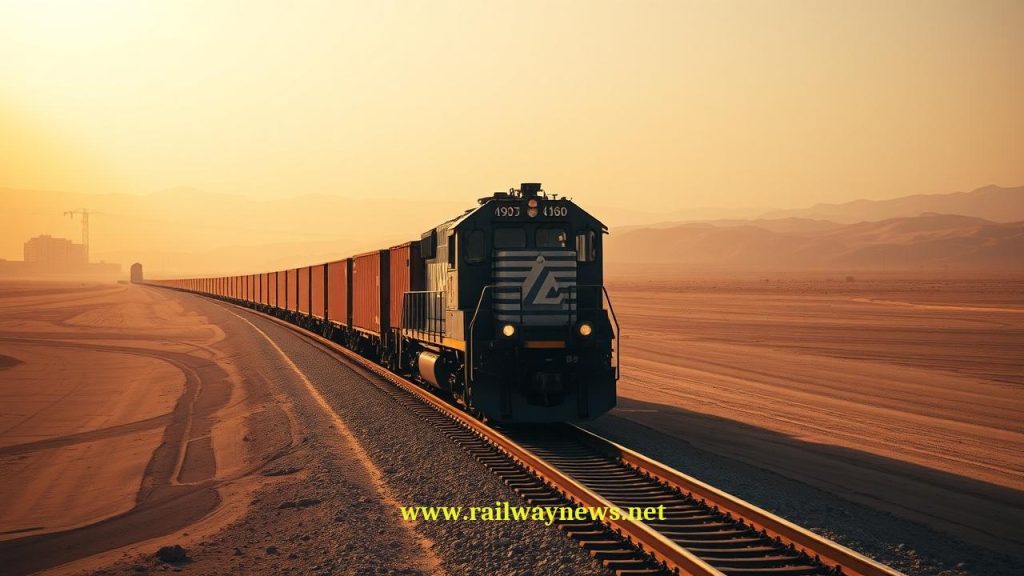
⚡ In Brief: Saudi Arabia Railways has launched a 1,700 km freight rail corridor connecting Persian Gulf ports to Jordan as a strategic alternative to the Strait of Hormuz, where maritime traffic has plummeted by over 90% amid regional conflict.
RIYADH, SAUDI ARABIA – Saudi Arabia Railways (SAR) has launched a new 1,700 km freight rail corridor connecting its Eastern Province ports with the Al Haditha border crossing into Jordan. The route is designed to provide a land-based alternative to the Strait of Hormuz for regional trade. Each train on the new line has a capacity of over 400 containers, aiming to significantly reduce transit times compared to road transport.
What Is the Full Scope of This Project?
The project establishes a direct land bridge between Persian Gulf ports—including Dammam, King Fahd Industrial Port, and Jubail Commercial Port—and Jordan, creating onward access to the Port of Aqaba on the Red Sea. The 1,700 km corridor is bidirectional, handling both imports and exports to bypass maritime chokepoints. The initiative is a core component of Saudi Arabia’s National Transport and Logistics Strategy, which aims to transform the Kingdom into a global logistics hub under the Vision 2030 program.
Key Project Data
| Parameter | Value |
|---|---|
| Project / Contract Name | Saudi Landbridge Alternative Corridor |
| Total Value | Not disclosed |
| Parties Involved | Saudi Arabia Railways (SAR) |
| Timeline / Completion | Launched; full operational timeline not disclosed |
| Country / Corridor | Saudi Arabia / Jordan |
How Does This Compare to Similar Projects?
The corridor’s strategic value is best understood in the context of the severe disruptions to its primary alternative, the Strait of Hormuz. Recent regional conflict has reduced daily ship transits through the strait from an average of 129 to just 4, a traffic decline of over 97% (Source: Seatrade Maritime). This disruption has cost Gulf states an estimated $20 billion to $25 billion, highlighting the economic vulnerability the rail line is designed to mitigate. Compared to road transport, a single train on the new corridor can carry over 400 containers, replacing the equivalent of 400 long-haul trucks. Based on current market pricing for a 2025 IVECO S-WAY truck at approximately $219,800, one train convoy replaces a road fleet with a capital equipment value of over $87.9 million (Source: Australian Mining).
Editor’s Analysis
This rail corridor is less a simple infrastructure project and more a strategic geopolitical maneuver by Saudi Arabia to assert its role as the dominant regional logistics hub. By creating a reliable land bridge, SAR is directly capitalizing on the instability of traditional maritime routes, offering a tangible solution to global supply chain fragility. The project mirrors a broader trend of Middle Eastern nations investing heavily in logistics infrastructure to diversify their economies, as seen with the UAE’s Etihad Rail network, creating a competitive environment for regional trade flows.
FAQ
Q: What is the main purpose of the new Saudi rail corridor?
A: The main purpose is to create a secure and efficient land-based freight route from the Persian Gulf to Jordan and the Red Sea. It serves as a strategic alternative to the vulnerable Strait of Hormuz maritime chokepoint.
Q: How much faster is the train compared to trucks?
A: The new rail connection is designed to cut transit times in half compared to conventional long-distance road transport across the same 1,700 km route.
Q: What is the total investment cost for this project?
A: The total investment value for the construction and launch of the 1,700 km corridor has not been officially disclosed by Saudi Arabia Railways.

Railway infrastructure, rolling stock and transport technologies specialist focused on global rail industry developments, high-speed rail systems, signaling technologies and freight transportation. Covering railway investments, public transport modernization, rail operations and international mobility projects across Europe, Asia and North America.
RELATED POSTS

October 8, 2026 1:15 pm
Alstom secured a €1bn contract to build 13 automated trains,...

October 1, 2026 7:09 am
United States regulators confirmed a September 30 deadline for the...

October 8, 2026 12:18 pm
Siemens Mobility signed an agreement with VinSpeed to supply 350...

October 4, 2026 5:14 pm
Alstom secured a CA$4.7 billion order from VIA Rail Canada...

October 5, 2026 6:12 pm
AECOM and Jacobs secured a contract in September 2026 to...

October 1, 2026 12:13 am
Illinois approved $1.5 billion annually for the Northern Illinois Transit...