
Finland Launches Tornio-Haparanda Passenger Rail After 30 Years
Finland invested €1.9 million to restore Tornio-Haparanda passenger rail service after a 30-year hiatus.
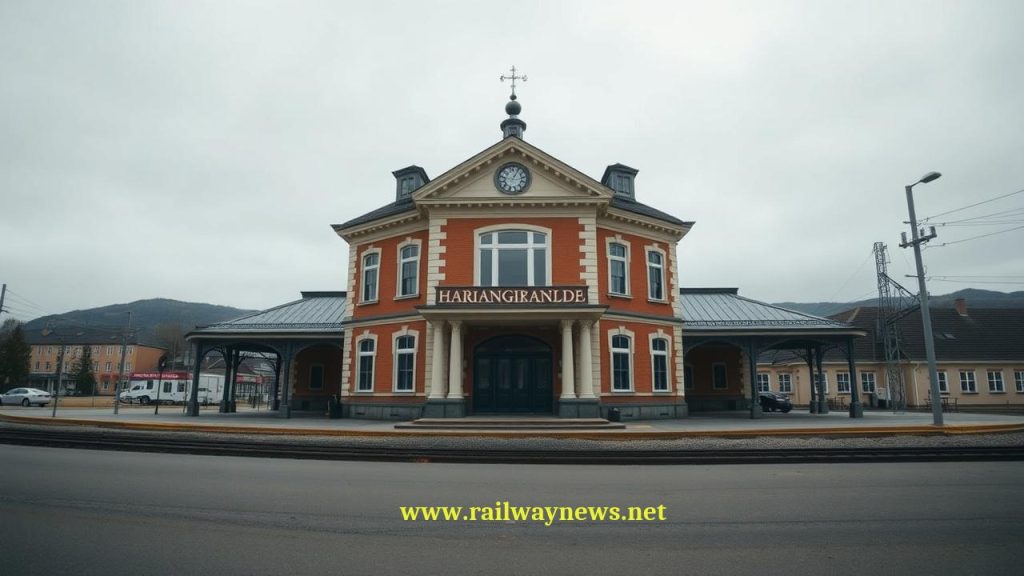
⚡ In Brief: Finland and Sweden will restore passenger rail service on the Tornio-Haparanda line for the first time in over 30 years, with a €1.9 million investment from the Finnish government to re-establish a key cross-border connection to the European network.
HELSINKI/STOCKHOLM – After a hiatus of more than three decades, passenger rail services are set to resume between Tornio, Finland, and Haparanda, Sweden, this summer. The Finnish government has allocated €1.9 million to support the launch, which could occur as soon as late June. This project will restore Finland’s direct passenger rail access to the broader European network.
What Is the Full Scope of This Project?
The project’s primary goal is to re-establish a passenger rail connection across the Finnish-Swedish border, creating a transfer hub at the historic Haparanda station. The initiative involves infrastructure adjustments to accommodate passenger traffic and the restoration of the Haparanda station building. Due to differing track gauges—1,524 mm in Finland and 1,435 mm in Sweden—the service will not be a direct through-train; instead, passengers on Finnish VR trains will transfer to Swedish Norrtåg services. The precise rolling stock to be used on the cross-border section has not been specified.
Key Project Data
| Parameter | Value |
|---|---|
| Project / Contract Name | Tornio–Haparanda Rail Link Restoration |
| Total Value | €1.9 million (Finnish state funding for 2026 launch) |
| Parties Involved | Finnish Government, City of Tornio, VR (Finland), Norrtåg (Sweden) |
| Timeline / Completion | Potential service launch late June 2024 |
| Country / Corridor | Finland / Sweden |
How Does This Compare to Similar Projects?
The Tornio-Haparanda project’s €1.9 million funding highlights a focus on strategic connectivity over large-scale infrastructure spending. For comparison, Switzerland’s Gornergrat Bahn recently invested approximately CHF 30 million (approx. €30.5 million) in a new fleet of Stadler POLARIS trains to modernize a single high-value tourist route (Source: Global Railway Review, 2024). The Finnish project’s value is modest, reflecting its function as a critical link rather than a high-capacity upgrade. This targeted spending also occurs as Finland commits to significant defense investments, such as its participation in the multi-nation CV90 Infantry Fighting Vehicle procurement program, indicating a strategic allocation of national funds (Source: Janes, 2024).
Editor’s Analysis
This project’s significance is primarily geopolitical and strategic, not commercial. Re-establishing this link provides Finland with a resilient land-based connection to Western Europe, a critical alternative now that its eastern rail border with Russia is closed. While not a high-speed rail megaproject, it aligns with a wider European trend of restoring secondary cross-border lines to improve regional integration, military mobility, and sustainable tourism. The small investment yields a disproportionately high strategic value by plugging a long-standing gap in the Nordic transport network.
FAQ
Q: Why can’t a single train travel directly from Finland to Sweden on this route?
A: A single train cannot make the journey due to a difference in track gauge. Finland uses a 1,524 mm gauge inherited from the Russian Empire, while Sweden and most of Europe use the standard 1,435 mm gauge, requiring passengers to transfer between trains at Haparanda station.
Q: Is the €1.9 million the total cost of the project?
A: The €1.9 million is the amount allocated by the Finnish government to facilitate the launch of passenger service. The total cost, including the full restoration of Haparanda station and other associated works, has not been fully disclosed.
Q: How will this affect travel from Helsinki to Stockholm?
A: The all-rail journey between Helsinki and Stockholm via this new link is estimated to take over 24 hours. While it provides a land-based alternative, existing ferry and air travel options will remain significantly faster and more direct for most passengers.

Railway infrastructure, rolling stock and transport technologies specialist focused on global rail industry developments, high-speed rail systems, signaling technologies and freight transportation. Covering railway investments, public transport modernization, rail operations and international mobility projects across Europe, Asia and North America.
RELATED POSTS

October 8, 2026 1:15 pm
Alstom secured a €1bn contract to build 13 automated trains,...

October 1, 2026 7:09 am
United States regulators confirmed a September 30 deadline for the...

October 8, 2026 12:18 pm
Siemens Mobility signed an agreement with VinSpeed to supply 350...

October 4, 2026 5:14 pm
Alstom secured a CA$4.7 billion order from VIA Rail Canada...

October 5, 2026 6:12 pm
AECOM and Jacobs secured a contract in September 2026 to...

October 1, 2026 12:13 am
Illinois approved $1.5 billion annually for the Northern Illinois Transit...