
Renfe Launches €42.7M Tender for Móstoles Depot Madrid
Renfe launched a €42.7 million tender for a new Móstoles, Madrid depot to service Stadler trains for Line C-5.
⚡ In Brief: Renfe has launched a €42.7 million tender for the 18-month construction of a new maintenance facility in Móstoles, Madrid, designed to service the new high-capacity Stadler trains for the Cercanías Line C-5.
MADRID, SPAIN – Spanish national operator Renfe has opened a tender valued at €42.7 million for a new train maintenance depot in the Madrid suburb of Móstoles. The project, which has a planned 18-month construction period, is a key component of the €1.35 billion modernization plan for the heavily used Cercanías Line C-5. The facility will directly support the introduction of a new fleet of high-capacity Stadler Rail 453 series trains.
What Is the Full Scope of This Project?
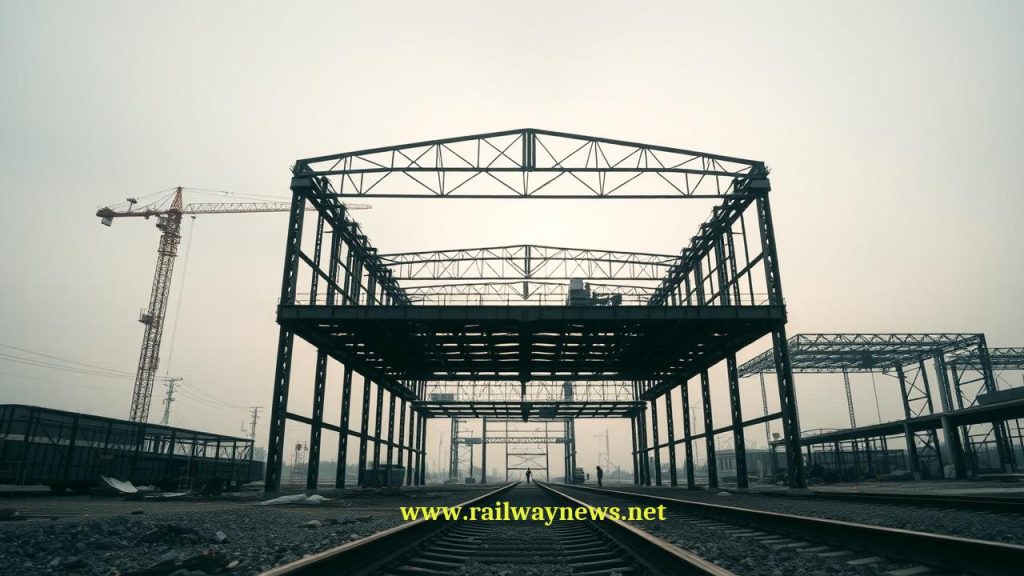
The project entails the construction of a new maintenance and stabling facility at Móstoles-El Soto, at the terminus of Line C-5. The depot’s design includes three indoor maintenance tracks, each 200 meters long, and an attached building for offices and support services. The exterior will feature three additional tracks with technical platforms, a train washing line, and a track equipped with a lathe for wheel maintenance, a critical component for reducing rolling stock downtime.
Key Project Data
| Parameter | Value |
|---|---|
| Project / Contract Name | Móstoles-El Soto Maintenance Facility Construction |
| Total Value | €42.7 million |
| Parties Involved | Renfe (client), Stadler Rail (train supplier) |
| Timeline / Completion | 18-month construction period. Specific start date not disclosed. |
| Country / Corridor | Spain / Cercanías Madrid, Line C-5 |
How Does This Compare to Similar Projects?
This €42.7 million depot is a targeted investment within Renfe’s larger capital programs, including its €1 billion+ Detailed Workshop and Maintenance Plan for 2025–2030. The facility is also part of the dedicated €1.35 billion modernization of Line C-5, a plan split between Adif (€650 million for infrastructure) and Renfe (€700 million for rolling stock and operations). Direct cost comparisons for similar new-build suburban maintenance depots in Spain were not publicly available at the time of publication. The strategy aligns with a broader industry trend where operators invest in bespoke maintenance facilities to support new fleets, such as Amtrak’s efforts to prepare for its new standardized long-distance fleet in the United States (Source: Newsweek, 2024).
Editor’s Analysis
This investment in maintenance infrastructure is a critical enabler for Renfe’s fleet modernization, directly addressing the operational needs of the new Stadler 453 series trains. The project goes beyond simple construction, representing a strategic move towards a technology-based maintenance model to improve reliability on a line that carries nearly 40% of Madrid’s suburban rail traffic. This focus on operational efficiency is necessary to support the growing demand driven by Madrid’s strong economic performance and a national surge in tourism, which saw nearly 97 million overseas visitors last year (Source: Tourism Review, 2024).
FAQ
Q: Why is this new maintenance facility necessary for Madrid?
A: The facility is essential for servicing the new high-capacity Stadler 453 series trains being introduced on Line C-5. The existing infrastructure requires adaptation for these modern trains, and the new depot will increase maintenance capacity for a line that handles approximately 72 million passengers annually.
Q: Who is funding the overall modernization of Line C-5?
A: The total investment of €1.35 billion for the line’s modernization is split between two state-owned entities. Infrastructure manager Adif is responsible for approximately €650 million, while operator Renfe is investing around €700 million in new trains and operational upgrades.
Q: What are the key features of the new Stadler trains?
A: The new Stadler 453 series trains are designed for high capacity, accommodating over 500 passengers. They also feature full accessibility for passengers with reduced mobility and provide dedicated spaces for transporting bicycles.

Railway infrastructure, rolling stock and transport technologies specialist focused on global rail industry developments, high-speed rail systems, signaling technologies and freight transportation. Covering railway investments, public transport modernization, rail operations and international mobility projects across Europe, Asia and North America.
RELATED POSTS

October 8, 2026 1:15 pm
Alstom secured a €1bn contract to build 13 automated trains,...

October 1, 2026 7:09 am
United States regulators confirmed a September 30 deadline for the...

October 8, 2026 12:18 pm
Siemens Mobility signed an agreement with VinSpeed to supply 350...

October 4, 2026 5:14 pm
Alstom secured a CA$4.7 billion order from VIA Rail Canada...

October 5, 2026 6:12 pm
AECOM and Jacobs secured a contract in September 2026 to...

October 1, 2026 12:13 am
Illinois approved $1.5 billion annually for the Northern Illinois Transit...