
Lineas Secures Two Stadler EURO9000 Hybrid Locomotives Germany
Lineas secured two Stadler EURO9000 hybrid locomotives for Germany, supported by €15 million in German government funding.
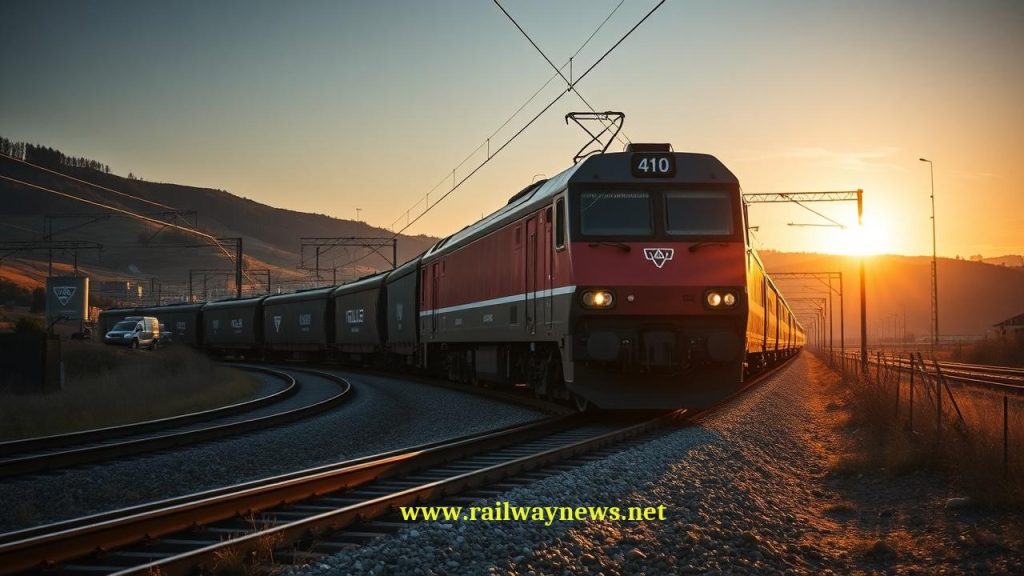
⚡ In Brief: Freight operator Lineas is leasing two Stadler EURO9000 hybrid locomotives from Alpha Trains for use on German and European corridors, supported by €15 million in German government funding to enhance rail freight capacity and flexibility.
COLOGNE, GERMANY – Freight rail operator Lineas and leasing company Alpha Trains have finalized a contract for the lease of two Stadler EURO9000 multi-system locomotives. The agreement is supported by approximately €15 million in funding from the German Ministry of Transport, with the first unit scheduled for delivery this month for deployment on European north-south freight corridors.
What Does This Contract Cover?
The contract covers the long-term lease of two six-axle Stadler EURO9000 locomotives, which are part of a larger order for 12 such units placed by Alpha Trains in 2023. These locomotives are designed for heavy freight transport and feature a hybrid propulsion system, combining 9 MW of electric traction with diesel power modules, enabling seamless operation across electrified and non-electrified track sections. Lineas will primarily deploy the locomotives in Germany to bridge gaps in the electrified network and operate on the Rhine–Alpine corridor connecting North Sea and Mediterranean ports.
Key Contract Data
| Parameter | Value |
|---|---|
| Contract Name | Lineas / Alpha Trains EURO9000 Lease Agreement |
| Total Value | Not disclosed |
| Parties Involved | Lineas (Lessee), Alpha Trains (Lessor), Stadler (Manufacturer), German Ministry of Transport (Funder) |
| Timeline / Completion | First locomotive delivery scheduled for the current month |
| Country / Corridor | Germany / Rhine–Alpine Corridor |
Where Does This Technology Stand in the Market?
The Stadler EURO9000 is positioned at the high-power end of the European locomotive market, specifically targeting heavy, cross-border freight. Its 9 MW power output under electric catenary significantly exceeds that of major competitors like the Alstom Traxx MS3 (approx. 6.4 MW) and the Siemens Vectron MS (approx. 6.4 MW). While competitors offer “last mile” diesel solutions, the EURO9000’s dual diesel engine configuration provides substantial power for mainline operation on non-electrified segments, a feature only matched by dedicated dual-mode locomotives like the Siemens Vectron Dual Mode, which has a lower electric power rating of 2 MW. This combination of high electric power and robust diesel capability in a single multi-system platform is its key market differentiator for demanding Alpine routes.
Editor’s Analysis
Lineas’s acquisition of the EURO9000 locomotives is a strategic move timed to capitalize on shifting logistics dynamics within Germany. The investment in powerful, flexible rail assets aligns with market forecasts predicting a significant tightening of truckload supply and a corresponding 15% year-over-year increase in road freight spot rates. (Source: CNBC, 2026). By deploying locomotives that can bypass network electrification gaps, Lineas can offer a more reliable and potentially cost-competitive alternative to long-haul trucking, directly supporting the modal shift objectives of both the German government and the EU.
FAQ
Q: Why is the EURO9000 locomotive model significant for European freight?
A: The Stadler EURO9000 is significant due to its market-leading 9 MW power output and its hybrid electric-diesel system. This allows it to haul heavier trains over steep Alpine corridors and operate continuously across borders and non-electrified track sections without changing locomotives.
Q: What is the total cost of this locomotive lease?
A: The total commercial value of the lease agreement between Lineas and Alpha Trains has not been disclosed. The project is supported by a separate €15 million grant from the German government’s program for alternative propulsion systems in rail.
Q: How does this deal impact the German freight market?
A: This deal introduces more powerful and flexible rail assets into the German market at a time when road freight costs are projected to rise. By improving the efficiency and reach of rail services, it strengthens rail’s competitive position against trucking, particularly on key north-south corridors.

Railway infrastructure, rolling stock and transport technologies specialist focused on global rail industry developments, high-speed rail systems, signaling technologies and freight transportation. Covering railway investments, public transport modernization, rail operations and international mobility projects across Europe, Asia and North America.
RELATED POSTS

September 6, 2026 5:19 am
Hitachi delivered Taiwan's first N700ST high-speed train from Japan in...

September 6, 2026 6:17 am
Hungary ordered a national ban on most freight trains from...

September 6, 2026 1:17 am
Hitachi Toshiba Supreme Consortium confirmed the first of 12 N700ST...

September 5, 2026 4:19 pm
CPK launched formal tender talks with four consortia to design...
September 7, 2026 8:16 am
Midea, Gree and TCL shipped air conditioners via China Railway...

September 6, 2026 4:12 am
Alstom delivered the first of 100 new G Class trams...