
CTA Confirms VRCPI 1.9864 for Canada Grain 2026-2027
The Canadian Transportation Agency confirmed 1.9864 as the volume-related composite price index (VRCPI) for Canadian National and CPKC’s 2026-2027 crop year grain revenue.
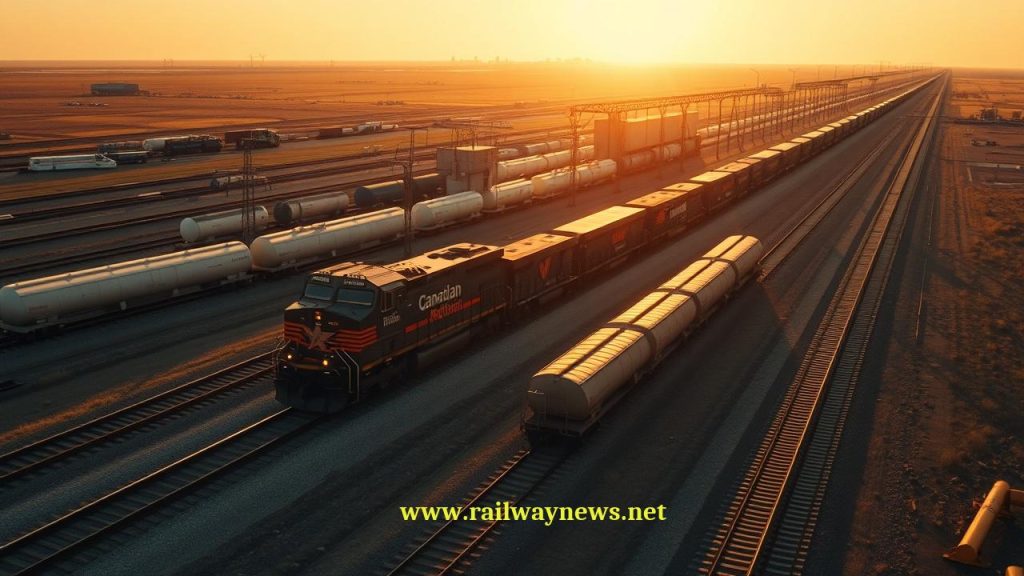
⚡ In Brief: The Canadian Transportation Agency has set the volume-related composite price index (VRCPI) for CN and CPKC at 1.9864 for the 2026-2027 crop year, a key determinant for calculating the railways’ maximum revenue entitlement for regulated grain transport.
OTTAWA, CANADA – The Canadian Transportation Agency (CTA) has established the volume-related composite price index (VRCPI) at 1.9864 for the upcoming 2026-2027 crop year. This regulatory figure will be applied to Canadian National (CN) and Canadian Pacific Kansas City (CPKC) railways starting August 1. The index is a critical component in the formula that determines the maximum revenue the railways can earn for moving regulated western grain.
What Does This Regulation Cover?
This regulation sets a key inflationary and cost adjustment factor for grain transportation handled by Canada’s two Class I railways. The VRCPI is used annually to adjust the maximum revenue the railways can earn for moving more than 40 million tonnes of western grain. An index value of 1.9864 indicates a significant upward adjustment from a baseline of 1.0, directly impacting the revenue cap for both CN and CPKC. The specific weighting of volume, fuel, and other cost components used to calculate the final index was not disclosed in the determination.
Key Regulatory Data
| Parameter | Value |
|---|---|
| Regulation / Policy Name | Volume-Related Composite Price Index (VRCPI) 2026-2027 |
| Total Value | 1.9864 (Index Value) |
| Parties Involved | Canadian Transportation Agency (Regulator), Canadian National (CN), Canadian Pacific Kansas City (CPKC) |
| Timeline / Completion | Effective for crop year August 1, 2026 to July 31, 2027 |
| Country / Corridor | Canada (Western Grain Network) |
How Does This Compare to Global Standards?
While direct international comparisons of grain-specific price indices are difficult due to unique national regulatory frameworks, the CTA’s determination occurs amidst strong operational performance by Canadian railways. For instance, CPKC transported a record 2.9 million metric tonnes of Canadian grain and grain products in April 2026, demonstrating the high volume throughput that influences the VRCPI calculation (Source: CPKC, 2026). This operational success contrasts with broader market indicators, including reports of a downturn in the agriculture sector impacting equipment sales, suggesting grain shippers may face higher transport costs during a period of financial pressure (Source: CNH Industrial, 2026). Historical VRCPI values for previous years were not available for a direct year-over-year comparison.
Editor’s Analysis
The CTA’s VRCPI determination at 1.9864 places Canadian grain shippers in a challenging position. While railways are demonstrating capacity to move record volumes, this index will translate to substantially higher freight costs and could erode producer margins. This dynamic highlights the regulatory tension between ensuring railway financial health and maintaining the cost-competitiveness of Canada’s agricultural exports, particularly as the broader sector navigates an economic downturn.
FAQ
Q: What is the VRCPI and how does it work?
A: The Volume-Related Composite Price Index (VRCPI) is a figure set annually by the Canadian Transportation Agency. It adjusts the maximum revenue CN and CPKC can earn for moving western grain to account for inflation, changes in railway costs, and shipping volumes.
Q: What does an index of 1.9864 mean for shipping costs?
A: An index of 1.9864 represents a 98.64% adjustment factor over a baseline of 1.0 in the revenue calculation formula. This will lead to a significant increase in the maximum allowable freight revenue for railways, which in turn raises the cost ceiling for shippers.
Q: Does this decision affect all cargo shipped by CN and CPKC?
A: No, this specific VRCPI applies only to the regulated movement of western Canadian grain. It does not directly impact freight rates for other commodities such as intermodal containers, coal, potash, or automotive products.

Railway infrastructure, rolling stock and transport technologies specialist focused on global rail industry developments, high-speed rail systems, signaling technologies and freight transportation. Covering railway investments, public transport modernization, rail operations and international mobility projects across Europe, Asia and North America.
RELATED POSTS

October 1, 2026 7:09 am
United States regulators confirmed a September 30 deadline for the...

October 4, 2026 5:14 pm
Alstom secured a CA$4.7 billion order from VIA Rail Canada...

October 6, 2026 2:14 am
Union Pacific launched export rail shipments with Ferromex to deliver...

October 1, 2026 12:13 am
Illinois approved $1.5 billion annually for the Northern Illinois Transit...

October 1, 2026 6:10 am
Amtrak approved a System Expansion Committee on July 30 to...

October 1, 2026 3:12 am
Greenbrier confirmed Brian Comstock as new president and CEO effective...