
ETF Reports 10-Hour Madrid-Paris Rail Slows EU Network
European Transport Workers’ Federation condemns an EU energy communication, citing 10-hour Madrid-Paris rail journeys as evidence of chronic network underinvestment and failed liberalization.
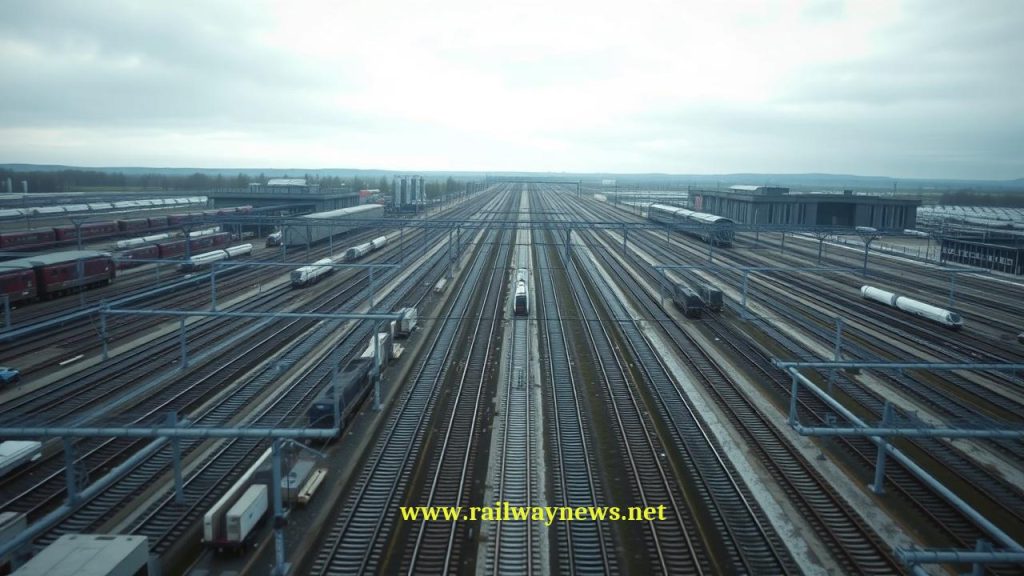
⚡ In Brief: The European Transport Workers’ Federation is criticising a new EU energy crisis communication, arguing its pro-rail measures are undermined by decades of liberalization policies and chronic underinvestment, exemplified by a 10-hour Madrid-to-Paris train journey versus a 2-hour flight.
BRUSSELS – The European Transport Workers’ Federation (ETF) has condemned a new European Commission communication on the energy crisis, stating its transport-related proposals are insufficient and contradict decades of EU policy. The communication follows a period where the EU spent an additional €24 billion on energy imports. The ETF argues that promoting rail without committing to direct, large-scale public investment is a paradoxical strategy.
What Does This Regulation Cover?
The EU communication proposes a package of measures to mitigate high fossil fuel prices and accelerate the clean energy transition. For the transport sector, it suggests temporary fare reductions for public transport, promoting a modal shift to passenger and freight rail, and supporting zero-emission vehicle purchases. However, the ETF criticises the framework for relying on incentivising private investment, arguing that public funds must be invested directly into services, networks, and staffing to address years of underfunding and infrastructure decay. The federation calls for rail freight to be designated a service of general and strategic interest, thereby exempting it from EU state aid restrictions that have historically favoured liberalization.
Key Regulatory Data
| Parameter | Value |
|---|---|
| Regulation / Policy Name | Unnamed EU Communication on the Energy Crisis |
| Total Value | Not disclosed |
| Parties Involved | European Commission, European Transport Workers’ Federation (ETF), EU Member States |
| Timeline / Completion | Immediate and long-term measures proposed; no firm timeline specified |
| Country / Corridor | European Union |
How Does This Compare to Global Standards?
The ETF’s critique of underinvestment is substantiated by current network performance, where a rail journey from Madrid to Paris takes around 10 hours, five times longer than the 2-hour flight time, highlighting a severe infrastructure deficit for cross-border travel (Source: European Commission). While this policy communication lacks specific funding commitments, other EU initiatives demonstrate an appetite for large-scale investment; the European Parliament is seeking a €200 billion budget for the 2028-34 Horizon Europe research programme alone (Source: Research Professional News). The ETF’s claim of limited private sector interest in EU rail is contrasted by developments elsewhere. In South Africa, African Rail Co. is currently raising $170 million to expand its locomotive and wagon fleet, indicating robust private investment in freight rail is possible under different market and regulatory conditions (Source: Business Insider Africa).
Editor’s Analysis
The friction between the EU’s new pro-rail rhetoric and its foundational policies of liberalization and strict state aid controls is now at a breaking point. The ETF’s position highlights that merely suggesting a modal shift is ineffective when the underlying infrastructure has been degraded by years of policies that discouraged direct public subsidy. Without a fundamental revision of state aid rules to treat rail as a strategic public service, similar to what is being called for, any top-level EU goals for transport decarbonization will struggle to translate into operational reality. The success of private rail investment in other global markets suggests the EU’s regulatory framework, not the inherent viability of rail, may be the primary obstacle.
FAQ
Q: Why does the ETF call the EU’s pro-rail stance a “paradox”?
A: The ETF labels it a paradox because for decades, EU policy has actively promoted liberalization and restricted state aid, often penalizing member states for keeping rail services under public control. The new call for states to support the sector directly contradicts the very framework that led to its current underfunded state.
Q: What is a specific example of Europe’s current rail network inefficiency?
A: A key example is the Madrid-to-Paris corridor, where the train journey takes approximately 10 hours. This is five times longer than the 2-hour flight, a gap that illustrates the significant need for investment in cross-border high-speed rail infrastructure (Source: European Commission).
Q: Is private investment in rail freight truly limited?
A: Within the EU, the ETF argues private interest is low, evidenced by few bidders in public service tenders. However, this is not a global standard, as shown by African Rail Co. raising $170 million for freight expansion in South Africa, which suggests that the EU’s market structure may be a greater deterrent to private capital than the rail sector itself.

Railway infrastructure, rolling stock and transport technologies specialist focused on global rail industry developments, high-speed rail systems, signaling technologies and freight transportation. Covering railway investments, public transport modernization, rail operations and international mobility projects across Europe, Asia and North America.
RELATED POSTS

October 8, 2026 1:15 pm
Alstom secured a €1bn contract to build 13 automated trains,...

October 1, 2026 7:09 am
United States regulators confirmed a September 30 deadline for the...

October 8, 2026 12:18 pm
Siemens Mobility signed an agreement with VinSpeed to supply 350...

October 4, 2026 5:14 pm
Alstom secured a CA$4.7 billion order from VIA Rail Canada...

October 5, 2026 6:12 pm
AECOM and Jacobs secured a contract in September 2026 to...

October 1, 2026 12:13 am
Illinois approved $1.5 billion annually for the Northern Illinois Transit...