
Network Rail Awards £200M Portishead Line Contracts UK
Network Rail awarded three contracts totalling £200 million for the UK’s Portishead Line, reconnecting 50,000 people by winter 2028/29.
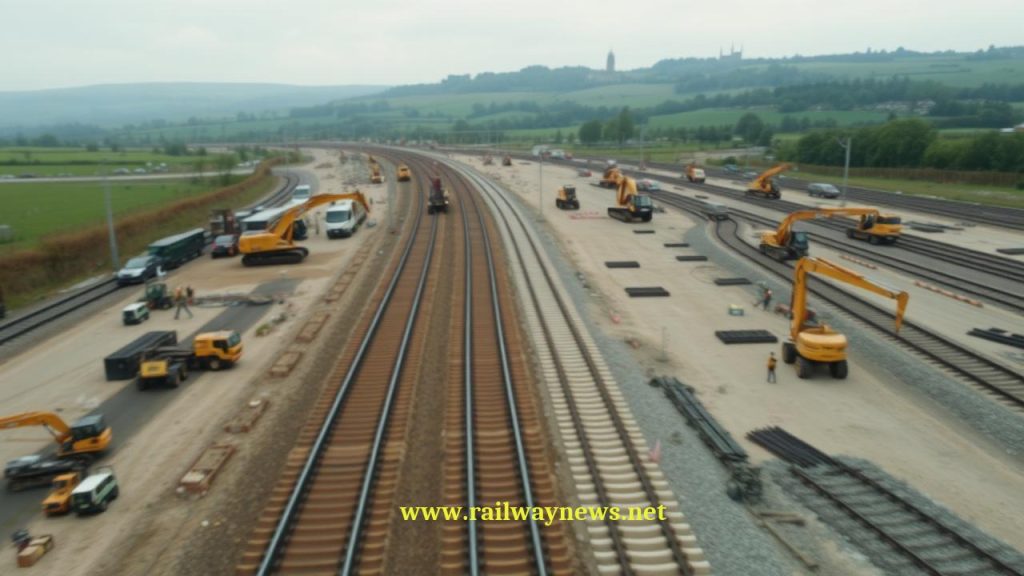
⚡ In Brief: Network Rail has awarded three key contracts for the £200 million Portishead Line project in the UK, which will reconnect 50,000 people to the national rail network by winter 2028/29 after a 64-year closure.
BRISTOL, UK – Network Rail has awarded contracts to Morgan Sindall Infrastructure, Colas Rail, and AmcoGiffen to deliver the £200 million Portishead Line project. The project, funded by the UK’s Department for Transport and regional authorities, will build two new stations and relay three miles of track for a scheduled opening in winter 2028/29.
What Is the Full Scope of This Project?
The project encompasses the full delivery of a new passenger rail service on a corridor that has been dormant for passenger traffic since 1964. Key works include the construction of new stations at Portishead and Pill, relaying three miles of track, and significant bridge and highways works in Bristol. The total investment for the scheme is cited as £200 million, which also covers a new digital signalling system to be installed by Colas Rail.
Key Project Data
| Parameter | Value |
|---|---|
| Project / Contract Name | Portishead Line Reopening |
| Total Value | £200 million (approx. US$254 million) |
| Parties Involved | Network Rail (deliverer), DfT, West of England Mayoral Combined Authority, North Somerset Council (funders), GWR (operator), Morgan Sindall, Colas Rail, AmcoGiffen (contractors) |
| Timeline / Completion | Winter 2028/29 |
| Country / Corridor | UK / Bristol to Portishead |
How Does This Compare to Similar Projects?
The Portishead Line’s £200 million budget is comparable to other recent UK rail reopening schemes aimed at reversing historical line closures. For instance, the Northumberland Line project, which is restoring passenger services between Ashington and Newcastle, is budgeted at approximately £166 million and involves building six new stations along an 18-mile route (Source: Northumberland County Council, 2023). While the Portishead project has a higher cost per mile, this likely reflects the complexity of the urban civils work required in Bristol and the inclusion of a new digital signalling system. The individual values of the contracts awarded to Morgan Sindall, Colas Rail, and AmcoGiffen were not disclosed.
Editor’s Analysis
The selection of Colas Rail to install a digital signalling system aligns with a major industry trend toward modernising network control infrastructure. This investment moves beyond simple track and station restoration, future-proofing the line for greater capacity and reliability. The global rail traffic management market is forecast to expand at a 12.3% CAGR through 2032, underscoring the strategic importance of this digital component in regional rail projects (Source: Persistence Market Research, 2025).
FAQ
Q: What is the main goal of the Portishead Line project?
A: The primary goal is to reconnect over 50,000 people in Portishead and Pill to the national rail network for the first time since passenger services ceased in 1964. The project aims to reduce road congestion and provide improved access to jobs and services in Bristol.
Q: How much faster will the train be compared to driving?
A: The train journey from Portishead to Bristol Temple Meads is projected to take around 25 minutes. This is approximately half the time the same journey typically takes by road during peak hours.
Q: Will the individual contract values be made public?
A: The individual financial values of the contracts awarded to Morgan Sindall Infrastructure, Colas Rail, and AmcoGiffen have not been officially disclosed by Network Rail or the funding bodies.

Railway infrastructure, rolling stock and transport technologies specialist focused on global rail industry developments, high-speed rail systems, signaling technologies and freight transportation. Covering railway investments, public transport modernization, rail operations and international mobility projects across Europe, Asia and North America.
RELATED POSTS

October 1, 2026 7:09 am
United States regulators confirmed a September 30 deadline for the...

October 8, 2026 1:15 pm
Alstom secured a €1bn contract to build 13 automated trains,...

October 4, 2026 5:14 pm
Alstom secured a CA$4.7 billion order from VIA Rail Canada...

October 1, 2026 12:13 am
Illinois approved $1.5 billion annually for the Northern Illinois Transit...

October 6, 2026 2:14 am
Union Pacific launched export rail shipments with Ferromex to deliver...

October 1, 2026 6:10 am
Amtrak approved a System Expansion Committee on July 30 to...