
LA Port Rail Yard Expansion: Sustainable Transport Advancements
The Port of Los Angeles’ rail yard expansion boosts efficiency and sustainability. Discover how 1,250 fewer daily truck trips improve traffic flow and air quality!
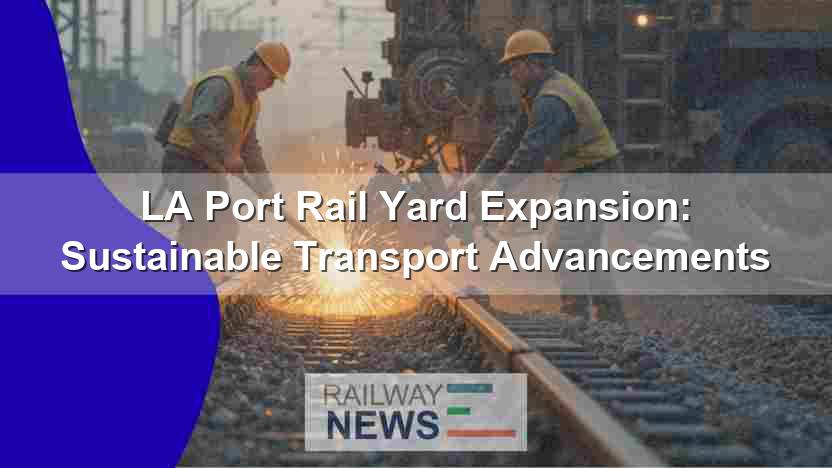
The Port of Los Angeles, a critical component of the US supply chain, faces persistent challenges related to freight movement and environmental impact. The sheer volume of cargo handled necessitates efficient and sustainable transportation solutions. Traditional reliance on trucking contributes significantly to traffic congestion, air pollution, and delays. To address these issues, strategic investments in rail infrastructure are paramount. This article examines the $21 million grant awarded to the Port of Los Angeles from California’s Trade Corridor Enhancement Program (TCEP) for the expansion of its on-dock rail operations. This investment forms a key part of the broader Terminal Island Railyard Enhancement Project, aiming to significantly increase rail capacity, reduce reliance on trucking, and improve overall operational efficiency within the San Pedro Bay port complex. We will explore the details of this project, its projected impact on the region, and the wider implications for port logistics and sustainability in the context of America’s Global Freight Gateway: Southern California Rail Project.
Terminal Island Railyard Enhancement: Expanding Capacity and Efficiency
The core of the project involves a substantial expansion of the intermodal rail storage yard on Terminal Island. This expansion will increase the number of storage tracks from six to eleven, adding 31,000 linear feet of track. This increase in track length directly translates to a significantly larger capacity for storing containers before they are transported to their final destinations. The project aims to boost the capacity of Pier 400’s on-dock railyard by an estimated 525,000 twenty-foot equivalent units (TEUs) annually. This increased capacity will improve the fluidity of rail operations, reducing bottlenecks and delays commonly associated with high cargo volumes. The strategic location of the yard, directly within the port complex, also minimizes the need for lengthy and potentially congested trucking routes.
Reducing Congestion and Environmental Impact
The benefits of this rail yard expansion extend far beyond increased capacity. By shifting freight transportation from trucks to rail, the project directly addresses several critical challenges facing the Port of Los Angeles and the surrounding region. The projected reduction of approximately 1,250 truck trips per day by 2040 will lead to a substantial decrease in traffic congestion on local streets and freeways, improving commute times and overall traffic flow. Additionally, the reduced reliance on trucking translates to a significant decrease in tailpipe emissions, contributing to improved air quality and reduced greenhouse gas emissions. This aligns with broader sustainability goals and enhances the Port’s commitment to environmentally responsible operations.
Intermodal Efficiencies and the Broader Regional Impact
The Terminal Island Railyard Enhancement Project is not an isolated initiative; it is deeply integrated into the larger America’s Global Freight Gateway: Southern California Rail Project, comprising eight interconnected rail projects aimed at optimizing freight movement throughout the region. The expansion creates a ripple effect of improved intermodal efficiencies, impacting the entire San Pedro Bay port complex. Enhanced rail capacity at the Port of Los Angeles directly benefits neighboring ports, facilitating smoother and more efficient transfer of goods. This coordinated approach underscores the critical importance of regional cooperation and strategic planning in addressing the challenges of managing large-scale freight transportation.
Conclusion: A Multifaceted Investment in the Future of Port Logistics
The $21 million grant awarded for the expansion of the Port of Los Angeles’ on-dock rail yard represents a significant investment in the future of efficient and sustainable port operations. The Terminal Island Railyard Enhancement Project, as part of the larger Southern California Rail Project, tackles multiple challenges simultaneously: increasing capacity, reducing congestion, minimizing environmental impact, and improving overall intermodal efficiency. The projected reduction in truck trips and resulting decrease in emissions demonstrate a commitment to environmental responsibility and improved air quality within the region. The project’s success will serve as a model for other major ports facing similar challenges, highlighting the crucial role of strategic rail infrastructure investments in enhancing the sustainability and efficiency of global supply chains. By focusing on intermodal solutions, the Port of Los Angeles is not only addressing its immediate needs but also shaping a more sustainable and efficient future for freight transportation. The integration of this project into the broader Southern California Rail Project further emphasizes the importance of collaborative approaches to address complex logistical challenges and underscores the long-term vision for a more robust and environmentally responsible transportation network within the region and beyond. The ripple effect of increased efficiency and reduced congestion will benefit not only the Port of Los Angeles but also the entire Southern California economy, highlighting the transformative potential of well-planned investments in rail infrastructure. (TEUs – twenty-foot equivalent units; TCEP – Trade Corridor Enhancement Program)

Railway infrastructure, rolling stock and transport technologies specialist focused on global rail industry developments, high-speed rail systems, signaling technologies and freight transportation. Covering railway investments, public transport modernization, rail operations and international mobility projects across Europe, Asia and North America.
RELATED POSTS

September 5, 2026 4:19 pm
CPK launched formal tender talks with four consortia to design...

September 5, 2026 7:14 pm
HS2 Ltd signed renegotiated civils contracts with EKFB and Align...

September 6, 2026 4:12 am
Alstom delivered the first of 100 new G Class trams...
September 6, 2026 6:17 am
Hungary ordered a national ban on most freight trains from...

September 5, 2026 6:17 pm
Universal Signalling won a deal to install its U-Cross system...
September 7, 2026 8:16 am
Midea, Gree and TCL shipped air conditioners via China Railway...