
London Gateway: Rail Expansion Boosts Efficiency, Sustainability
The expansion of rail capacity at London Gateway, including the installation of two new RMG cranes, significantly enhances operational efficiency and sustainability by reducing congestion, optimizing cargo flow, and promoting greener transportation methods.
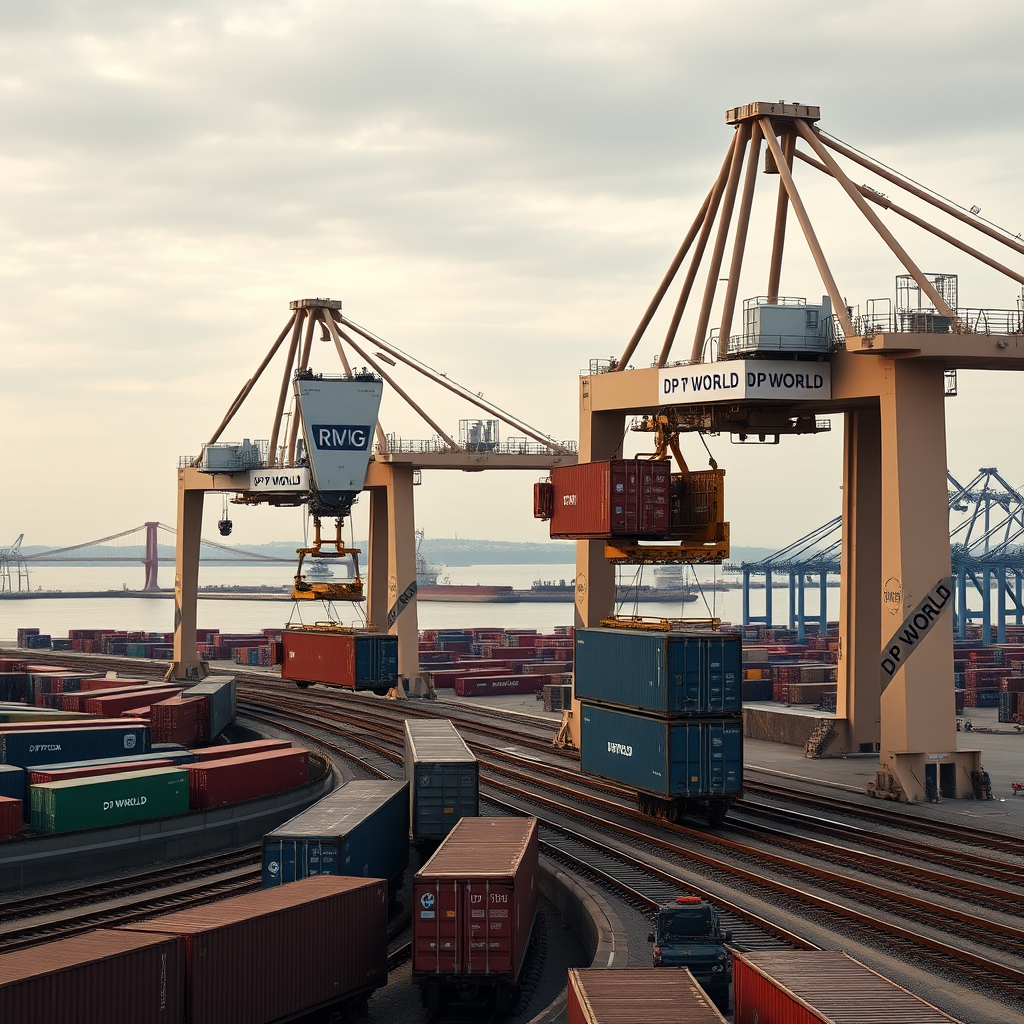
This article examines the significant expansion of rail capacity at DP World’s London Gateway port and logistics center, focusing on the strategic implications of this investment for the port’s operations, its customers’ competitiveness, and the broader context of sustainable port development. The recent addition of two new Rail-Mounted Gantry (RMG) cranes represents a substantial commitment to improving rail connectivity and efficiency, directly addressing the increasing demand for sustainable and reliable cargo transportation. The £12 million investment not only increases capacity but also underpins DP World’s broader strategy to shift towards rail-based cargo movement, mitigating environmental impact and enhancing operational efficiency within the complex global supply chain. This analysis will explore the technical aspects of the upgrade, its economic benefits, and the environmental considerations that underpin this significant development in the UK’s port infrastructure.
Increased Rail Capacity and Operational Efficiency
The installation of two new 41-tonne capacity RMG cranes at London Gateway has resulted in a 50% increase in rail capacity. These cranes, manufactured by ZPMC and equipped with advanced control systems, significantly enhance operational efficiency and safety. The improved handling capacity, boosted by 75%, directly translates to faster turnaround times for rail freight, reducing congestion and optimizing the flow of goods. This increased efficiency directly benefits both DP World and its customers, enabling them to handle a larger volume of cargo with reduced dwell times and improved scheduling precision. The integration of these modern cranes into the existing infrastructure is a testament to DP World’s commitment to continuous improvement and investment in state-of-the-art technology.
Sustainable Port Operations and Environmental Impact
DP World’s investment in expanded rail capacity is intrinsically linked to its broader commitment to sustainable port operations. By promoting the use of rail transport for cargo movement, the company directly reduces reliance on road haulage, thereby decreasing carbon emissions and mitigating the environmental impact associated with heavy goods vehicle traffic. The recent transition to Hydrotreated Vegetable Oil (HVO) as a fuel source for all terminal operations further underscores the company’s dedication to minimizing its carbon footprint. This detailed approach, combining infrastructural upgrades with fuel diversification, positions London Gateway as a leader in environmentally responsible port management.
Competitive Advantage and Customer Benefits
The enhanced rail capacity at London Gateway provides significant benefits to DP World’s customers. In the context of recent supply chain disruptions and increasing pressure to reduce carbon emissions, the port’s commitment to sustainable and efficient rail operations provides a clear competitive advantage. Customers benefit from improved transit times, reduced transportation costs, and a demonstrably lower environmental impact associated with their supply chains. This is particularly crucial for businesses seeking to improve their environmental, social, and governance (ESG) performance and meet increasingly stringent regulatory requirements.
The All-Electric Berth and Future Developments
The new RMG cranes are integrated into the development of London Gateway’s fourth berth, projected to be the world’s first all-electric berth upon its completion. This initiative further solidifies DP World’s commitment to sustainability and innovation. The all-electric berth signifies a paradigm shift in port operations, minimizing reliance on fossil fuels and significantly reducing the port’s overall carbon emissions. This ambitious project serves as a benchmark for future port development, illustrating the potential for large-scale decarbonization within the maritime sector.
Conclusions
The 50% expansion of rail capacity at DP World’s London Gateway, facilitated by the addition of two new RMG cranes, represents a significant milestone in sustainable port development. This investment has delivered substantial improvements in operational efficiency, significantly increased handling capacity, and provided considerable benefits to DP World’s customers by offering a more sustainable and cost-effective transportation solution. The strategic shift towards rail-based cargo movement directly addresses the growing need for environmentally responsible port operations, aligning with global efforts to reduce carbon emissions within the maritime industry. The transition to HVO fuel and the development of the world’s first all-electric berth further demonstrate DP World’s unwavering commitment to sustainability. This case study highlights how significant investments in infrastructure and operational processes can contribute to a more efficient, sustainable, and competitive port environment, benefiting both the operator and its clientele within a rapidly evolving global supply chain landscape. The successful implementation of these upgrades positions London Gateway as a leading example of best practices in environmentally responsible port management and underscores the pivotal role of rail transport in creating a more sustainable future for global logistics. The long-term implications of this initiative extend beyond London Gateway, potentially shaping future port development strategies and promoting wider adoption of sustainable practices across the maritime industry.

Railway infrastructure, rolling stock and transport technologies specialist focused on global rail industry developments, high-speed rail systems, signaling technologies and freight transportation. Covering railway investments, public transport modernization, rail operations and international mobility projects across Europe, Asia and North America.
RELATED POSTS

October 8, 2026 1:15 pm
Alstom secured a €1bn contract to build 13 automated trains,...

October 1, 2026 7:09 am
United States regulators confirmed a September 30 deadline for the...

October 8, 2026 12:18 pm
Siemens Mobility signed an agreement with VinSpeed to supply 350...

October 4, 2026 5:14 pm
Alstom secured a CA$4.7 billion order from VIA Rail Canada...

October 5, 2026 6:12 pm
AECOM and Jacobs secured a contract in September 2026 to...

October 4, 2026 11:08 pm
Sound Transit confirmed the September 30 opening of Seattle Pinehurst...