
Renfe Invests €85.4M in 4G/5G Satellite for 183 Trains
Renfe invests €85.4 million in a hybrid 4G/5G and Starlink LEO satellite platform for 183 AVE trains, providing 10 Gbps onboard networks over a five-year rollout.
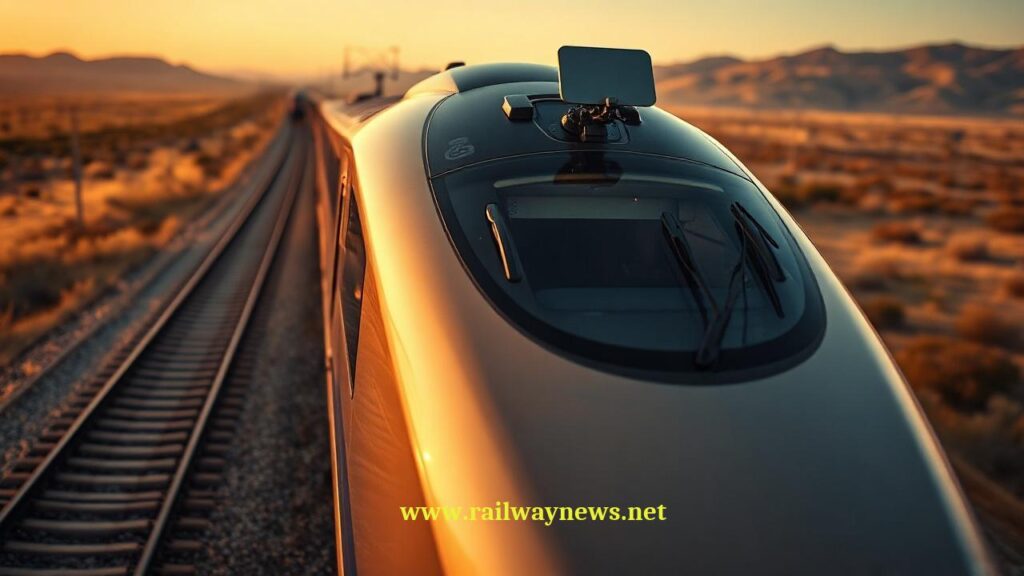
⚡ In Brief: Renfe will invest €85.4 million to install a unified 4G/5G/LEO satellite communications platform across 183 AVE and long-distance trains, with deployment phased over five years and internal network capacity reaching 10 Gbps per train.
MADRID, Spain – Spanish state operator Renfe is preparing to equip 183 high-speed and long-distance trains with a hybrid communications platform combining terrestrial 4G/5G networks and low-Earth orbit satellite connectivity, at a total project cost of approximately €85.4 million. The investment, comprising €49.7 million in capital expenditure and €35.7 million in operating expenses, was confirmed by the operator in July 2025. The upgrade replaces the existing PlayRenfe infrastructure and will be rolled out over five years with pilot installations preceding fleet-wide deployment.
What Are the Technical Specifications?
The new platform aggregates multiple connectivity bearers — LTE 4G, 5G, LTE-M, and LEO satellite — into a single unified communications infrastructure with automatic network selection to optimise coverage and transmission cost in real time. Onboard internal networks will be upgraded to 10 Gbps capacity, enabling simultaneous support for passenger entertainment and bandwidth-intensive operational systems. Traffic prioritisation rules will assign the highest precedence to train operations and safety-related data, with passenger internet and entertainment services receiving secondary allocation. The platform is engineered for future 5G NTN (Non-Terrestrial Networks) compatibility, allowing direct satellite-to-mobile-network connections once the standard becomes commercially available. Each of Renfe’s high-speed train series carries a distinct technological configuration, so tailored engineering solutions must be designed per fleet type before the full rollout begins. Entity verification data indicates that Siemens’ Railigent X platform will supply AI-driven digital services and predictive maintenance capabilities, while Starlink satellite antennas will provide the LEO connectivity layer for the trains managed under this architecture.
Key Technical Data
| Parameter | Value |
|---|---|
| Technology / System Name | Unified Communications Platform (successor to PlayRenfe) |
| Total Value | €85.4 million (€49.7M capex + €35.7M opex) |
| Parties Involved | Renfe (operator); Siemens Railigent X (AI/predictive maintenance); Starlink (LEO satellite antennas, per entity verification data) |
| Timeline / Completion | Five-year phased rollout; pilot projects per train series precede full deployment |
| Country / Corridor | Spain — all AVE and long-distance train series (183 trains, plus 26 additional units beyond current covered fleet) |
| Connectivity Modes | LTE 4G, 5G, LTE-M, LEO satellite; 5G NTN-ready |
| Internal Network Capacity | 10 Gbps per train |
| Supplier (Communications Platform) | Not disclosed at time of publication |
Where Does This Technology Stand in the Market?
Renfe’s €85.4 million investment enters a European rail connectivity market undergoing rapid consolidation around multi-bearer architectures. Icomera, deployed on SNCF TGV fleets and Deutsche Bahn ICE services, offers a similar bonded 4G/5G platform but relies primarily on trackside and terrestrial infrastructure rather than integrated LEO satellite fallback — Renfe’s satellite-native design gives it an edge on rural and cross-border routes where terrestrial coverage gaps persist (Source: Icomera, 2024). Nomad Digital, acquired by Alstom, provides connectivity to operators including Amtrak and various European regional fleets but typically caps internal train network throughput below the 10 Gbps ceiling Renfe is specifying, reflecting a shift in operator requirements as passenger data consumption rises by an estimated 30–40% annually (Source: Alstom/Nomad Digital, 2023). Outside Europe, Florida’s Brightline became the first passenger rail service to deploy Starlink fleet-wide in 2023, reporting sub-20ms latency and average speeds exceeding 100 Mbps per train on its Miami–Orlando corridor — a deployment that demonstrated LEO viability for rail but on a far smaller scale than Renfe’s 183-train programme (Source: Brightline/SpaceX, 2023). The global digital railway market is projected to reach USD 90.6 billion in 2025 and USD 296.7 billion by 2035, with Europe holding the dominant position in signalling and onboard digitalisation investment (Source: Market.us, 2025). Renfe’s contract value represents a mid-range capital outlay for fleet-wide connectivity modernisation — Deutsche Bahn’s ongoing “Digitale Schiene Deutschland” programme, by comparison, carries a total budget exceeding €1.2 billion across infrastructure and onboard systems, though this includes signalling and trackside components beyond pure connectivity (Source: DB AG, 2024).
Editor’s Analysis
The decision to incorporate 5G NTN readiness into the platform specification signals that Renfe is betting on direct satellite-to-device technology maturing within the five-year deployment window — a timeline that aligns with 3GPP Release 18 and 19 standardisation roadmaps. This forward compatibility, combined with Starlink’s existing LEO infrastructure, positions the Spanish fleet to maintain service continuity on routes crossing the Iberian Peninsula’s extensive low-population-density interior, where terrestrial 5G buildout timelines remain uncertain. The parallel five-year coexistence of old and new systems, while operationally prudent, creates a maintenance cost overlap that Renfe’s €35.7 million opex figure must absorb — a non-trivial burden given that European rail operators are simultaneously funding ERTMS migration, fleet renewal, and energy transition investments. Alstom’s record €27.6 billion order book for fiscal year 2025/2026, alongside the European Environment Agency’s projection of 600 billion freight tonne-km by 2030 under the MIX-FF55 scenario, confirms that rail demand growth is accelerating precisely when onboard digitalisation becomes a competitive differentiator for passenger operators (Source: Alstom, 2025; Source: EEA, 2025).
FAQ
Q: Which satellite provider is supplying the LEO connectivity for Renfe’s trains?
A: Entity verification data confirms that Starlink satellite antennas will be installed for the LEO connectivity layer. The communications platform supplier responsible for integrating these antennas with the 4G/5G terrestrial components has not been publicly named as of publication.
Q: When will Renfe passengers experience the upgraded Wi-Fi service?
A: No specific date for passenger-facing service activation on the first pilot trains has been disclosed. The full five-year phased rollout means some train series will operate on the legacy PlayRenfe system while others are upgraded, with parallel operations maintained throughout the transition period to avoid service interruptions.
Q: Will the new connectivity platform cost passengers extra to use?
A: Renfe has not announced any changes to its passenger pricing structure for onboard connectivity services. The operator’s statement focuses on the technical architecture and operational prioritisation, with internet and entertainment classified as secondary traffic behind safety-critical systems.
Q: What cybersecurity measures are included in the new platform?
A: Renfe specifies that the platform will incorporate advanced onboard cybersecurity measures covering equipment, applications, and data exchanges. Specific standards, certification requirements, or cybersecurity framework details have not been publicly disclosed.

Railway infrastructure, rolling stock and transport technologies specialist focused on global rail industry developments, high-speed rail systems, signaling technologies and freight transportation. Covering railway investments, public transport modernization, rail operations and international mobility projects across Europe, Asia and North America.
RELATED POSTS

October 8, 2026 1:15 pm
Alstom secured a €1bn contract to build 13 automated trains,...

October 1, 2026 7:09 am
United States regulators confirmed a September 30 deadline for the...

October 8, 2026 12:18 pm
Siemens Mobility signed an agreement with VinSpeed to supply 350...

October 4, 2026 5:14 pm
Alstom secured a CA$4.7 billion order from VIA Rail Canada...

October 5, 2026 6:12 pm
AECOM and Jacobs secured a contract in September 2026 to...

October 1, 2026 12:13 am
Illinois approved $1.5 billion annually for the Northern Illinois Transit...