
Alstom AGV High-Speed Train Project: Italy
Alstom’s AGV high-speed train, a technological marvel, achieves 360 km/h, setting a new standard in railway technology. Innovative design and rigorous testing ensured its success.
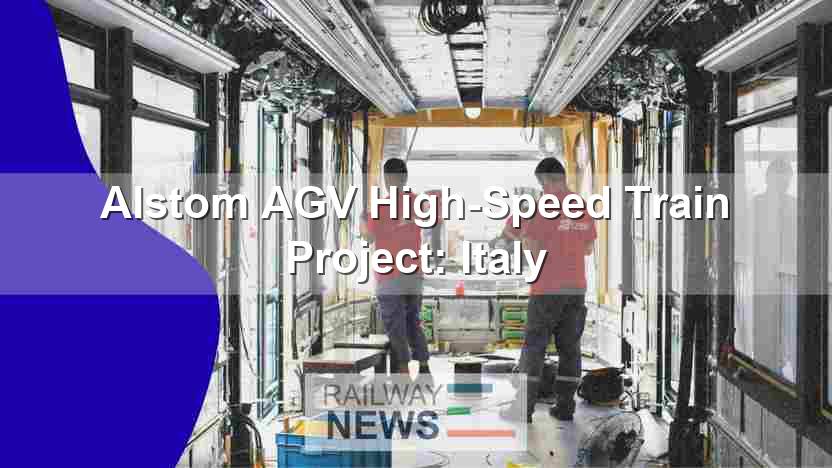
This article explores the technological advancements and operational characteristics of the Alstom AGV (Automotrice Grande Vitesse) very high-speed train. The project, a significant undertaking in high-speed rail technology, aimed to create a highly efficient, passenger-centric, and technologically advanced trainset. We will explore the design innovations incorporated into the AGV, including its unique distributed traction system, lightweight construction, and advanced safety features. Additionally, the article examines the development process, from initial design concepts to rigorous testing and certification, highlighting the key milestones and challenges encountered. The analysis will also consider the AGV’s contribution to the broader evolution of high-speed rail technology and its impact on passenger experience. The project’s success serves as a benchmark for future high-speed rail initiatives, emphasizing the importance of innovative design, robust testing, and efficient collaboration between manufacturers and operators.
Design Innovations and Technological Advancements
The Alstom AGV represents a significant leap forward in high-speed train technology. Its most defining feature is the integration of an articulated carriage architecture with a distributed traction system utilizing synchronous permanent magnet motors (PMM). This innovative design maximizes efficiency and passenger capacity. The use of lightweight aluminum alloys, reducing the overall weight by 700kg compared to steel construction, contributes to lower energy consumption and improved operational efficiency. The train’s aerodynamically designed conical front end enhances visibility for the driver and minimizes air resistance at high speeds. The incorporation of advanced braking systems, including electrodynamic braking (EBS) with energy recovery capabilities, further improves energy efficiency by feeding recovered energy back into the grid. The kinetic energy absorption unit (KEAU) is a crucial safety feature, designed to mitigate the impact of collisions, protecting both passengers and crew. The detailed passenger amenities, including Wi-Fi, onboard internet access, live television, and even a 39-seat cinema car, set a new standard for passenger comfort and entertainment. The modular interior design also allows for flexible configuration to meet the varying needs of operators.
Development and Testing
The development of the AGV was a phased process, beginning with the initial design conceptualization in June 2004. A physical mock-up was showcased at the Eurailspeed trade expo in Milan in November 2005, providing a tangible representation of the design and generating industry interest. The maiden AGV was completed in February 2007, with first wheel rotation occurring in October of the same year. Rigorous testing was a pivotal phase, commencing at the Velim railway test centre in the Czech Republic in May 2008. These tests covered a wide range of speeds, culminating in the achievement of the designed top speed of 360 km/h on a section of the French TGV high-speed line. These tests, combined with detailed simulations and modeling, played a crucial role in ensuring the train’s safety and operational readiness. Service entry, initially slated for September 2011, was postponed to 2012 due to certification delays, highlighting the critical importance of rigorous safety standards and regulatory compliance in high-speed rail.
Power System and Performance
The AGV’s power system is based on Alstom’s Onix traction system, which employs 6.5 kV IGBT power modules, a 3,600V power bus, and PMMs. The distributed nature of the traction system, integrated beneath the car body, maximizes space efficiency and allows for higher passenger capacity (approximately 20% increase compared to alternative configurations). The individual motor axle power inverters and the redundant system design ensure high reliability and resilience. Even with a single power module failure, the train maintains a significant portion (5/6) of its operational traction power, minimizing service disruption.
Project Overview and Summary
The Alstom AGV project represents a substantial investment in high-speed rail technology. The initial contract, awarded to Alstom by Nuovo Trasporto Viaggiatori (NTV) in January 2008, involved the supply of 25 eleven-car trainsets, with an option for an additional ten. The table below summarizes key project details:
| Project Parameter | Value |
|---|---|
| Contract Value | €650 million ($955 million) |
| Number of Trainsets | 25 (with option for 10 more) |
| Cars per Trainset | 11 |
| Project Duration | From 2004 (design) to 2012 (service entry) |
| Top Speed | 360 km/h |
| Manufacturer | Alstom |
| Operator | Nuovo Trasporto Viaggiatori (NTV) |
Conclusions
The Alstom AGV project successfully delivered a high-speed trainset incorporating numerous innovative design features and technological advancements. The project’s success underscores the importance of collaboration between manufacturers and operators in realizing ambitious rail projects. The AGV’s design, incorporating lightweight materials, distributed traction, and advanced braking systems, significantly improves energy efficiency and passenger capacity. The rigorous testing program ensured compliance with stringent safety standards and operational readiness. The train’s sophisticated passenger amenities enhance the overall travel experience. Although there were delays in certification and service entry, the final product stands as a testament to the potential of innovative engineering in high-speed rail. The lessons learned from the project, including the challenges of certification and the importance of robust testing, provide valuable insights for future high-speed rail initiatives. The AGV’s operational performance and passenger acceptance will continue to shape the design and development of next-generation high-speed trains, setting a high benchmark for future projects. The project’s long-term impact will be defined by its continued operational success and its influence on the evolution of high-speed rail technology worldwide.
Company Information:
Alstom: A global leader in rail transportation, providing rolling stock, signaling, and infrastructure solutions.
Nuovo Trasporto Viaggiatori (NTV): An Italian private railway company operating high-speed services.

Railway infrastructure, rolling stock and transport technologies specialist focused on global rail industry developments, high-speed rail systems, signaling technologies and freight transportation. Covering railway investments, public transport modernization, rail operations and international mobility projects across Europe, Asia and North America.