
VIP Rail Completes 750-Car Yard Expansion in Sarnia
VIP Rail expanded its Sarnia yard in Ontario by 750 spots, lifting total storage capacity past 2,150 railcars for local chemical and oil refining shippers.
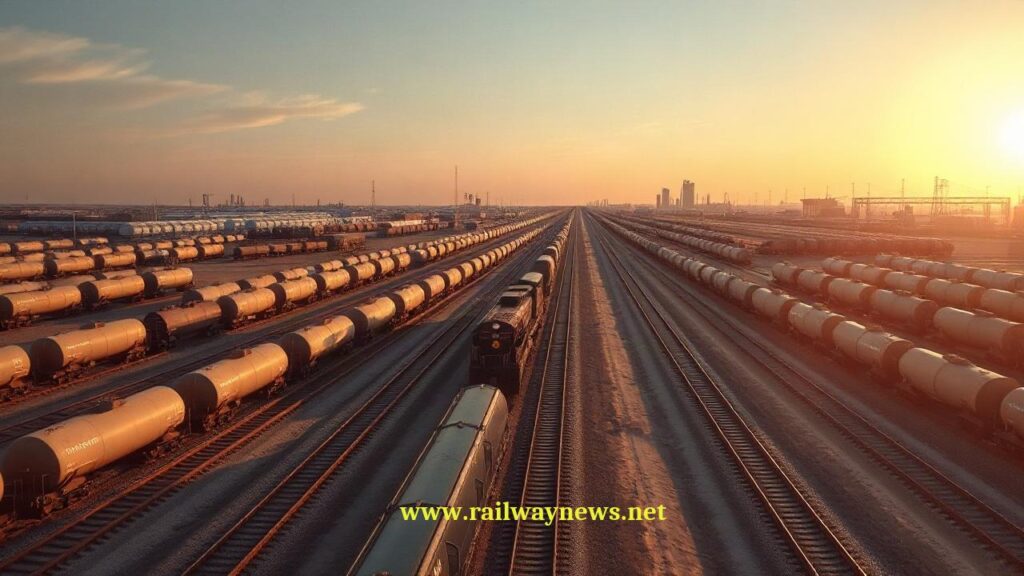
⚡ In Brief: Alpenglow Rail subsidiary VIP Rail has completed a 750-spot rail yard expansion at its Sarnia terminal in Ontario, raising local staging and storage capacity past 2,150 railcars.
SARNIA, Canada – VIP Rail finished construction on a 750-car yard expansion at its Sarnia logistics terminal, elevating total operational capacity beyond 2,150 rail-car spots. The facility operates within Ontario’s Chemical Valley, serving regional petrochemical and refining production clusters. Capital expenditure figures for the project were not disclosed by parent firm Alpenglow Rail.
What Is the Full Scope of This Project?
VIP Rail added 750 rail-car spots to expand its multi-service chemical logistics terminal network in Sarnia to more than 2,150 storage locations. The facility provides industrial switching, transloading, car cleaning, track repair, and fleet staging adjacent to major refining assets. The additional trackage permits chemical shippers to hold inventory on-site and buffer supply chain volatility without congesting Class I mainline tracks.
Key Project Data
| Parameter | Value |
|---|---|
| Project / Contract Name | VIP Rail Sarnia Terminal Yard Expansion |
| Total Value | Not disclosed |
| Parties Involved | VIP Rail, Alpenglow Rail |
| Timeline / Completion | Completed (Specific construction start date not disclosed) |
| Country / Corridor | Sarnia, Ontario, Canada (Chemical Valley) |
How Does This Compare to Similar Projects?
Industrial switching and terminal expansions remain a primary operational focus as the North American rail sector grows from USD 8.59 billion in 2025 to USD 8.90 billion in 2026 (Source: Fortune Business Insights, 2025). While Class I railroads prioritize mainline velocity, terminal operators like Alpenglow Rail target specialized first-mile and last-mile storage for hazardous cargo. Across Canada, private freight yard investments parallel national network reinvestment programs documented by rail authorities, even as passenger initiatives such as the Alto high-speed corridor between Ottawa and Montreal advance toward development (Source: Railway Association of Canada, 2025). Independent verification of contractor costs and civil engineering procurement was not available at time of publication.
Editor’s Analysis
Terminal expansions in petrochemical clusters reflect freight rail’s structural shift toward private storage infrastructure designed to insulate shippers from mainline network congestion. As the broader North American market expands toward USD 8.90 billion by 2026, captive transload facilities offer essential risk mitigation for chemical refiners managing unpredictable inventory cycles (Source: Fortune Business Insights, 2025). Alpenglow Rail is capitalizing on persistent demand for third-party yard switching, establishing defensible physical assets in freight markets with high barriers to entry.
FAQ
Q: What is the total storage capacity of VIP Rail in Sarnia?
A: The terminal holds more than 2,150 railcars following the addition of 750 new storage spots. This infrastructure supports both storage and transloading operations across Ontario’s Chemical Valley.
Q: What was the capital expenditure for the Sarnia yard expansion?
A: Alpenglow Rail did not disclose the total investment figure for the project. Independent financial figures for this specific rail yard buildout were not made publicly available.
Q: What services are available at the expanded Sarnia facility?
A: VIP Rail provides railcar storage, switching, transloading, mechanical repairs, and car cleaning. These operations directly serve regional petrochemical producers requiring flexible fleet staging.

Railway infrastructure, rolling stock and transport technologies specialist focused on global rail industry developments, high-speed rail systems, signaling technologies and freight transportation. Covering railway investments, public transport modernization, rail operations and international mobility projects across Europe, Asia and North America.
RELATED POSTS

October 1, 2026 7:09 am
United States regulators confirmed a September 30 deadline for the...

October 4, 2026 5:14 pm
Alstom secured a CA$4.7 billion order from VIA Rail Canada...

October 1, 2026 12:13 am
Illinois approved $1.5 billion annually for the Northern Illinois Transit...

October 6, 2026 2:14 am
Union Pacific launched export rail shipments with Ferromex to deliver...

October 1, 2026 6:10 am
Amtrak approved a System Expansion Committee on July 30 to...

October 1, 2026 3:12 am
Greenbrier confirmed Brian Comstock as new president and CEO effective...