
Transflo Opens 40-Railcar Transload Terminal in Virginia
Transflo launched a 40 railcar transload terminal in Petersburg, Virginia, linking truck freight to CSX lines to cut transit emissions by up to 75 percent.
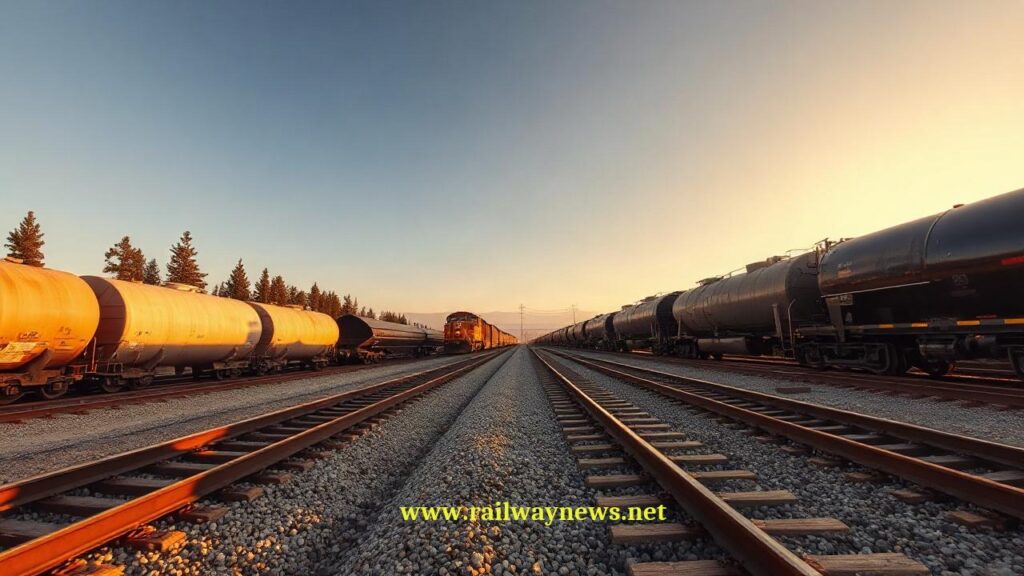
⚡ In Brief: CSX subsidiary Transflo has opened a 40-railcar transloading terminal in Petersburg, Virginia, expanding bulk highway-to-rail transfer capabilities for liquefied petroleum gas and industrial cargo.
PETERSBURG, UNITED STATES – CSX subsidiary Transflo has commenced operations at its new rail-truck transloading terminal located at 3500 Halifax Road in Petersburg, Virginia. The site provides 40 dedicated railcar spots to serve regional shippers lacking direct rail siding connections. Transflo initially announced the development in November 2025 with an operational target of March 30, 2026, though the exact initial day of commercial operation was not publicly disclosed.
What Is the Full Scope of This Project?
The Petersburg terminal integrates bulk freight transfer machinery, liquefied petroleum gas handling infrastructure, and conveyor systems directly into the CSX freight network. Positioned near Interstate 95, Interstate 85, and U.S. Highway 460, the terminal allows regional manufacturers and agricultural producers to shift long-haul truck freight to rail, cutting transit greenhouse gas emissions by up to 75% per shipment. The Petersburg facility expands Transflo’s operational network to more than 40 active transloading facilities across North America, but total capital expenditure for site construction was not disclosed.
Key Project Data
| Parameter | Value |
|---|---|
| Project / Contract Name | Petersburg Transload Terminal |
| Total Value | Not disclosed |
| Parties Involved | Transflo, CSX |
| Timeline / Completion | Announced November 2025; operational Q1 2026 |
| Country / Corridor | United States / Mid-Atlantic (I-95, I-85, U.S. 460) |
How Does This Compare to Similar Projects?
Transloading infrastructure across North America exhibits wide variation in functional scope and capital commitment. While Transflo’s Petersburg facility provides intermediate regional capacity at 40 car spots, larger intermodal-industrial projects involve multi-hundred-million-dollar outlays; for example, Canadian National Railway completed a C$750 million rail-to-container transload facility in Prince Rupert, British Columbia, aimed at high-volume export intermodal trade (Source: Railway News, 2025). On a regional level, municipal-led multi-modal hubs like the Spokane International Airport transload project in Washington State rely on public capital through USDOT BUILD grants to support agricultural and manufacturing shippers (Source: WSDOT, 2026). In contrast, specialized bulk facilities such as those operated by Simplot, Nutrien, and Two Rivers Terminal focus strictly on localized chemical and fertilizer distribution rather than mixed highway-rail commodity transloading.
Editor’s Analysis
Class I railroads are using transload terminals as their primary mechanism to capture non-rail-served freight without incurring the capital expense of constructing new main-line branch spurs. This strategy aligns with broader industry expansion, as the global rail infrastructure market reached USD 101.11 billion in 2025 and is projected to hit USD 126.54 billion by 2030 (Source: Mordor Intelligence, 2025). By securing hazardous and energy commodity capabilities such as liquefied petroleum gas at the junction of two major interstate corridors, CSX secures short-haul truck feeding volumes against competing regional motor carriers.
FAQ
Q: Where is the new Transflo facility located?
A: The terminal is situated at 3500 Halifax Road in Petersburg, Virginia, adjacent to Interstate 95, Interstate 85, and U.S. Highway 460.
Q: What is the operating capacity of the Petersburg transload terminal?
A: The facility features 40 railcar spots and includes conveyor loading systems alongside dedicated liquefied petroleum gas handling equipment.
Q: How much capital did CSX invest in the Petersburg facility?
A: Total capital expenditure for the Petersburg site was not disclosed by CSX or Transflo.

Railway infrastructure, rolling stock and transport technologies specialist focused on global rail industry developments, high-speed rail systems, signaling technologies and freight transportation. Covering railway investments, public transport modernization, rail operations and international mobility projects across Europe, Asia and North America.
RELATED POSTS

October 1, 2026 7:09 am
United States regulators confirmed a September 30 deadline for the...

October 1, 2026 12:13 am
Illinois approved $1.5 billion annually for the Northern Illinois Transit...

October 4, 2026 5:14 pm
Alstom secured a CA$4.7 billion order from VIA Rail Canada...

October 1, 2026 6:10 am
Amtrak approved a System Expansion Committee on July 30 to...

October 6, 2026 2:14 am
Union Pacific launched export rail shipments with Ferromex to deliver...

October 1, 2026 3:12 am
Greenbrier confirmed Brian Comstock as new president and CEO effective...