
Wabtec Secures $700M Simandou Service Contract in Guinea
Wabtec secured a $700 million service deal in Guinea to maintain heavy freight locomotives along the 373-mile Simandou iron ore corridor for rail operator CTG.
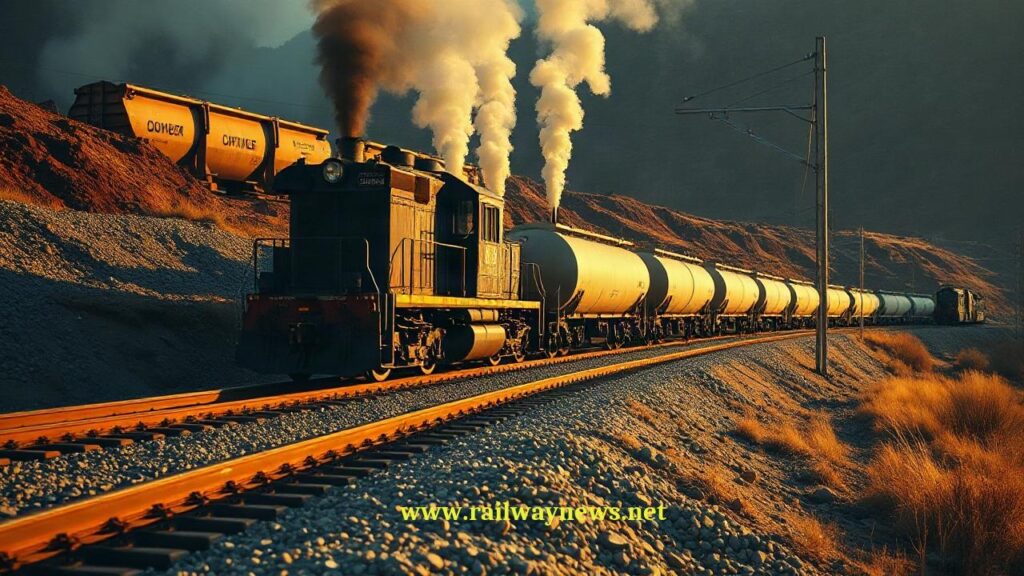
⚡ In Brief: Wabtec Corporation finalized a multi-year service contract valued at more than $700 million with Compagnie du TransGuinéen for heavy-haul freight operations on Guinea’s 373-mile Simandou mining corridor.
CONAKRY, GUINEA – Wabtec Corporation announced a long-term service agreement exceeding $700 million with Compagnie du TransGuinéen to maintain its ES43AC locomotive fleet along the Simandou iron ore corridor. The deal builds on an initial 2024 locomotive order, lifting Wabtec’s total Simandou contract value to over $1.2 billion. Concurrently, freight car supplier Greenbrier secured an order for 780 railcars from Saudi Arabia Railways as part of a wider $600 million quarterly order intake.
What Does This Contract Cover?
The Compagnie du TransGuinéen service contract encompasses lifecycle maintenance and fleet management for 4,500-horsepower Wabtec ES43AC locomotives operating across Guinea. Wabtec will deliver scheduled and unscheduled servicing, parts overhauls, logistics operations, technical training, remote digital diagnostics, and local workforce development along the 373-mile line connecting the Simandou iron ore deposit to the Port of Morebaya. Specific multi-year duration milestones and end dates for the service contract were not disclosed by either party.
Key Contract Data
| Parameter | Value |
|---|---|
| Contract Name | Compagnie du TransGuinéen (CTG) Fleet Services Agreement |
| Total Value | Exceeds $700 million (Simandou project total exceeds $1.2 billion) |
| Parties Involved | Wabtec Corp., Compagnie du TransGuinéen (Simfer Infraco, WCS Infraco, Government of Guinea) |
| Timeline / Completion | Not disclosed |
| Country / Corridor | Guinea (373-mile Simandou–Port of Morebaya line) |
How Does This Compare to Similar Contracts?
Procurement and service valuations for Wabtec heavy-haul platforms vary widely across international jurisdictions depending on contract scope, localization, and technical support clauses. In 2025, Kazakhstan’s state operator KTZ executed a $4.2 billion agreement with Wabtec covering 300 freight units at approximately $14 million per locomotive, an outlay driven by prolonged support packaging (Source: Kursiv Media, 2026). By comparison, Indian Railways acquired comparable Wabtec platforms for approximately $2.6 million per locomotive, while Brazilian operators procured Wabtec ES44ACi heavy-haul units for $3.4 million per unit in 2024 (Source: Kursiv Media, 2026). Outside heavy mining corridors, industrial railway investments show divergent cost structures; for instance, the United States and Egypt executed a $235 million rail infrastructure modernization pact in 2025, while Vietnam’s VinSpeed awarded a €1 billion high-speed rail contract to Siemens (Source: U.S. Embassy Egypt, 2025; Rail Market, 2025).
Editor’s Analysis
Mining conglomerates and state operators are increasingly pairing equipment procurement with integrated multi-decade servicing packages to de-risk greenfield corridors. Similar fleet expansions in the Middle East reflect this model, where Saudi Arabia Railways moved 30 million tonnes of freight in 2025 to substitute two million annual road truck trips across the Kingdom (Source: IMARC Group, 2025). As industrial freight networks expand toward target export markets, specialized rolling stock maintenance guarantees high track availability across heavy-haul export channels.
FAQ
Q: What locomotives are deployed on the Simandou rail corridor?
A: Compagnie du TransGuinéen operates Wabtec ES43AC freight locomotives powered by 4,500-horsepower Evolution Series diesel engines. These units are specifically adapted for high-ambient-temperature operations between the Simandou mine and the Port of Morebaya.
Q: What is the delivery schedule for the Greenbrier railcars ordered by Saudi Arabia Railways?
A: Greenbrier manufactured the 780 specialized phosphoric acid and molten sulfur tank cars in Mexico using U.S. steel, with shipments underway as of late 2026. The full handover completion date for SAR’s double-stack intermodal units was not disclosed.
Q: Will the Simandou railway carry cargo other than iron ore?
A: CTG designed the 373-mile line as a multi-use corridor configured to carry passenger traffic and non-mining commercial freight alongside iron ore export trains. Dedicated scheduling capacity figures for commercial freight services have not been officially confirmed.

Railway infrastructure, rolling stock and transport technologies specialist focused on global rail industry developments, high-speed rail systems, signaling technologies and freight transportation. Covering railway investments, public transport modernization, rail operations and international mobility projects across Europe, Asia and North America.
RELATED POSTS

October 1, 2026 7:09 am
United States regulators confirmed a September 30 deadline for the...

October 4, 2026 5:14 pm
Alstom secured a CA$4.7 billion order from VIA Rail Canada...

October 1, 2026 12:13 am
Illinois approved $1.5 billion annually for the Northern Illinois Transit...

October 6, 2026 2:14 am
Union Pacific launched export rail shipments with Ferromex to deliver...

October 1, 2026 6:10 am
Amtrak approved a System Expansion Committee on July 30 to...
October 1, 2026 3:12 am
Greenbrier confirmed Brian Comstock as new president and CEO effective...