
VIA Rail Canada Reports 7.7% Revenue Gain And Fleet RFP
VIA Rail Canada reported a 7.7% revenue gain to CA$36.8 million in 2025 while launching a Request for Proposals for its new long-distance fleet.
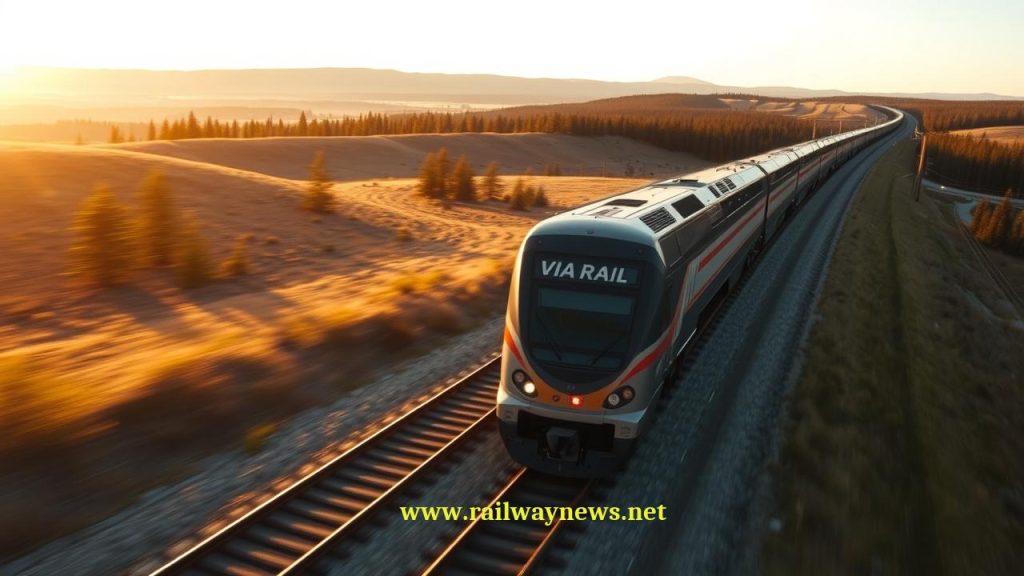
⚡ In Brief: VIA Rail Canada reported a 7.7% revenue increase to CA$36.8 million in its 2025 annual report, while ridership remained flat at 4.4 million and it launched a procurement process for its new long-distance fleet.
OTTAWA, CANADA – VIA Rail Canada Inc. released its 2025 annual report showing a 7.7% rise in revenue to CA$36.8 million, while operating expenses grew 3.3% to CA$894 million. The national passenger carrier’s ridership held steady at approximately 4.4 million passengers for the year. The company also highlighted improved financial performance, covering 58% of its operating costs with self-generated revenue.
What Is the Full Scope of This Development?
The 2025 financial results indicate a period of managed cost growth alongside modest revenue gains, leading to a reduced reliance on public funding. Government subsidies for the year totaled CA$736 million, a decrease of approximately 24% compared to 2024. Operationally, VIA Rail completed the final delivery of its 32 new Siemens trainsets for the high-density Quebec City-Windsor corridor and formally launched the Request for Proposals (RFP) to replace its entire long-distance, regional, and remote service fleet.
Key Development Data
| Parameter | Value |
|---|---|
| Company / Organisation | VIA Rail Canada Inc. |
| Total Value | CA$894 million (Operating Expenses) |
| Parties Involved | VIA Rail Canada, Government of Canada |
| Timeline / Completion | Fiscal Year 2025 |
| Country / Corridor | Canada (National) |
How Does This Compare to Industry Trends?
VIA Rail’s self-sufficiency rate of 58% shows progress but remains below that of its US counterpart, Amtrak, which reported covering approximately 70.5% of its operating expenses with revenue in fiscal year 2023. (Source: Amtrak, 2023). VIA’s 2025 ridership of 4.4 million passengers is still below its pre-pandemic level of 5 million in 2019, indicating an ongoing recovery challenge. The launch of the long-distance fleet RFP aligns with a broader North American trend of significant investment in passenger rail, including multi-billion dollar high-speed rail projects in California and the Sepulveda Transit Corridor Program. (Source: Construction Dive, 2025).
Editor’s Analysis
VIA Rail is navigating the dual pressures of improving operational finances while executing a generational, capital-intensive fleet renewal. The flat ridership, despite the introduction of new trains on its busiest corridor, suggests that recovering and growing its passenger base remains a primary challenge. The major procurement for a new long-distance fleet is a critical step towards modernizing the service offering, but its success will depend on securing long-term capital funding in a competitive public finance environment.
FAQ
Q: What is VIA Rail’s self-sufficiency ratio?
A: In 2025, VIA Rail covered 58% of its operating costs through its own revenue, with the remainder covered by government funding. This represents an improvement in financial self-sufficiency for the national carrier.
Q: What is the status of VIA Rail’s new fleet?
A: VIA Rail has completed the acceptance of all 32 new trainsets for its Quebec City-Windsor corridor. It has also officially launched the Request for Proposals (RFP) to procure a new fleet for all its long-distance, regional, and remote services.
Q: How much did VIA Rail’s operating expenses increase?
A: Operating expenses increased by 3.3% to CA$894 million in 2025 compared to the previous year. The value of the new long-distance fleet RFP was not disclosed in the report.

Railway infrastructure, rolling stock and transport technologies specialist focused on global rail industry developments, high-speed rail systems, signaling technologies and freight transportation. Covering railway investments, public transport modernization, rail operations and international mobility projects across Europe, Asia and North America.
RELATED POSTS

October 8, 2026 1:15 pm
Alstom secured a €1bn contract to build 13 automated trains,...

October 1, 2026 7:09 am
United States regulators confirmed a September 30 deadline for the...

October 8, 2026 12:18 pm
Siemens Mobility signed an agreement with VinSpeed to supply 350...

October 4, 2026 5:14 pm
Alstom secured a CA$4.7 billion order from VIA Rail Canada...

October 5, 2026 6:12 pm
AECOM and Jacobs secured a contract in September 2026 to...

October 1, 2026 12:13 am
Illinois approved $1.5 billion annually for the Northern Illinois Transit...