
UIC Leaflet 504: Conditions for Transporting Railway Vehicles on
UIC Leaflet 504 establishes the technical and safety conditions for the transport of railway vehicles on their own wheels. It defines the mandatory checks for braking, lubrication, and gauge clearance required to move locomotives, coaches, or wagons that are not in their normal operating configuration (e.g., being delivered from a factory or moved to a workshop).
What is UIC Leaflet 504?
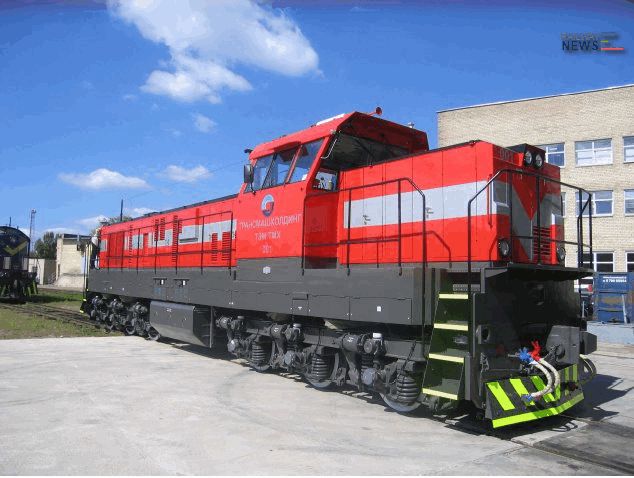
UIC Leaflet 504 is an operational and safety standard titled “Conditions for the transport of railway vehicles on their own wheels.” In the lifecycle of Rolling Stock, there are many instances where a vehicle needs to be moved while “out of service”—such as a new locomotive being delivered from the manufacturer, a damaged coach being sent for repair, or the transfer of vintage museum units.
Because these vehicles may have deactivated safety systems or specific mechanical limitations, UIC 504 provides the mandatory protocol to ensure they do not pose a risk to Operational Safety or damage the Infrastructure Management assets during transit.
Preparation for Transport
Before a vehicle can be moved on its own wheels according to UIC 504, it must undergo a rigorous “Fitness for Transport” inspection. Key requirements include:
- Braking System: Verification of whether the vehicle’s brakes will be active (integrated into the train pipe) or if it will travel as an “unbraked” load. If unbraked, the leaflet defines the required braking weight of the towing train.
- Lubrication: Ensuring that axle boxes and Bogies are properly lubricated, especially for vehicles that have been stationary for a long period.
- Mechanical Securing: Standardized methods for securing moving parts (like pantographs, internal doors, or specialized cranes) to prevent them from shifting and violating the Gauge.
- Speed Restrictions: Determining the maximum permissible transport speed based on the vehicle’s mechanical condition and the type of bearings used.
Technical Documentation: The Transport Label
UIC 504 mandates that every vehicle being transported must carry a specific “Transport Label” (often called the Model 504 Label). This document must be visible on both sides of the vehicle and include:
- The origin and destination of the move.
- Specific speed limits (e.g., “Max 40 km/h”).
- Instructions for shunting (e.g., “Do not hump” or “Gravity shunting prohibited”).
- Technical faults that the Infrastructure Management staff need to be aware of (e.g., “Isolated brake”).
Safety Risks and Mitigation
The leaflet addresses specific risks inherent in moving out-of-service vehicles:
- Hot Axle Boxes: Risk of bearing failure in older vehicles. UIC 504 requires temperature monitoring at stops.
- Suspension Instability: For vehicles with “dead” air suspension, the leaflet defines the height adjustments needed to maintain Track Quality interaction.
- Buffer and Draw Gear: Rules for using auxiliary couplers if the vehicle’s standard Draw Gear is damaged or incompatible with the towing locomotive.
Comparison: Normal Operation vs. UIC 504 Transport
| Parameter | Normal Operation | Transport (UIC 504) |
|---|---|---|
| Speed | Line speed (e.g., 120-160 km/h). | Restricted (often 40-80 km/h). |
| Braking | Fully controlled by driver. | Often “piped through” or isolated. |
| Supervision | Remote diagnostics. | Physical inspection at major stops. |
| Labeling | Standard UIC number. | Yellow “Special Transport” labels. |

Railway infrastructure, rolling stock and transport technologies specialist focused on global rail industry developments, high-speed rail systems, signaling technologies and freight transportation. Covering railway investments, public transport modernization, rail operations and international mobility projects across Europe, Asia and North America.