
Why EN 50122-2 Changes European DC Rail Protection
EN 50122-2 is crucial for DC rail safety. Learn how this standard manages stray currents, preventing corrosion and protecting vital railway and urban infrastructure.
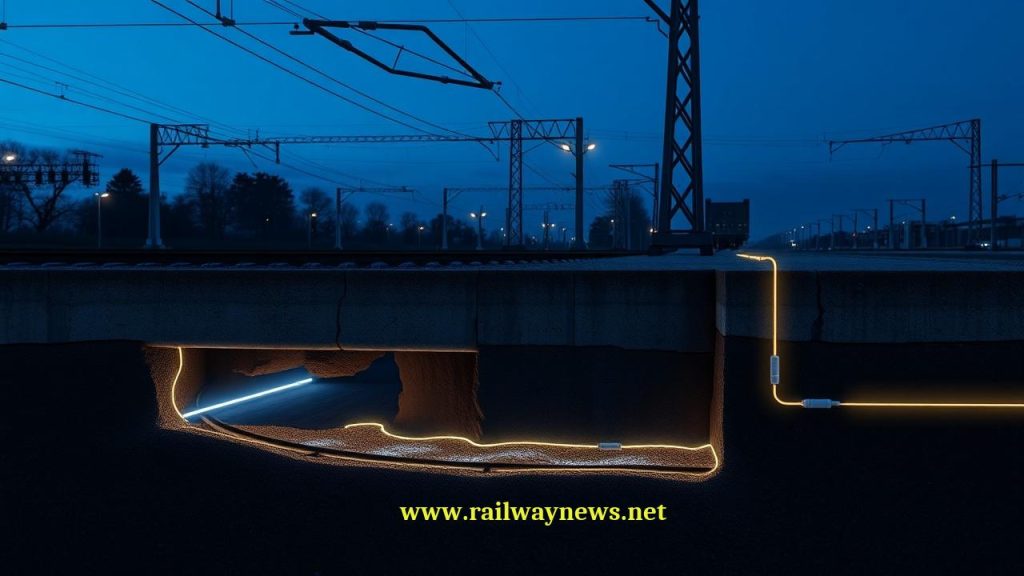
Understanding EN 50122-2: Managing Stray Currents in DC Rail Systems
EN 50122-2 is a European standard specifically addressing electrical safety and the return circuit in railway fixed installations. Its primary focus is to establish provisions and mitigation measures against the detrimental effects of stray currents generated by direct current (d.c.) traction systems. The standard provides a framework for designers, operators, and asset owners to protect both railway infrastructure and third-party metallic structures from accelerated corrosion.
Stray current is an unavoidable by-product of DC traction power systems. While the running rails are designed to be the primary return path for the traction current, they are not perfectly insulated from the earth. A portion of this return current “leaks” or strays into the ground and surrounding conductive media, seeking the path of least resistance back to the substation. This leakage is the “stray current” that EN 50122-2 aims to manage.
The Core Problem: Electrolytic Corrosion
The primary danger posed by DC stray currents is electrolytic corrosion. When stray current flows from a buried metallic structure (like a steel pipeline, reinforced concrete foundation, or utility cable sheath) into the surrounding electrolyte (the soil), it causes a rapid loss of metal. This electrochemical process can severely reduce the structural integrity and service life of affected assets, leading to significant safety risks and economic costs. EN 50122-2 provides the technical requirements to limit this phenomenon to acceptable levels.
Key Technical Requirements and Principles of EN 50122-2
The standard approaches the problem from multiple angles, focusing on both limiting the generation of stray currents at the source and protecting potentially affected structures. The core principles can be broken down into several key areas.
1. Design of the Return Circuit
The first line of defense is a well-designed traction power return circuit. The goal is to make the intended path (the running rails) as conductive as possible and the leakage path (rail-to-earth) as resistive as possible.
- Rail-to-Earth Conductance: The standard places significant emphasis on the conductance per unit length (G’re). A lower value is desirable as it indicates better insulation of the rails from the earth, thus reducing current leakage. This is influenced by the type of track construction, ballast quality (clean and dry is better), and the design of rail fastenings.
- Rail Continuity: Maintaining excellent electrical continuity along the running rails is critical. This is typically achieved through continuously welded rails (CWR) and robust electrical bonding across any mechanical joints or track components like switches and crossings.
- Substation Spacing and Configuration: The design and spacing of traction power substations influence the voltage gradients along the track, which in turn affects the magnitude of stray currents.
2. Stray Current Collection Systems
In areas where achieving sufficiently high rail-to-earth resistance is impractical (e.g., in tunnels or depots), the standard allows for the use of dedicated stray current collection systems. These systems provide a controlled, low-resistance path for the stray current to return to the substation, thereby preventing it from flowing through unintended structures.
- Stray Current Collector Mats: Conductive mats installed beneath the track structure to collect leakage current directly.
- Buried Conductors: Dedicated conductors buried alongside the track that are intentionally connected to the return circuit at the substation.
3. Monitoring, Measurement, and Acceptance Criteria
EN 50122-2 defines the criteria and methods for assessing the impact of stray currents. The primary metric is the potential shift on a buried structure caused by the DC traction system.
- Potential Measurement: Measurements are taken between the affected structure and the surrounding soil using a reference electrode. The standard specifies acceptable limits for the average potential shift over time to ensure that the rate of corrosion remains within a safe range.
- Cooperation: The standard mandates a cooperative approach between the railway authority and the owners of other potentially affected infrastructures. This includes sharing design information, conducting joint testing, and agreeing on mitigation measures.
Comparison of Stray Current Mitigation Strategies
Choosing the right mitigation strategy involves a trade-off between effectiveness, cost, and practicality. The table below compares common methods detailed or influenced by the principles in EN 50122-2.
| Mitigation Method | Principle of Operation | Advantages | Disadvantages |
|---|---|---|---|
| High-Resistance Track Bed | Increases the electrical resistance between the rails and the earth, reducing the amount of current that can leak. | Reduces stray current at the source. Passive system with low maintenance. | Effectiveness depends heavily on environmental conditions (e.g., moisture). Can be expensive to implement in existing lines. |
| Stray Current Collection System | Provides a dedicated, low-resistance path for stray currents to return to the substation, intercepting them before they affect other structures. | Highly effective in targeted high-risk areas like tunnels and depots. | Can be complex and costly to install. The collection system itself requires monitoring for corrosion. |
| Cathodic Protection | Applies a protective DC current to the affected third-party structure, forcing it to act as a cathode and preventing corrosion. | Directly protects the asset. Can be retrofitted to existing structures. | Requires a continuous power source and regular maintenance. Can cause interference with other buried systems if not designed correctly. |
| Insulating Joints/Coatings | Electrically isolates the protected structure from the surrounding soil or breaks its electrical continuity to limit current flow. | Effective for isolating specific sections of a pipeline or structure. Coatings are a standard first-line defense. | Coatings can be damaged during installation. Insulating joints can be a point of failure if not properly maintained. |
Conclusion: A Framework for Infrastructure Integrity
EN 50122-2 is a critical standard for the longevity and safety of modern DC railway systems and surrounding urban infrastructure. It moves beyond simple electrical safety to address the complex and destructive phenomenon of stray current corrosion. By establishing clear design principles, measurement protocols, and a framework for cooperation, the standard ensures that the benefits of efficient DC rail transport do not come at the cost of accelerated degradation of other vital metallic assets.
Frequently Asked Questions about EN 50122-2
Here are some common questions regarding the scope and application of this standard.

Railway infrastructure, rolling stock and transport technologies specialist focused on global rail industry developments, high-speed rail systems, signaling technologies and freight transportation. Covering railway investments, public transport modernization, rail operations and international mobility projects across Europe, Asia and North America.