
Spain Awards EUR 20 Million Rail Compensation
Families of 45 deceased and over 150 injured receive EUR 20 million compensation from Spain after the Adamuz rail incident. A track fracture caused the derailment.
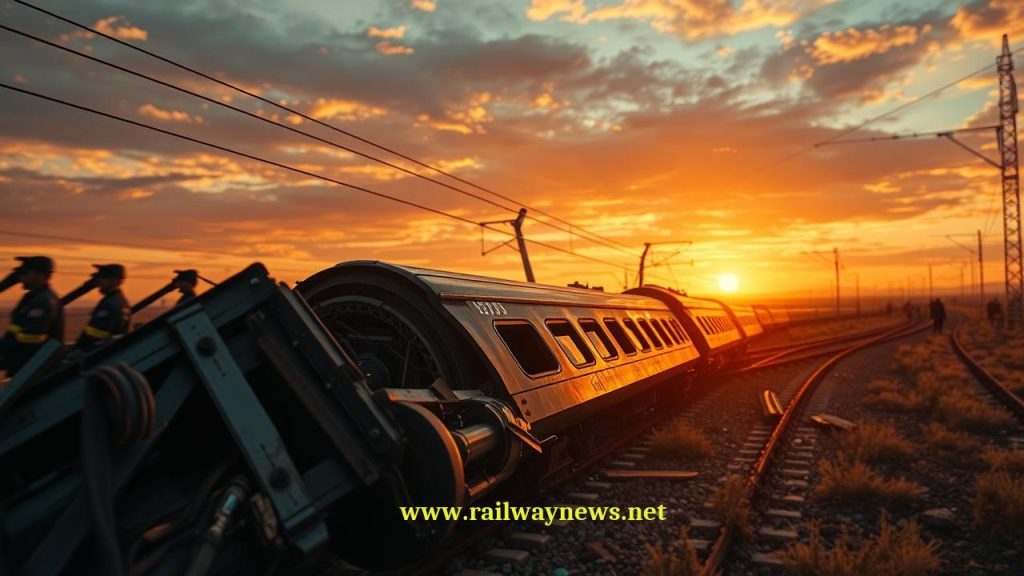
Spain’s government has allocated approximately EUR 20 million for compensation related to the January 18 high-speed rail incident near Adamuz, Córdoba. The derailment and subsequent collision of an Iryo-operated service resulted in 45 fatalities and more than 150 injuries. The state’s transport ministry confirmed the compensation package, which designates EUR 216,000 for the family of each deceased person and amounts between EUR 2,400 and EUR 84,000 for those injured.
The preliminary findings from the Comisión de Investigación de Accidentes Ferroviarios (CIAF) indicate a pre-existing track fracture as the probable cause. Evidence cited in the initial report includes the discovery of grooves on the wheels of the accident train and on three other trains that had previously used the same track section. The investigation noted that the fifth carriage, the last one not to derail, had a distinct groove on its outer wheel edge, suggesting the rail was already deforming prior to the structural failure.
In response to the incident, infrastructure manager Adif implemented temporary speed reductions across parts of the high-speed network. The maximum permitted speed on sections of the Madrid-Barcelona line was lowered from 300 km/h to 230 km/h. On the Madrid-Valencia line, operational speeds were reduced to a range of 160-200 km/h to allow for detailed track integrity assessments.
Transport Minister Óscar Puente announced that payments to the families of the deceased are scheduled for disbursement within a maximum period of three months. The Adamuz incident was one of four separate rail accidents in Spain during the same week, including a fatal event in Catalonia and a collision in Murcia, placing increased focus on the maintenance protocols for the nation’s 3,900 km high-speed network.

Railway infrastructure, rolling stock and transport technologies specialist focused on global rail industry developments, high-speed rail systems, signaling technologies and freight transportation. Covering railway investments, public transport modernization, rail operations and international mobility projects across Europe, Asia and North America.
RELATED POSTS

October 5, 2026 6:12 pm
AECOM and Jacobs secured a contract in September 2026 to...

October 4, 2026 11:08 pm
Sound Transit confirmed the September 30 opening of Seattle Pinehurst...
October 6, 2026 9:17 am
Illinois approved $1.1M in state funds to upgrade two McHenry...
October 6, 2026 12:16 am
FTA awarded $233 million in grants to eight US rail...
October 5, 2026 3:13 pm
DART launched a 90-day fare enforcement pilot across 5 light-rail...
October 6, 2026 12:12 pm
Amey secured an eight-year contract from Irish Rail to design,...