
Czech Railways: 5G & Starlink Transform Trains to Mobile Offices
Czech Railways launches 5G and Starlink, investing EUR 5.4 million to transform trains into high-speed mobile offices, enhancing passenger experience.
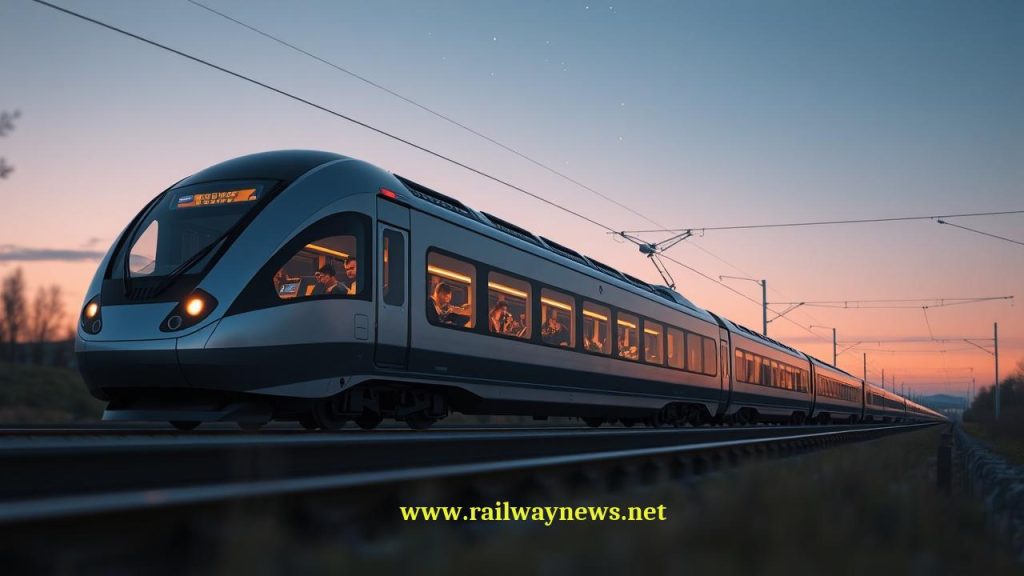
PRAGUE, CZECH REPUBLIC – Czech Railways (České dráhy) has completed a major connectivity overhaul across its premium long-distance fleet, deploying 5G mobile signal amplifiers and initiating Starlink satellite internet trials. The move positions the national operator at the forefront of a global trend where satellite internet is rapidly transforming connectivity in transport sectors, a market where Starlink’s global web traffic recently more than doubled as it expands into aviation and maritime operations.
| Category | Details |
|---|---|
| Project Cost | CZK 132 million (approx. EUR 5.4 million), excluding VAT |
| Core Technology | 5G-ready mobile signal repeaters and Starlink satellite internet trials |
| Fleet Upgraded | 151 carriages across 27 Pendolino, Railjet, and InterPanter units |
| Key Partners | ČD – Telematika, Kontron Transportation, SpaceX (for Starlink) |
| Funding Source | Czech Telecommunications Authority (ČTÚ) |
Czech national operator České dráhy (ČD) announced the completion of a landmark project to equip its premier long-distance trains with advanced connectivity solutions. The CZK 132 million initiative, implemented by ČD – Telematika and Kontron Transportation, saw 151 carriages on the Pendolino, Railjet, and InterPanter fleets fitted with 5G-ready mobile signal repeaters. This upgrade ensures stable voice and data services for passengers, effectively overcoming the signal-blocking effect of the train’s metal bodywork. “This is an important step in the modernization of our services and contributes significantly to increasing passenger comfort,” said Michal Krapinec, CEO of České dráhy. “Trains are thus transformed into a true mobile office.”
The technical solution involves sophisticated repeaters that capture external mobile network signals, amplify them, and distribute them evenly throughout the carriages for customers of all mobile operators. The system dynamically adjusts amplification based on real-time signal strength along the route. Complementing this, ČD also laser-treated the windows on 209 long-distance carriages to improve signal penetration. In a forward-looking move, the operator has also launched commercial trials of SpaceX’s Starlink satellite internet. This trial aims to evaluate performance in areas with poor or non-existent terrestrial mobile coverage, paving the way for a hybrid connectivity model. This mirrors a wider trend seen in the aviation sector, where companies like NetJets are equipping their fleets with Starlink to provide high-speed internet during flights.
ČD’s investment places it at the cutting edge of a rapidly evolving global connectivity landscape. Starlink’s aggressive expansion, which has seen its global web traffic more than double according to recent data from Cloudflare, is disrupting traditional connectivity markets. With plans to service over 23 airlines and a growing Direct-to-Cell service, SpaceX is demonstrating the viability of low-Earth orbit (LEO) satellite constellations for high-speed, low-latency internet on moving vehicles. By testing Starlink, ČD is exploring a powerful solution to the perennial problem of mobile “not-spots” on rural rail lines, ensuring a seamless digital experience that is crucial for attracting and retaining modern passengers.
Key Takeaways
- Detailed Fleet Upgrade: 151 carriages across ČD’s flagship Pendolino, Railjet, and InterPanter fleets now feature 5G-ready mobile signal amplification.
- Pioneering a Hybrid Model: The combination of 5G repeaters with Starlink satellite trials creates a resilient, future-proof connectivity solution that guarantees service even in remote regions.
- Enhanced Passenger Experience: The project delivers on a core passenger demand for reliable internet, transforming travel time into productive work or entertainment time and strengthening rail’s value proposition.
Editor’s Analysis
České dráhy’s dual-pronged investment in 5G repeaters and Starlink trials is more than a simple amenity upgrade; it’s a strategic move to future-proof its services against evolving passenger expectations and technological advancements. While cellular repeaters solve an immediate problem, the Starlink trial is the real headline. It signals a potential shift for the rail industry away from costly and complex trackside infrastructure towards more agile, scalable, and powerful satellite solutions. As Starlink solidifies its dominance in the aviation and maritime sectors, its application in rail is the next logical frontier. ČD’s initiative sets a new benchmark for European operators, demonstrating that providing seamless, high-speed internet is no longer a luxury but a core component of the modern railway service offering.
Frequently Asked Questions
Which trains have been upgraded by České dráhy?
The upgrade has been completed on 151 carriages across the operator’s premium long-distance fleets: the Pendolino (Class 680), Railjet, and InterPanter (Class 660/661) units.
How does the new 5G system work on the trains?
The system uses on-board repeaters that capture external mobile signals from networks along the track. They amplify these signals to compensate for the loss caused by the train’s metal structure (a Faraday cage effect) and then distribute the strengthened signal inside the carriages for all passengers, regardless of their mobile provider.
Why is České dráhy testing Starlink in addition to 5G?
České dráhy is testing Starlink satellite internet to provide a reliable, high-speed connection in areas where terrestrial mobile coverage is weak or unavailable, such as in rural valleys or remote cross-country sections. This could lead to a hybrid system that automatically switches between 5G and satellite to ensure uninterrupted connectivity throughout the entire journey.

Transport and railway industry editor covering global rail infrastructure, sustainable mobility, urban transit systems and next-generation railway technologies with a focus on accessible and industry-focused reporting.
RELATED POSTS

October 8, 2026 1:15 pm
Alstom secured a €1bn contract to build 13 automated trains,...

October 1, 2026 7:09 am
United States regulators confirmed a September 30 deadline for the...

October 4, 2026 5:14 pm
Alstom secured a CA$4.7 billion order from VIA Rail Canada...

October 1, 2026 12:13 am
Illinois approved $1.5 billion annually for the Northern Illinois Transit...

October 5, 2026 1:13 pm
New York MTA confirmed a late 2026 DEIS release for...

October 6, 2026 9:17 am
Illinois approved $1.1M in state funds to upgrade two McHenry...