
São Paulo’s $2.7B Rail Revolution: Eixo Norte Project
The Intercity Eixo Norte rail project in São Paulo, Brazil, is a $2.7 billion investment aimed at revolutionizing intercity transportation within the state through the construction and operation of three interconnected rail lines, promising enhanced connectivity, reduced travel times, and improved sustainability.
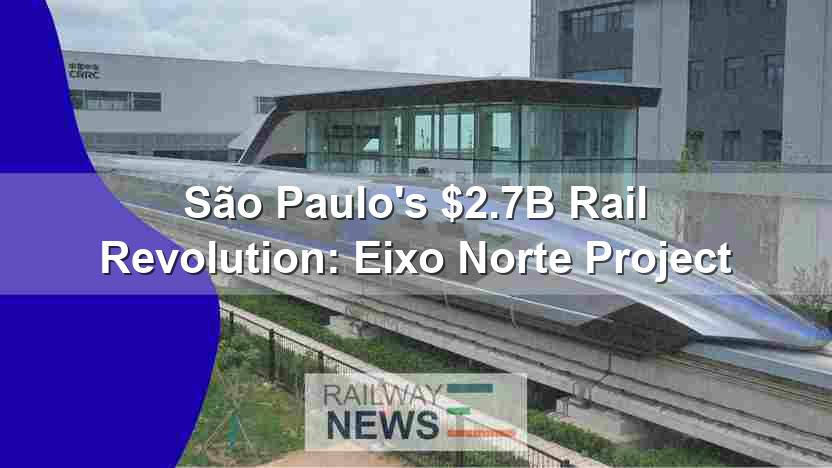
This article explores the significant undertaking of the Intercity Eixo Norte rail project in São Paulo, Brazil, a $2.7 billion investment aimed at revolutionizing intercity transportation within the state. The project encompasses the construction and operation of three interconnected rail lines, promising enhanced connectivity, reduced travel times, and improved sustainability. This analysis will explore the project’s scope, its economic and social implications, the technological advancements it incorporates, and the challenges involved in its implementation. We will examine the intricacies of the public-private partnership (PPP) model employed, the environmental considerations woven into the project, and the long-term impacts on São Paulo’s transportation infrastructure and economic development. The focus will be on the strategic importance of this initiative and its potential to serve as a model for similar projects worldwide.
The Intercity Eixo Norte Project: Scope and Objectives
The core of the project is a high-speed express rail line connecting São Paulo, Brazil’s largest city, to Campinas, its third largest, via Jundiaí. This 101km line, designed for speeds up to 140 km/h, will significantly reduce travel time between these two major economic hubs, currently estimated to be well over 2 hours. Beyond the express service, the project integrates two additional lines: a new 44km Intermetropolitan Train (TIM) line between Campinas and Jundiaí, and the existing 57km Line 7 of the state metro network, extending from Jundiaí to São Paulo. The concession to the C2 Mobilidade Sobre Trilhos consortium (a joint venture between Comporte Participações of Brazil and CRRC Hong Kong of China) includes the operation of all three lines for 30 years, demonstrating a significant commitment to long-term investment and management.
Public-Private Partnership and Financing
The project’s financing model utilizes a Public-Private Partnership (PPP), a collaborative approach that distributes risks and responsibilities between the government and the private sector. The C2 consortium secured the contract through a competitive bidding process, demonstrating the viability of the project and its attractiveness to private investors. This model is crucial for large-scale infrastructure projects, relieving some of the financial burden from the government while leveraging private sector expertise and efficiency in construction and operation. The 14.2 billion reais ($2.7 billion) investment underscores the significant financial commitment required for such a transformative undertaking, highlighting the economic benefits anticipated from the project’s completion.
Technological Advancements and Operational Efficiency
The Intercity Eixo Norte project incorporates several technological advancements designed to improve efficiency and passenger experience. The high-speed trains will be among the fastest in Brazil, drastically reducing commute times and making intercity travel more attractive. Additionally, the integration of the three lines necessitates a sophisticated centralized train control system (CTCS), improving operational coordination and safety. The potential for incorporating modern signaling systems, optimized scheduling algorithms, and real-time passenger information systems can further enhance the operational efficiency and convenience for commuters. This technological investment reflects a forward-looking approach to modern railway infrastructure.
Sustainability and Environmental Impact
Environmental considerations are integrated into the project’s design and implementation. The use of electric locomotives will contribute significantly to reducing greenhouse gas emissions compared to traditional diesel-powered trains, aligning with global sustainability goals. The project’s environmental impact assessment will likely address issues such as land use changes, noise pollution, and potential habitat disruption, with mitigation strategies incorporated into the planning process. The long-term environmental benefits stemming from a reduced carbon footprint of passenger travel, replacing car commutes with a more efficient and sustainable rail system, are substantial and further support the project’s strategic value.
Conclusions
The Intercity Eixo Norte project represents a significant step forward for São Paulo’s transportation infrastructure and showcases a modern approach to intercity rail development. The project’s scope, encompassing the construction of a high-speed express line and the integration of existing rail lines, will drastically improve connectivity between São Paulo and Campinas, positively impacting both commuters and businesses. The utilization of a Public-Private Partnership model leverages private sector expertise and financial resources while distributing the risk effectively. The incorporation of advanced technologies, such as centralized train control systems (CTCS) and electric locomotives, underscores a commitment to efficiency, safety, and environmental sustainability. While challenges remain in terms of project implementation, financing, and potential environmental concerns, the long-term economic and social benefits are considerable. The projected increase in daily ridership to 672,000 passengers, with 400,000 alone utilizing Line 7, speaks to the project’s transformative potential. The success of this endeavor could serve as a benchmark for similar rail development projects globally, demonstrating the power of well-planned, technologically advanced, and environmentally conscious infrastructure investments to drive economic growth and improve quality of life.

Railway infrastructure, rolling stock and transport technologies specialist focused on global rail industry developments, high-speed rail systems, signaling technologies and freight transportation. Covering railway investments, public transport modernization, rail operations and international mobility projects across Europe, Asia and North America.
RELATED POSTS

October 8, 2026 1:15 pm
Alstom secured a €1bn contract to build 13 automated trains,...

October 1, 2026 7:09 am
United States regulators confirmed a September 30 deadline for the...

October 8, 2026 12:18 pm
Siemens Mobility signed an agreement with VinSpeed to supply 350...

October 4, 2026 5:14 pm
Alstom secured a CA$4.7 billion order from VIA Rail Canada...

October 5, 2026 6:12 pm
AECOM and Jacobs secured a contract in September 2026 to...

October 4, 2026 11:08 pm
Sound Transit confirmed the September 30 opening of Seattle Pinehurst...