
CPK, PSE Sign PLN 46M Deals For Poland HSR Power
CPK and PSE executed PLN 46 million contracts for the Warsaw–Łódź high-speed railway’s power infrastructure, featuring a new 2×25 kV AC system.
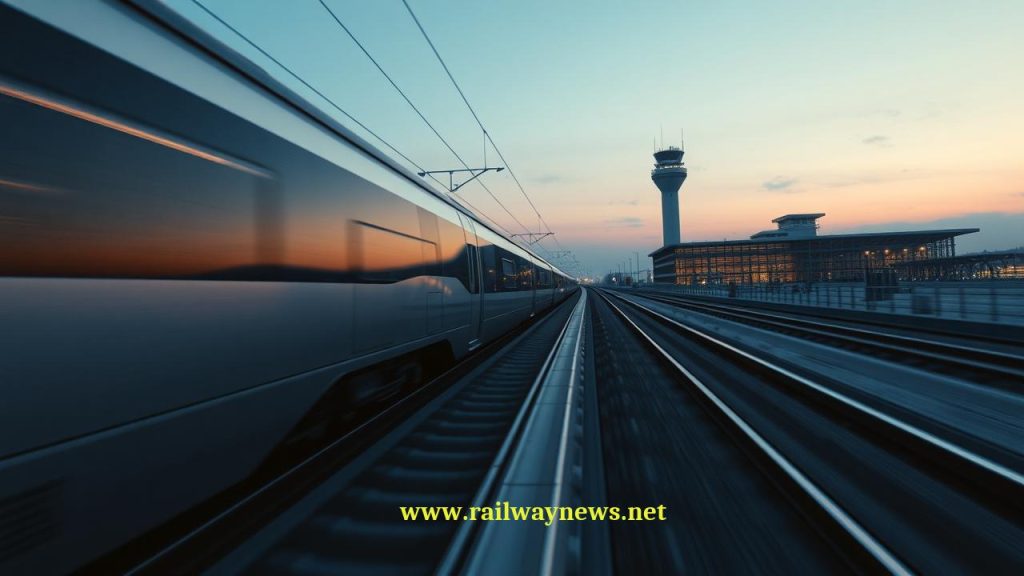
Centralny Port Komunikacyjny (CPK) and Poland’s national transmission system operator, Polskie Sieci Elektroenergetyczne (PSE), have executed contracts valued at more than PLN 46 million for the power supply infrastructure of the new Warsaw–Łódź high-speed railway. The agreements cover the grid connection for two traction substations that will support the line’s 2×25 kV AC power system, a standard not previously implemented on the Polish rail network.
The scope of work assigns responsibility for the design and construction of the traction substations to CPK, while PSE will develop the associated grid connection infrastructure. One substation, to be located in Dmosin near Łódź, will be connected to the existing Stryków 400/220/110 kV station. A second substation, situated near the planned CPK airport, will be integrated with a new 400/110 kV substation designed to power both the railway and airport facilities, including the air traffic control tower.
The 140 km line between Warsaw and Łódź is engineered for a maximum operational speed of 350 km/h. This section forms the initial phase of a larger high-speed network intended to link Warsaw, Łódź, Poznań, and Wrocław. The project is a component of the European Union’s North Sea-Baltic TEN-T corridor and has received approximately €64 million in funding from the Connecting Europe Facility (CEF) for its development and construction phases.

Railway infrastructure, rolling stock and transport technologies specialist focused on global rail industry developments, high-speed rail systems, signaling technologies and freight transportation. Covering railway investments, public transport modernization, rail operations and international mobility projects across Europe, Asia and North America.
RELATED POSTS

October 1, 2026 7:09 am
United States regulators confirmed a September 30 deadline for the...

October 1, 2026 12:13 am
Illinois approved $1.5 billion annually for the Northern Illinois Transit...

October 4, 2026 5:14 pm
Alstom secured a CA$4.7 billion order from VIA Rail Canada...

October 6, 2026 2:14 am
Union Pacific launched export rail shipments with Ferromex to deliver...

October 1, 2026 6:10 am
Amtrak approved a System Expansion Committee on July 30 to...
October 1, 2026 3:12 am
Greenbrier confirmed Brian Comstock as new president and CEO effective...